
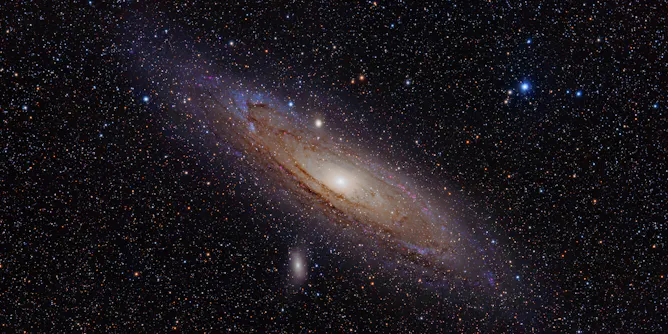
Deep images of the sky reveal that the universe contains billions of galaxies. Some, such as our own Milky Way, are immense, containing hundreds of billions of stars. Most galaxies, however, are dwarfs…
Articles on Astrophysics
Displaying 241 - 260 of 286 articles

The Square Kilometre Array (SKA) radio telescope has been on the cards since the early 1990s. It took until May of last year to find out where it will be built – in South Africa, Australia and New Zealand…
Astronomers have discovered a new, enormous black hole that could change our understanding of how galaxies evolve. Holding the mass of 17 billion suns, the black hole at the centre of the NGC 1277 galaxy…
Supernovae are the brilliant, explosive deaths of stars. For a short time, these explosions can outshine an entire galaxy containing billions of stars. A recently discovered rare class of supernovae, termed…
Earlier this week, a Swiss-based team searching for planets outside our solar system (exoplanets) published a paper in Nature announcing the detection of an Earth-mass planet orbiting the star Alpha Centauri…
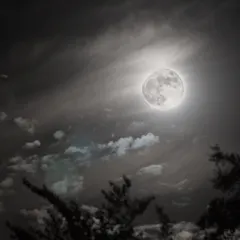
A study published in the journal Nature Geoscience last week suggests water on the moon may have come, at least in part, from the sun. Until a few years ago the orthodox view was that the moon was bone-dry…
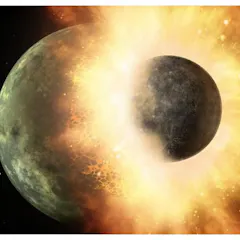
New research published in the planetary science journal Icarus, shows the moon may have been formed by a glancing collision with an “impactor” in the violent days of the early solar system. Contrary to…

Earlier this week, headlines in several major newspapers screamed: “Melbourne researchers rewrite Big Bang theory”. You might think this is a reference to a new script for a popular TV show, but as a cosmologist…
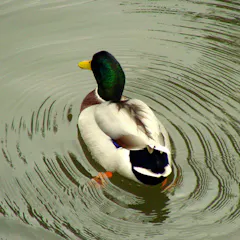
When an ambulance passes with its siren blaring, you hear the pitch of the siren change: as it approaches, the siren’s pitch sounds higher than when it is moving away from you. This change is a common…
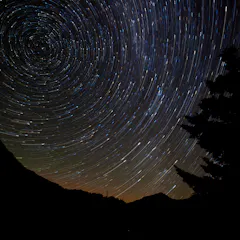
Humans have always had a deep affinity with the night sky. Over millennia the stars have guided us in our travels, provided a grand canvas for the great stories of mythology and invoked a sense of wonder…
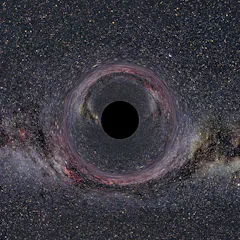
The concept of a “black hole” is one of the most curious in astrophysics. It’s the answer to the question: “What happens if the density of matter in a region becomes so high that not even light can escape…
In my previous article we discussed the “who, what, when, where and how” of the worldwide gravitational wave detection effort. The observant observer will have noticed we’re still missing the “why”. Why…
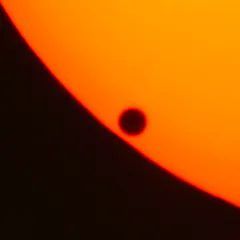
When Australia II won the America’s Cup yacht race in 1983, then-prime-minister Bob Hawke famously exclaimed: “Any boss who sacks anyone for not turning up today is a bum.” Taking inspiration from this…

Late last week, the Square Kilometre Array (SKA) board chairman, John Womersley, announced that the future telescope will have more than one home: Australia/New Zealand and South Africa. The announcement…
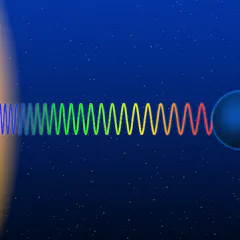
Albert Einstein made an executive decision to revolutionise our understanding of gravity in a paper published in 1916. Nearly 100 years on, a key prediction of Einstein’s theory has eluded direct detection…

You’ll remember that, about a year ago, Canadian astronomers announced the discovery of a small asteroid sharing the earth’s orbit. The asteroid in question, 2010 TK7, is a “planetary Trojan” – an object…
A population of old black holes, 15 million light years from Earth, has been discovered by astronomers using NASA’s Chandra…
The mass of the universe’s lightest particles, neutrinos, can be more accurately measured thanks to a new mapping study…
A group of 675 stars has been discovered on the outskirts of our Milky Way galaxy, having been shot out by the black hole…
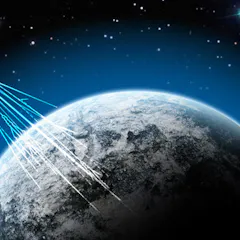
It’s been the defining question of high-energy astrophysics for the past century: where do cosmic rays come from? New findings from the IceCube Neutrino Observatory at the South Pole have brought us closer…
Top contributors
-

Professor (Astrophysics), University of Southern Queensland
-
Professor of Astrophysics, University of Sydney
-
University Distinguished Professor of Astronomy, University of Arizona
-
Associate Dean of Innovation and Engagement, Swinburne University of Technology
-
ARC Laureate Fellow, Swinburne University of Technology
-
John Curtin Distinguished Professor (Radio Astronomy), Curtin University
-
Emeritus Professor, ARC Centre of Excellence for Gravitational Wave Discovery, OzGrav, The University of Western Australia
-
Professor of Physics, Penn State
-
Professor, Radio Astronomy, University of Sydney
-
ARC Australian Laureate Fellow, School of Physics, The University of Melbourne
-
Professor of Astrophysics, UNSW
-
Professor of Astrophysics, Macquarie University
-
Senior Lecturer and ARC Future Fellow, Monash University
-
Reader in Astrophysics, Keele University
-
Pro Vice-Chancellor Flagship Initiatives, Swinburne University of Technology