
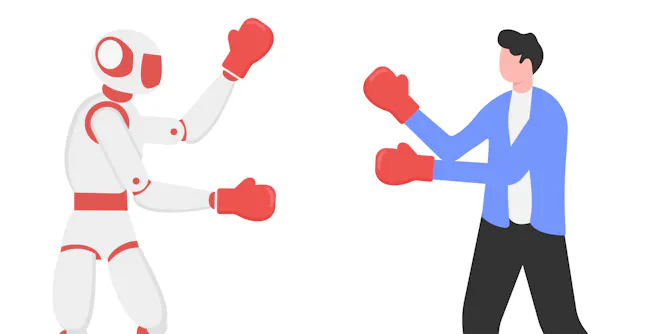
Prompting AI models to contradict your ideas can improve your thinking about a problem.
Articles on Artificial intelligence and jobs
Displaying 1 - 20 of 49 articles

Most career changers rely on their networks to move to a new industry, new research shows.

Of the top 20 occupations most at risk of being automated, 15 are dominated by women.
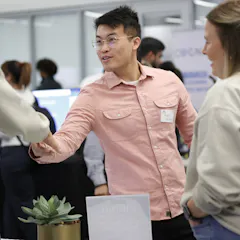
In a survey of more than 600 employers, one theme kept coming up: Despite AI, soft skills and the ability to learn still set successful job candidates apart.
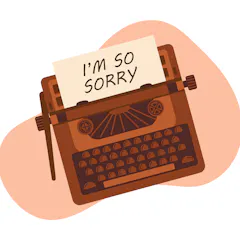
When people know someone used AI to write a message, they see the person as lazy or insincere.
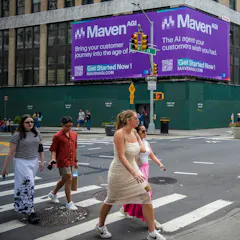
The services revolution enabled the rise of the generalist boss and the creation of the CEO class.

AI is creating new opportunities for some and new vulnerabilities for others, deepening the socioeconomic inequalities already embedded in the labour market.

Two surveys of hundreds of companies shed new light on what employers want.

Without deliberate strategies, over-reliance on AI could erode self-trust, creativity and ethical judgment and leave organizations more fragile, not more resilient.

As AI becomes part of everyday life, students showed how we can partner with the technology, rather than worry about it taking over jobs.
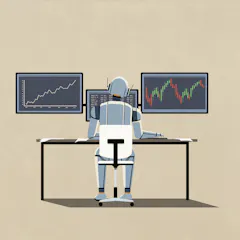
As AI becomes more pervasive, New Zealand’s economic strength may lie in work where the value is measured in what is grown, built, repaired and cared for.

Being ‘AI fluent’ is quickly becoming as important as being proficient in office software once was.

Companies are increasingly routing customers to chatbots. New research looks into whether customers prefer human or chatbots agents more, and under which circumstances.
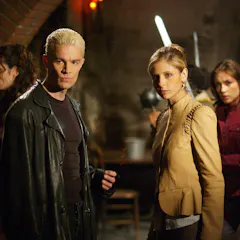
The Buffy reboot faces a problem: what to do about visibly older cast members who play ageless vampires?
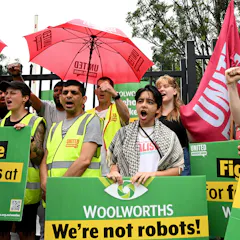
The use of AI and wearable technologies to speed up work and monitor employees is becoming more widespread in businesses around the world.

Research on artificial intelligence in marketing overwhelmingly neglects its potential negative consequences, a new study finds.

Artificial intelligence has the potential to overshadow human managers. But it could also shift the nature of management to a more human relationship-centred practice.
A new report from Statistics Canada about which professions are likely to be affected by artificial intelligence overlooks some key things.

Don’t feel you need to rush out and enrol in a degree on how to become an AI engineer (unless, of course, that is where your interest and passion lie).
Recruiters are now routinely using AI to automate the screening of CVs and interview videos. But human bias already exists in the AI data – and it can even be heightened by the algorithm.
Top contributors
-

Professor of Decision Sciences and Management Information Systems, Drexel University
-
Professor of Applied Mathematics, University of Leicester
-
Visiting Professor of Education, University of Wollongong
-
Professor of Management, Co-Director of the MIT Sloan Institute for Work and Employment Research, MIT Sloan School of Management
-
Professor Emeritus of Human Resource Studies and Research Fellow at the Center for Advanced Human Resource Studies, Cornell University
-
Senior Lecturer, Stellenbosch University
-
PhD Candidate, Haskayne School of Business, University of Calgary
-
Professor, University of Toronto
-
Associate Professor, University of Sydney
-
Professor in Computational Intelligence, Australian Catholic University
-
Assistant Professor, Computer Science, University of British Columbia
-
Chair in Trust, Professor of Management, The University of Melbourne; Melbourne Business School
-
Chief Executive, Gradient Institute, University of Sydney
-
Law Lecturer, CQUniversity Australia
-
Professor of Community Information, University of Michigan