

New research on Ukrainian refugees’ employment outcomes reveals that higher education does not always translate into better employment recovery after displacement.
Articles on Jobs
Displaying 1 - 20 of 540 articles

One area of burgeoning employment is in people cleaning up ‘workslop’.

By adding friction and making it possible for people around problem gamblers to see what they’re up to, a cash requirement could protect them from big losses.

Reducing the number of people on student and graduate visas may reduce migration numbers, but it could also weaken demand for Australian goods and services.

Isolated interventions are unlikely to help small sugarcane growers. Improving productivity requires integrated support systems.

Africa still needs millions of better-paying jobs and higher productivity to reduce poverty. What has changed is the route to achieving those goals.

Yes, strong laws already exist to protect job-seekers from discrimination. But AI has made things more complicated.

The Reserve Bank will be closely watching these job trends, along with upcoming inflation data, ahead of its August rate announcement.

In Mozambique growth and employment are becoming disconnected, and so are skills and opportunity.

Career influencers and resume services profit from exaggerated claims about how applicant-tracking systems work. Most of the popular advice is not backed by evidence.

Would you be happier checking mouse traps than emails?

The Conversation Canada invites applications for an Indigenous Affairs Editor-in-Residence.

Less than half of American workers feel that they clearly know what their employers expect from them. And many employees are too discouraged to do their best.

Resilience is not just a result but something people can use to change their experiences.

Parents who hire their own kids often skip the safety conversations they’d have with any other new employee. But that assumption can put young workers in danger.

Delivering on Ottawa’s AI for All strategy will require governments to build wraparound supports for workers, businesses and communities.
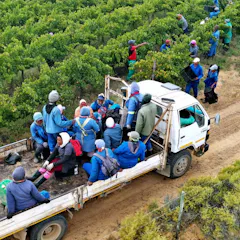
Global supply chains lead to companies capturing most of the value, while suppliers – and especially workers – get a much smaller share.

Sometimes they hear they’re supposed to stay active and engaged. Other times they’re vilified for holding on to power too long. It’s all made ‘knowing when it’s time’ a whole lot harder.

Communities have been laying the groundwork for offshore energy projects for years and counting on the jobs and energy supply.

Traders in the informal economy need a supportive ecosystem so they can move beyond survival and contribute to local growth and development.
Top contributors
-

Professor of Economics, University of Nebraska Omaha
-
Professor of Management, Co-Director of the MIT Sloan Institute for Work and Employment Research, MIT Sloan School of Management
-
Professor of Economics, The University of Melbourne
-
Professor of Economics, University of Canberra
-
Laurie Carmichael Distinguished Research Fellow at the Centre for Future Work, Melbourne; and Professor Emeritus, Griffith Business School, Griffith University
-
Associate Professor of Business, Boston University
-
RBC Professor in Responsible Organizations and Full Professor, Concordia University
-
Dean of Business School, University of Southern Queensland
-
Scientia Professor of Economics, UNSW
-
Professor of Sociology and Canada Research Chair, University of Toronto
-
Associate Professor of Strategy and Organizational Theory, Mount Royal University
-
Sir John Bunting Chair of Public Administration, Australian National University
-
Adjunct Professor of Organizational Studies, Schulich School of Business, York University, Canada
-
Associate Professor of Human Resources and Management, McMaster University
-
Cadre en exercice, John Molson School of Business, Concordia University