
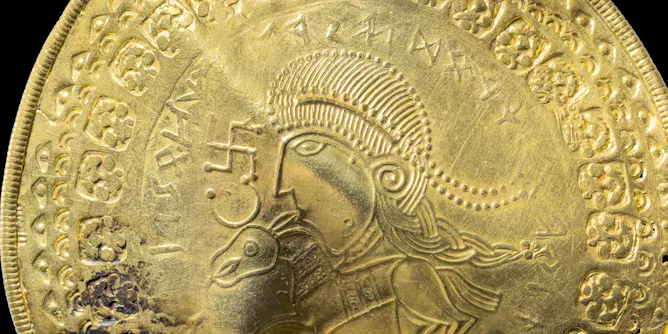
The discovery of the oldest recorded mention of the Norse god Odin pushes the age of this deity back at least 150 years.
Articles on Archaeology
Displaying 241 - 260 of 657 articles

The rectangular stone structures known as mustatils were used thousands of years ago for sacrificing animals to an unknown deity – perhaps in response to ancient climate change.
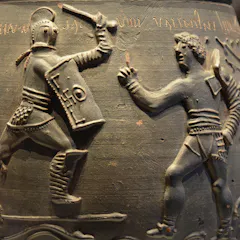
The Colchester vase contains the remains a male of about 40 years of age and not of local origin. Could he have been a gladiator?

In 2022 we detailed the discovery of 1,500 stone points in France’s Madrin cave. Experiments now show that they could were used as arrowheads, pushing back evidence of archery in Eurasia by 40,000 years.
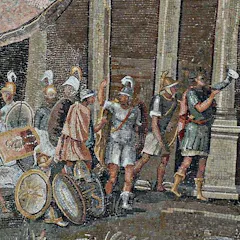
We uncovered evidence of a rebellion so significant, that events such as Cleopatra’s affairs and the rise of Christianity may not have come to pass without it.

Several studies have upended what we thought we knew about mummification using scientific dating techniques to reveal some fascinating – and surprising – insights.
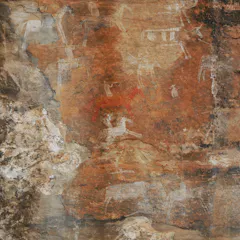
Changes in southern African rock art reflect the mixing of groups of people after they came into contact with each other.

There would have been plenty of time during the long, dark, Northern nights for ancient Roman shoemakers to indulge in side hustles.
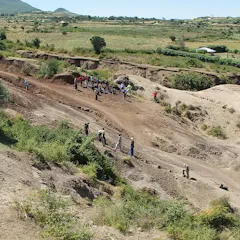
The findings suggest we weren’t the first advanced carnivore among the hominins, as has been previously assumed.
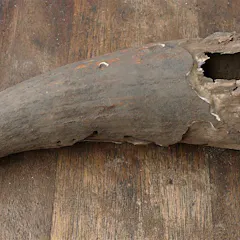
The medicine container was found in a painted rock shelter. A radio carbon date of the horn container places it at around AD 1461-1630.
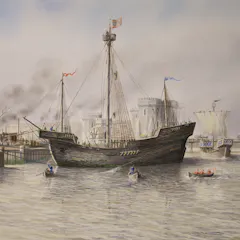
The Newport medieval ship is the most complete section of a 15th-century European vessel discovered to date.
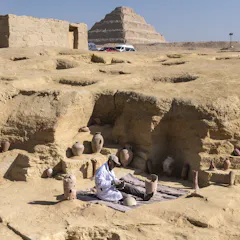
Egyptians believed gold was the colour of the gods and gilding the dead expressed the idea that they acquired divine qualities in the afterlife.

Archaeological discoveries show the different options that have solved human problems over time.

It’s been 200 years since the discovery of one of the oldest human burial sites in western Europe on the Gower peninsula in south Wales.
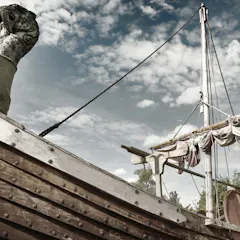
DNA analysis reveals a large migration of people into Scandinavia during Viking times.

Rituals have been around for hundreds of thousands of years – but are they still useful today?
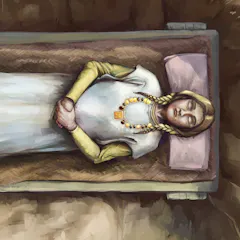
The jewellery and human remains discovered at a recent excavation in Northamptonshire shed light on the elite position of some newly-Christian women in seventh century England.
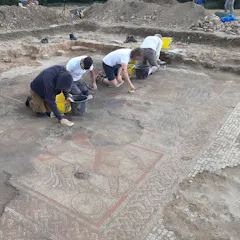
Rutland’s Roman villa caused a media storm when it was first discovered in 2020 – now researchers have returned to uncover even more surprises.
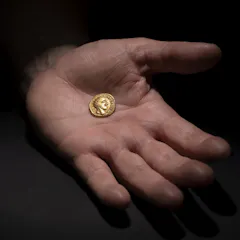
Disregarded as ‘fakes’ for decades, new analysis of coins bearing the face of a mysterious emperor is providing answers about a heady gap in Roman history.
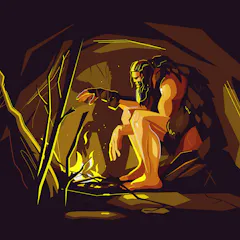
New study shows Neanderthals and Homo sapiens had a taste for sharp and bitter food.
Top contributors
-

PhD Candidate, Anthropology and Archaeology, University of Bristol
-
Associate Professor of Archaeology, Griffith University
-
Director, Australian Research Centre for Human Evolution, Griffith University
-
Professor in Geochronology and Geochemistry, Southern Cross University
-
Associate Professor and Director, Flinders Microarchaeology Laboratory, Flinders University
-
Professor of Archaeology and Biological Anthropology, School of Social Science, The University of Queensland
-
Professor of Environmental and Geographical Sciences, Bournemouth University; University of Reading
-
Professor of Archaeology, Griffith University
-
Curator of Human Evolution of the Cleveland Museum of Natural History and Research Assistant Professor of Anthropology, Stony Brook University (The State University of New York)
-
Associate professor, University of Johannesburg
-
Associate Professor in Archaeology and Space Studies, Flinders University
-
Honorary Associate Professor, UNSW
-
Research Associate, African Centre for Coastal Palaeoscience, Nelson Mandela University
-
Head, Public Engagement, Chau Chak Wing Museum, University of Sydney
-
Associate Professor of Anthropology, Rice University