

The return of an important monument to Mexico puts a spotlight on a culture whose influence is still felt in the Americas today.
Articles on Archaeology
Displaying 221 - 240 of 657 articles
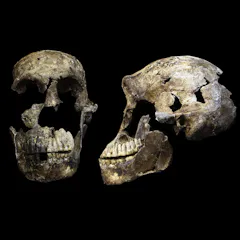
Homo naledi had a brain less than half the size of our own. Yet the new research claims it had cognitive abilities far beyond what we might expect.

This was an area in which early anatomically modern humans survived, evolved and thrived, before spreading out of Africa to other continents.

We need deep-time African urban history and theories to make sense of contemporary urban life and anticipate its future possibilities in African terms.

Researchers examined whether kissing is an innate human activity or whether its origins are relatively recent.

Signs of controlled fire use from Spain are at least 50,000 years older than previous evidence.
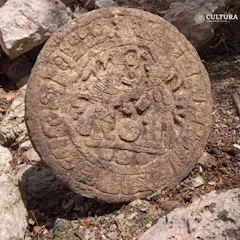
Ancient rituals and games possess characteristics like repetition, structure and the use of symbolic objects that aid students in understanding the world.
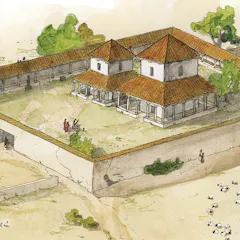
There may have been a main god or goddess at many temple sites, but there was a clear tendency to worship a range of deities.
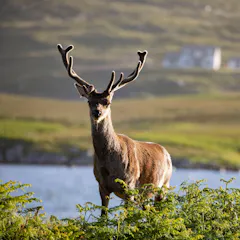
There are arguments over the future of red deer on the Scottish island of South Uist but archaeological expertise can help people live alongside wild animals.
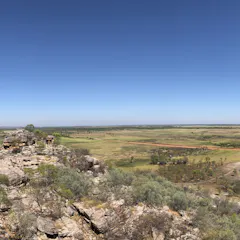
Beneath the floodplains of Arnhem Land lies a hidden landscape that has been transformed over millennia as seas rose and fell.

Ancient microbes likely produced natural products their descendants today do not. Tapping into this lost chemical diversity could offer a potential source of new drugs.
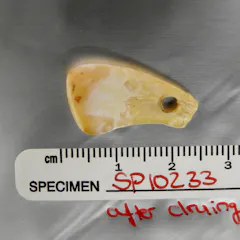
A way to recover the owner’s DNA from ancient artefacts will help archaeologists understand past societies in more detail than ever before.
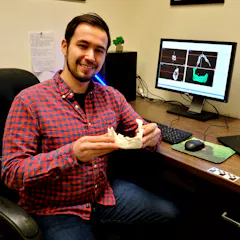
Scientists had figured a fossil found in Spain more than a century ago was from a Neandertal. But a new analysis suggests it could be from a lost lineage of our species, Homo sapiens.
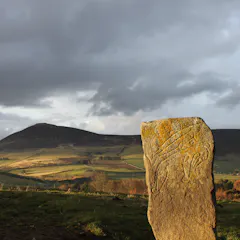
The genetic study challenges previous theories about the origins and culture of the Picts.

Researchers looked at the skeletal remains of 40 people, and found evidence of dairy consumption across a wide swathe of early Tibetan society.
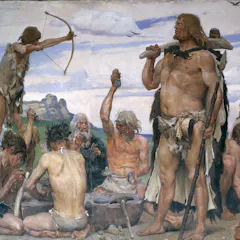
From Aristotle to Darwin, inaccurate and biased narratives in science not only reproduce these biases in future generations but also perpetuate the discrimination they are used to justify.
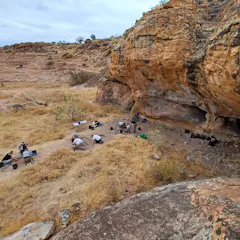
Hunter-gatherers were an important part of the development of the Mapungubwe Kingdom in southern Africa – a fact that history has tended to neglect.
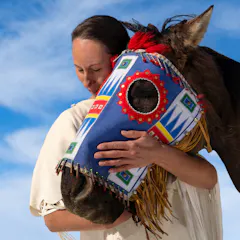
European colonists chronicled their version of how Indigenous peoples lived with horses. New collaborative research adds scientific detail to Indigenous narratives that tell a different story.

The first ancient DNA sequences from peoples of the medieval Swahili civilization push aside colonialist stories and reveal genetic connections from the past.
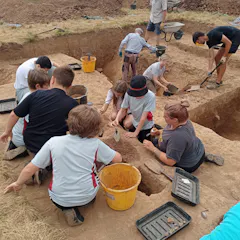
Since 2011, professional and amateur archaeologists in Cardiff have been unearthing prehistoric artefacts. But last summer, they began to discover something even more extraordinary.
Top contributors
-

PhD Candidate, Anthropology and Archaeology, University of Bristol
-
Associate Professor of Archaeology, Griffith University
-
Director, ARC Centre of Excellence for Transforming Human Origins Research, Griffith University
-
Professor in Geochronology and Geochemistry, Southern Cross University
-
Associate Professor and Director, Flinders Microarchaeology Laboratory, Flinders University
-
Professor of Archaeology and Biological Anthropology, School of Social Science, The University of Queensland
-
Professor of Environmental and Geographical Sciences, Bournemouth University; University of Reading
-
Professor of Archaeology, Griffith University
-
Curator of Human Evolution of the Cleveland Museum of Natural History and Research Assistant Professor of Anthropology, Stony Brook University (The State University of New York)
-
Associate professor, University of Johannesburg
-
Associate Professor in Archaeology and Space Studies, Flinders University
-
Honorary Associate Professor, UNSW
-
Research Associate, African Centre for Coastal Palaeoscience, Nelson Mandela University
-
Head, Public Engagement, Chau Chak Wing Museum, University of Sydney
-
Associate Professor of Anthropology, Rice University