

Meretneith was buried in a tomb fit for a male ruler. But for decades, debate has raged over her true royal status.
Articles on Ancient Egypt
Displaying 1 - 20 of 96 articles
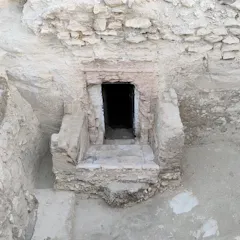
Due to its location at the foothills of the Theban mountain, the monuments in this necropolis are extremely vulnerable to flash flooding.
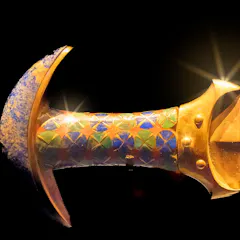
Women played a crucial role in all aspects of the development and endurance of the state, including some who ruled the country in their own right.
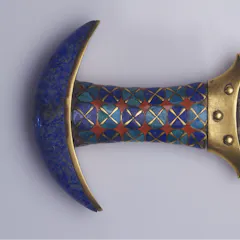
Ancient Egyptian princesses were buried with bows, arrows and daggers – and new research shows they weren’t just for decoration.
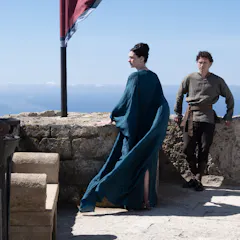
The Sea Peoples are widely blamed for the collapse of the interconnected world of the Bronze Age. But what’s the evidence say?

The exhibition is the product of the British Museum in Your Classroom programme where schools get access to the institution’s collection
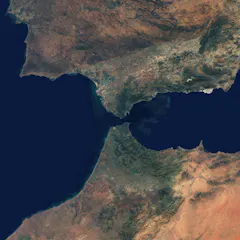
New research shows northwest African communities actively shaped connections and exchange between many cultures.
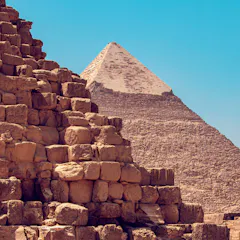
Key features of the famous monument defend it from earthquakes – but we can’t know if that’s what the builders had in mind.
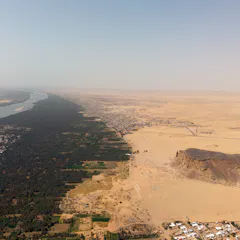
The ancient Kush city of Jebel Barkal rose up in the Nile River Valley starting around 2000 BCE. New research dug deep to learn more about what this landscape was like over the past 4,000 years.
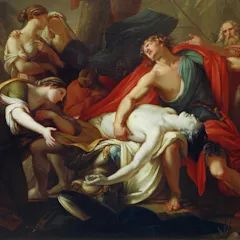
The fragment wasn’t placed besides the body, but stuffed inside it.

The circular mass graves were filled with the bones of people and animals, often carefully arranged around a key person at the centre.

Digital tools allow archaeologists to identify similarities between fragments and artifacts and potentially recover previously unknown parts of their stories.

The Sphinx sits right next to a pharaoh’s pyramid complex, which makes many historians think it was built to watch over his tomb.

The idea of ancient civilisations pioneering orthodontics is irresistible, but archaeology shows their gold dental work served very different purposes.

Pharaohs may have used this vessel to hunt hippopotami.

The new series attempts to chart the fall of four major empires but doesn’t always get it right.
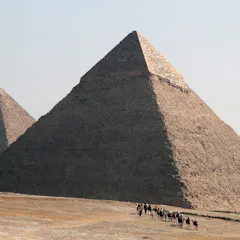
Anyone who tried to rob a tomb was taking a big risk because both the ancient police and the law were ready to punish them.
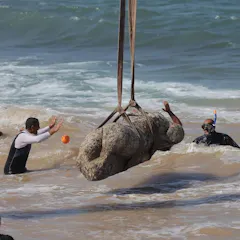
Statues continue to emerge, offering clues as to the physical appearance of the ancient city.

A new study argues that the pharaoh’s statues weren’t destroyed out of revenge, but were ‘ritually deactivated’ because of the power they contained.
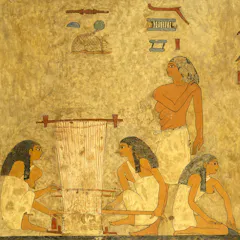
Evidence of textile workshops demonstrates that girls’ labour was valued enough to be documented in administrative records alongside adult workers.
Top contributors
-

PhD Candidate, Anthropology and Archaeology, University of Bristol
-
Associate Professor in Archaeology and Heritage, Adelaide University
-
Lecturer, Classics, University of Glasgow
-
Assistant Professor, University of Missouri-St. Louis
-
PhD Candidate in Egyptology, University of Toronto
-
Research Fellow in Ancient History, Macquarie University
-
Honorary Research Associate, Department of Classics and Ancient History, University of Sydney
-
Senior Lecturer in Egyptology, University of Manchester
-
Honorary Research Fellow in Archaeology, The University of Queensland
-
Senior Lecturer in the Department of Chemistry and Forensics, Nottingham Trent University
-
Chair in the History of Visual Culture, Durham University
-
Experimental Officer and Geophysical Researcher, University of Southampton
-
PhD Candidate in Classical Studies, The Open University
-
Professeur d'histoire ancienne, Université de Lorraine
-
Docteur en Egyptologie, Université Paul Valéry – Montpellier III