
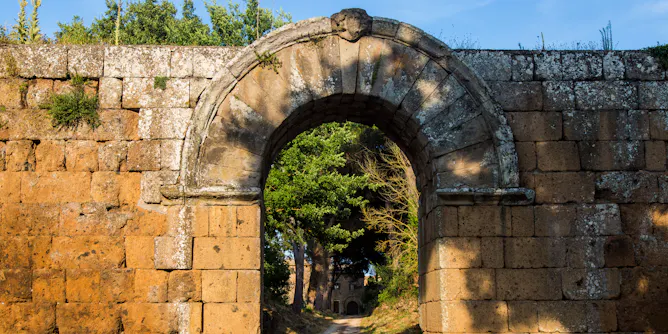
New technology mapped the buried ancient Roman site of Falerii Novi. Now archaeologists have started targeted excavation and soil testing to reveal details of life from more than 2,000 years ago.
Articles on Archaeology
Displaying 321 - 340 of 657 articles

We have found 140 quarry sites, where rock was excavated to make seed grinding stones, in the Channel Country of Central Australia. It’s part of a major project testing Bruce Pascoe’s hypothesis.

Plus, what the study of 700-year old garbage is revealing about who lived in Islamic Andalusia. Listen to episode 20 of The Conversation Weekly.

Desertification and climate change are threatening ancient sites in the Sahara.
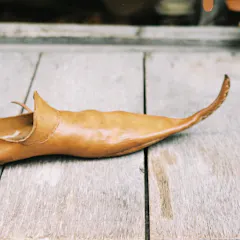
The English paid a high price for medieval fashion: in bunions and broken bones.

The Su-re site has provided a historical connection between local Tibetans in the highlands with Nepali Sherpas in the Himalayan lowlands.

The study yields the first direct chemical evidence for honeybee product exploitation in West Africa.
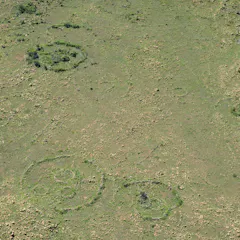
We now know that Bokoni Phase I was built as early as the 15th century – before the arrival of European colonisation or trade.
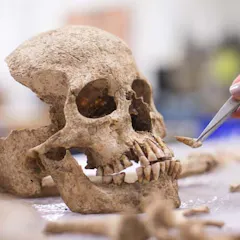
The government plans to cut university subsidy for teaching archaeology by 50%, yet it’s never been more relevant to society.

Are the descriptions of war passed down by ancient historians accurate? A site in Sicily provided a rare chance to fact-check stories told about two battles from more than 2,400 years ago.
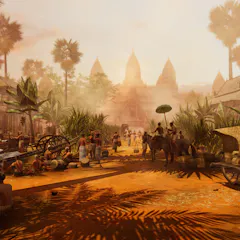
Combining archaeological evidence, aerial scans and machine learning algorithms, researchers modeled how this medieval city grew over time.
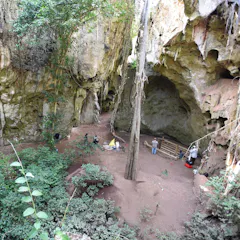
A small child buried almost 80,000 years ago in a cave in Kenya shows how ancient humans treated the dead.

Combining evidence from archaeology, geochronology and paleoenvironmental science, researchers identified how ancient humans by Lake Malawi were the first to substantially modify their environment.
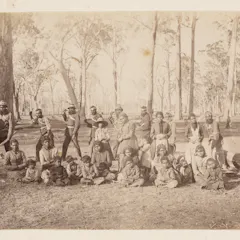
It was the site of historic gatherings, such as a four-day initiation ceremony for young men. Then colonial authorities quashed such practices. The place was lost for more than a century, until now.
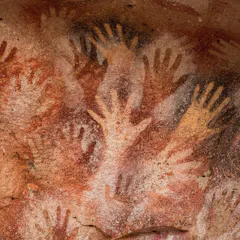
It’s possible that low oxygen levels in caves produced hallucinations – but that doesn’t explain the majority of prehistoric art.
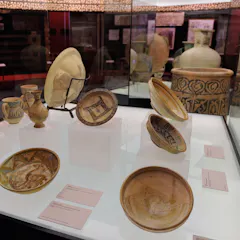
Practicing Islam was banned in Spain after the Catholic conquest but recent discoveries prove that Muslims continued eating traditions in secret.
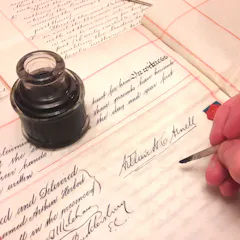
We studied hundreds of British legal documents and found most were made from sheepskin, which is harder to tamper with than other animal skins.
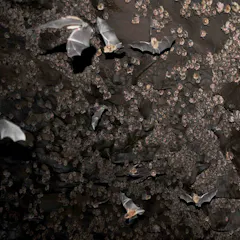
Laboratory experiments with bat poo reveal how archaeological materials in tropical caves have been chemically altered over the millennia.

Stone-walled structures such as Driefontein often store information that’s not written down and are the only remaining resources to help understand local histories.

Research into the bodies of victims of the Vesuvius eruption show how pyroclastic flows affect the human body.
Top contributors
-

PhD Candidate, Anthropology and Archaeology, University of Bristol
-
Associate Professor of Archaeology, Griffith University
-
Director, ARC Centre of Excellence for Transforming Human Origins Research, Griffith University
-
Professor in Geochronology and Geochemistry, Southern Cross University
-
Associate Professor and Director, Flinders Microarchaeology Laboratory, Flinders University
-
Professor of Archaeology and Biological Anthropology, School of Social Science, The University of Queensland
-
Professor of Environmental and Geographical Sciences, Bournemouth University; University of Reading
-
Professor of Archaeology, Griffith University
-
Curator of Human Evolution of the Cleveland Museum of Natural History and Research Assistant Professor of Anthropology, Stony Brook University (The State University of New York)
-
Associate professor, University of Johannesburg
-
Associate Professor in Archaeology and Space Studies, Flinders University
-
Honorary Associate Professor, UNSW
-
Research Associate, African Centre for Coastal Palaeoscience, Nelson Mandela University
-
Head, Public Engagement, Chau Chak Wing Museum, University of Sydney
-
Associate Professor of Anthropology, Rice University