
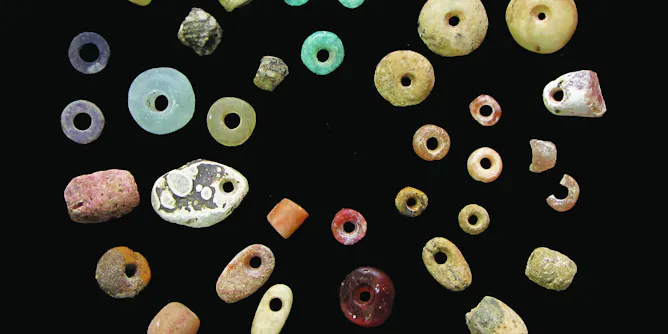
Mineralogical analysis of 5,000-year-old stone beads from Turkana, Kenya suggest a novel mortuary tradition by early pastoralists.
Articles on Archaeology
Displaying 201 - 220 of 657 articles
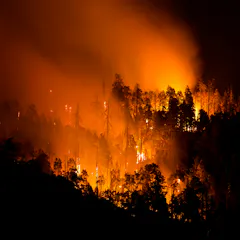
A changing climate, humans and fire were a deadly combination for the big animals that used to roam southern California. Listen to The Conversation Weekly podcast.
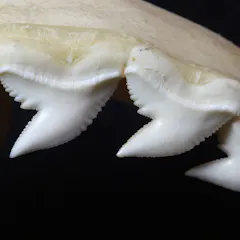
Archaeologists have discovered two 7,000-year-old tiger shark teeth that were once part of ritual or fighting blades on the Indonesian island of Sulawesi.

Archaeological data alone can’t always help to answer researchers’ questions: multiple lines of evidence are needed.
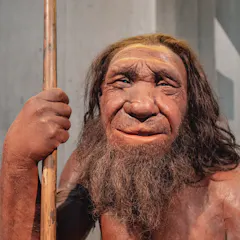
What could the extinction of Neanderthals tell us about our own species? An archaeologist explains in The Conversation Weekly podcast.
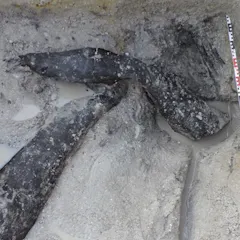
Experts speculated that very early humans worked wood, but previously didn’t have the evidence.
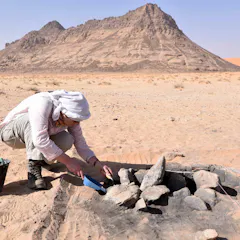
A close look at 7,000-year-old grinding stones left in ancient firepits shows wandering herders in northern Saudi Arabia carried heavy tools for working on bones, plants and rocks.
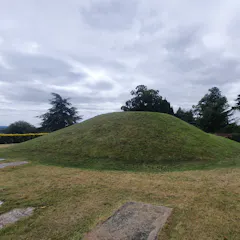
Skeletons found with items that don’t align with their estimated sex are usually excluded from research – but that assumes a 19th century view of gender.
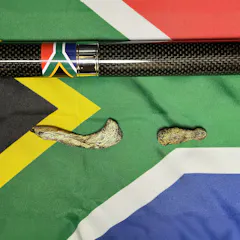
Experts insist there is no scientific reason for allowing these fossils to travel to space.

Maui officials have asked relatives to provide DNA samples to help identify victims of the Lahaina wildfires. Time and exposure to the elements, however, can make DNA retrieval from remains difficult.
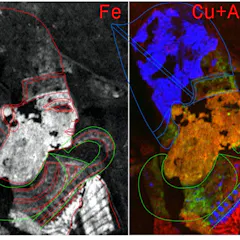
A technique called portable X-ray fluorescence has helped Egyptologists identify changes and adjustments to details of tomb decoration that are invisible to the human eye.
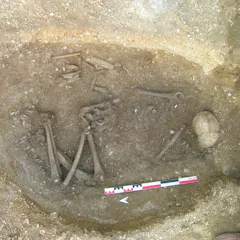
In the largest study of its kind, researchers have used DNA from a 6,700-year-old cemetery in France to reconstruct the lives of everyday Neolithic people.
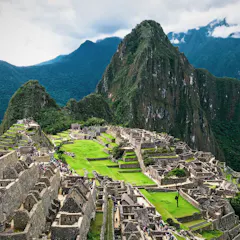
Machu Picchu is now an iconic tourist destination in Peru – but it was once a royal palace that pulled people from all corners of the Inca empire.
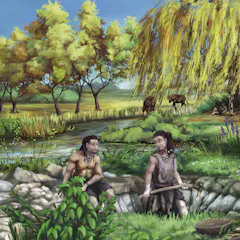
The pits are important for rethinking how we have previously considered life and society during the Mesolithic period.
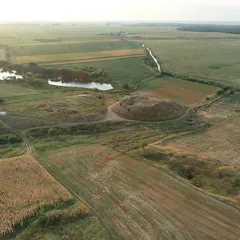
Ancient DNA from Ukraine uncovers the earliest evidence of the arrival of the ‘steppe ancestry’ – the last piece of the modern Western European genetic puzzle.
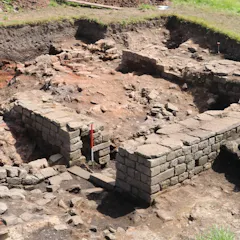
It might seem odd to rebury what’s been dug up but it’s to make sure what’s found is preserved for future research.

Despite opening to mixed reviews, the final instalment is a classic Indiana Jones caper that doesn’t disappoint.
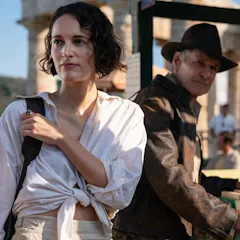
The final Indiana Jones movie is coming out June 30. The fifth in a series over 42 years, many of its ideas are taken from 19th-century orientalist and racist archaeology.
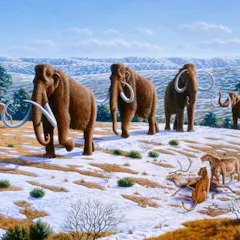
A forensic technique more often used at modern crime scenes identified blood residue from large extinct animals on spearpoints and stone tools used by people who lived in the Carolinas millennia ago.

New evidence from contested Laos cave site shows humans reached Southeast Asia at least 68,000 years ago.
Top contributors
-

PhD Candidate, Anthropology and Archaeology, University of Bristol
-
Associate Professor of Archaeology, Griffith University
-
Director, Australian Research Centre for Human Evolution, Griffith University
-
Professor in Geochronology and Geochemistry, Southern Cross University
-
Associate Professor and Director, Flinders Microarchaeology Laboratory, Flinders University
-
Professor of Archaeology and Biological Anthropology, School of Social Science, The University of Queensland
-
Professor of Environmental and Geographical Sciences, Bournemouth University; University of Reading
-
Professor of Archaeology, Griffith University
-
Curator of Human Evolution of the Cleveland Museum of Natural History and Research Assistant Professor of Anthropology, Stony Brook University (The State University of New York)
-
Associate professor, University of Johannesburg
-
Associate Professor in Archaeology and Space Studies, Flinders University
-
Honorary Associate Professor, UNSW
-
Research Associate, African Centre for Coastal Palaeoscience, Nelson Mandela University
-
Head, Public Engagement, Chau Chak Wing Museum, University of Sydney
-
Associate Professor of Anthropology, Rice University