
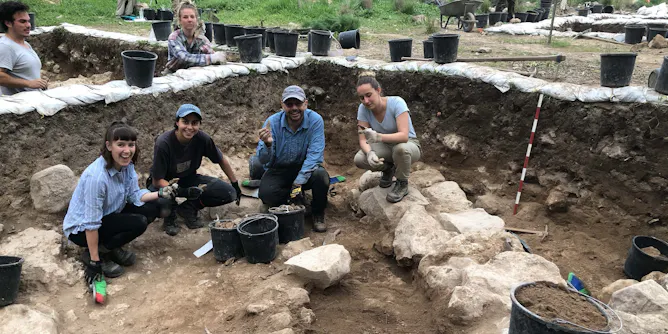
An archaeological dig is the holiday experience of a lifetime. And as you learn more skills, the rewards grow.
Articles on Archaeology
Displaying 301 - 320 of 657 articles
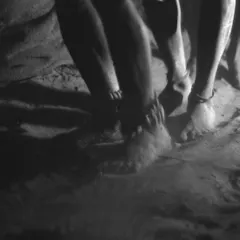
The moth cocoons are the first archaeological evidence of shamanic ritual paraphernalia in southern Africa.

Scientists can be asked to help find solutions during disasters. A study of how archaeologists worked on the problem of looting during the Syrian war offers lessons for science done during crisis.

This history covers twelve decades, from the surrender of Boer guerrillas in the Second Anglo-Boer War in 1902 to the July 2021 looting spree and violence.
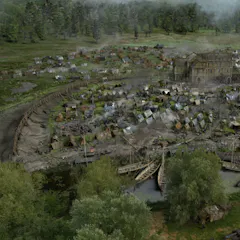
Viking camps across western Europe were carefully planned and organised venues, offering their occupants much more than just a place to safely rest their heads.
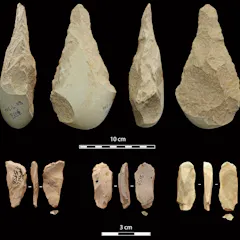
Knowing that our North African ancestors were making handaxes helps scientists to understand how our human ancestors spread across the African continent.
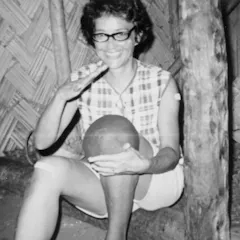
‘Wives’, volunteers, assistants: the vital contribution of women archaeologists has long been underplayed, if not erased. A new project uncovers trailblazers in the Pacific.
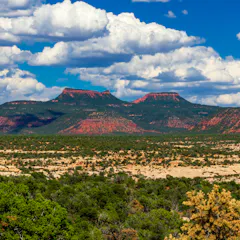
The Biden administration is restoring full protection to three national monuments that President Trump sought to cut down drastically.
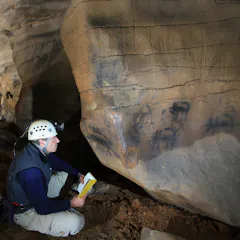
For thousands of years, Native Americans left their artistic mark deep within caves in the American Southeast. It wasn’t until 1980 that these ancient visual expressions were known to archaeologists.
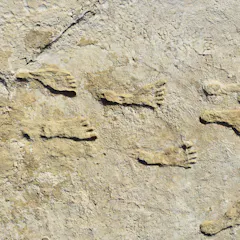
The New Mexico findings could rewrite the history of human migration to the Americas.

This article was based on research that has been retracted. See editor’s note.

With 300 stone artefacts submerged on Australia’s continental shelf last year, Indigenous underwater cultural heritage needs to be prioritised in marine science and industry practices.
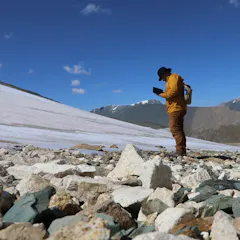
From the high Yukon to the mountains of Central Asia, melting ice exposes fragile ancient artifacts that tell the story of the past – and provide hints about how to respond to a changing climate.
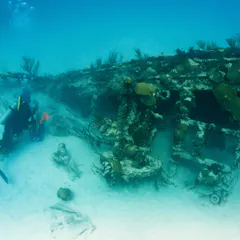
It’s difficult to tell a shipwreck from a natural feature on the ocean floor in a scan taken from a plane or ship. This project used deep learning to get it right 92% of the time.

Today, Homo sapiens regularly use psychoactive chemicals to modify the mind – but how did it all begin?
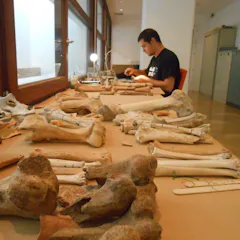
The presence of pig bones in a refuse dump from Islamic Iberia can tell you a lot about who was doing the eating back then.
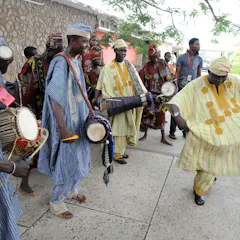
By providing insights from different disciplines, a new book uncovers new themes in the history of Yoruba people of West Africa
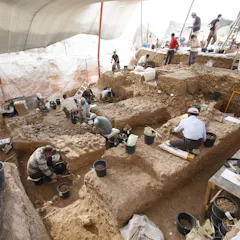
The 140,000-year-old skull fossils are leading to more questions than answers. Also found was the oldest intact campfire ever found in the open air.

Our research has also uncovered major long-term changes in ancient animal populations at Denisova Cave, and has provided the first direct evidence of Homo sapiens having lived there.
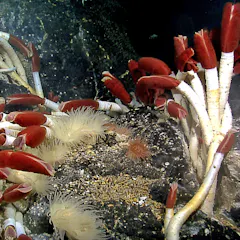
Oceanographer Robert D. Ballard, who is best known for finding the wreck of Titanic, has written a memoir recounting his biggest discoveries and calling for more ocean exploration.
Top contributors
-

PhD Candidate, Anthropology and Archaeology, University of Bristol
-
Associate Professor of Archaeology, Griffith University
-
Director, Australian Research Centre for Human Evolution, Griffith University
-
Professor in Geochronology and Geochemistry, Southern Cross University
-
Associate Professor and Director, Flinders Microarchaeology Laboratory, Flinders University
-
Professor of Archaeology and Biological Anthropology, School of Social Science, The University of Queensland
-
Professor of Environmental and Geographical Sciences, Bournemouth University; University of Reading
-
Professor of Archaeology, Griffith University
-
Curator of Human Evolution of the Cleveland Museum of Natural History and Research Assistant Professor of Anthropology, Stony Brook University (The State University of New York)
-
Associate professor, University of Johannesburg
-
Associate Professor in Archaeology and Space Studies, Flinders University
-
Honorary Associate Professor, UNSW
-
Research Associate, African Centre for Coastal Palaeoscience, Nelson Mandela University
-
Head, Public Engagement, Chau Chak Wing Museum, University of Sydney
-
Associate Professor of Anthropology, Rice University