
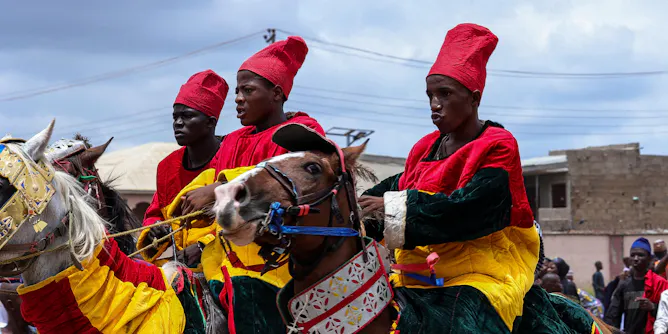
New research on Ilorin in Nigeria provides insights into regional socio-political developments prior to the 19th century.
Articles on Archaeology
Displaying 181 - 200 of 657 articles
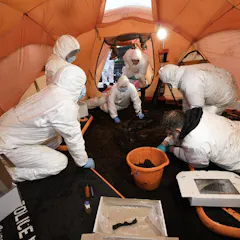
The bog does not neatly divide traces of the distant and recent past. Archaeology and forensic science still have much to learn from each other.
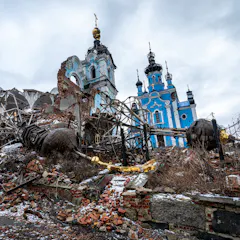
In addition to destroyed buildings, there’s an entire underground world – filled with untold numbers of artifacts, bones and ruins – that are exposed and damaged by the digging of trenches.

Out of Darkness attempts at historical accuracy are a welcome surprise, and what’s more, it is fun to watch.

After sifting through DNA from almost 10,000 people from ancient and pre-modern societies, we have discovered six cases of Down syndrome in past human populations.
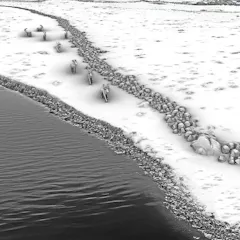
The find represents Europe’s largest human-made megastructure.
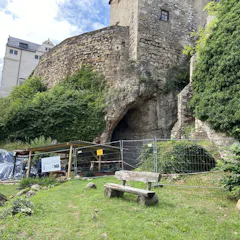
New discoveries of bone fragments at Ranis cave in Germany prove the early presence of cold-adapted Homo sapiens in northern Europe
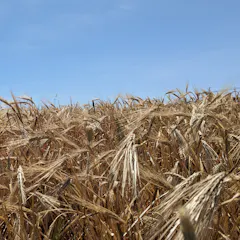
New research shows that Neolithic migrants from Spain brought agriculture to Northern Morocco over 7,500 years ago.
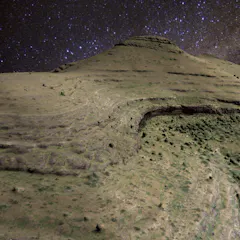
One criticism of current 3D models of archaeological sites is that they are presented devoid of human traces and history.

More discoveries are being made with the use of technology, but that’s just the start of the investigation.
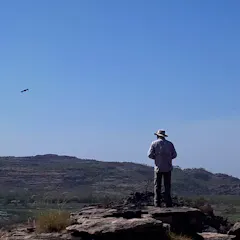
Rock art directly represents how our ancestors saw the world. A new approach involving the history of the landscape brings fresh meaning to Arnhem Land rock art.
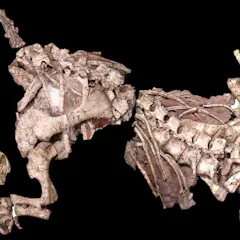
Some time between 1100 and 1700 AD, a Massospondylus bone was discovered and carried to a rock shelter in Lesotho.

A team of archaeologists discovered the remains of the 16th-century father of modern astronomy, who demonstrated that the Earth orbits the Sun.

Our new study reveals a mosaic of habitable landscapes – now submerged by the ocean – once supported up to 500,000 people living in Australia’s northwest.
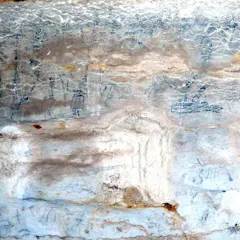
Rock art from a Malagasy cave hints at some remarkable cultural connections.

Historians know a fair bit about Herod the Great, the king of Judea at the time of Jesus’ birth.
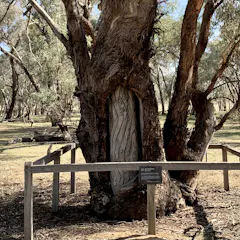
A new study unlocks the mysteries of ancient burial marker trees made by Wiradjuri people in southeastern Australia.
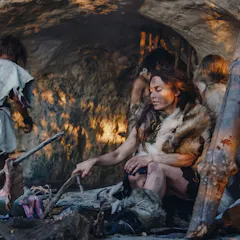
Female bodies have an advantage in endurance ability that means Paleolithic women likely hunted game, not just gathered plants. The story is written in living and ancient human bodies.
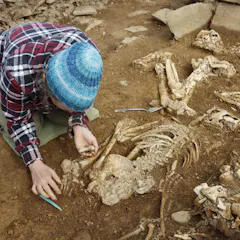
It is unusual to find a tomb so intact and so well preserved.

For a decade, debate has raged over Dark Emu’s account of Aboriginal agriculture. But ancient food production in Australia is more complex than labels like farming or hunter-gathering suggest.
Top contributors
-

PhD Candidate, Anthropology and Archaeology, University of Bristol
-
Associate Professor of Archaeology, Griffith University
-
Director, Australian Research Centre for Human Evolution, Griffith University
-
Professor in Geochronology and Geochemistry, Southern Cross University
-
Associate Professor and Director, Flinders Microarchaeology Laboratory, Flinders University
-
Professor of Archaeology and Biological Anthropology, School of Social Science, The University of Queensland
-
Professor of Environmental and Geographical Sciences, Bournemouth University; University of Reading
-
Professor of Archaeology, Griffith University
-
Curator of Human Evolution of the Cleveland Museum of Natural History and Research Assistant Professor of Anthropology, Stony Brook University (The State University of New York)
-
Associate professor, University of Johannesburg
-
Associate Professor in Archaeology and Space Studies, Flinders University
-
Honorary Associate Professor, UNSW
-
Research Associate, African Centre for Coastal Palaeoscience, Nelson Mandela University
-
Head, Public Engagement, Chau Chak Wing Museum, University of Sydney
-
Associate Professor of Anthropology, Rice University