
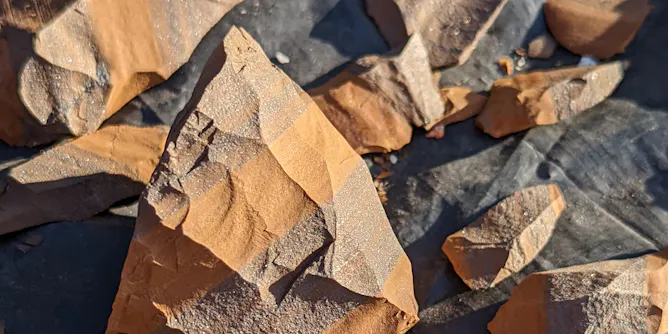
With a little guidance and a lot of practice, even you can make stone tools the way our oldest ancestors did – and learn to recognize the signs of a deliberately made tool.
Articles on Archaeology
Displaying 101 - 120 of 657 articles

New research presents evidence of a wet forest environment 150,000 years ago in Côte d'Ivoire.

Researchers reexamining fossils identified telltale marks made by human ancestors cutting meat from bones. The discovery pushes back the date hominins started living in Europe by 200,000 years.

The artefacts in focus are a set of four clay trays, plain in design and apparently quite utilitarian.
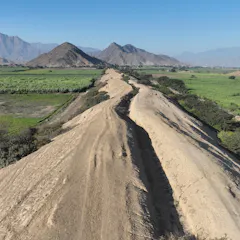
Ancient practices hold important lessons for farmers facing drying lands, but they were often more complex than modern societies realize. Glacier loss adds to the challenge today.
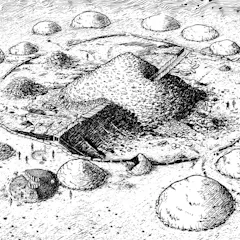
New analysis challenges the idea that only elites were buried in passage tombs.
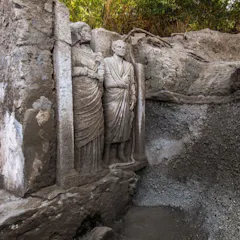
This woman might have been a priestess of the goddess Ceres.
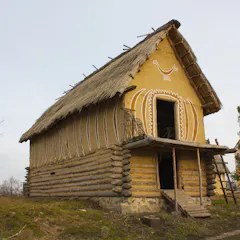
Anthropologist Alex Bentley tells The Conversation Weekly about his research how modelling the spread of COVID sparked new research on the spread of disease in early civilisations.
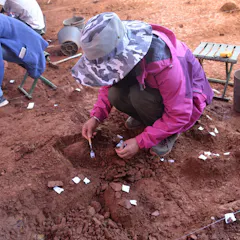
Discovery in China of tools called Quina scrapers suggests the people of East Asia were as inventive and flexible with technology during the Middle Paleolithic era as those in other parts of the world.

The Maghreb has long been absent from studies on the recent prehistory of the Mediterranean. The new findings change that.
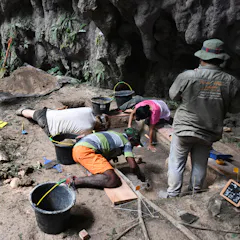
Archaeologists show some of the first people to settle the ancient continent of Sahul arrived on the shores of present-day West Papua, some 50,000 years ago.
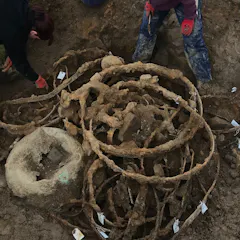
Among the over 800 Iron Age metal artefacts are finds that prove Iron Age Brits had conact with Europe.
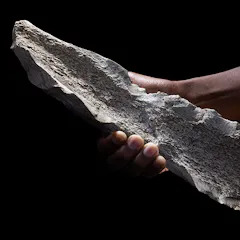
By 1.5 million years ago, Homo erectus was able to transfer tool-making skills from stone to bone.

Research that combined archaeology, history and ecology provides a nuanced understanding of the past that could help conservationists better plan for the future.
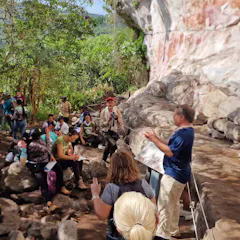
Local community archaeology tourism benefits the heritage, the people and the rainforest.
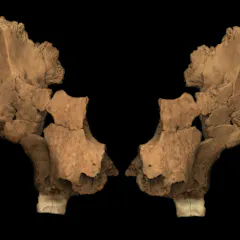
The bone fragments belong to an extinct species of human who lived 1.4 million years ago.

A fossil face reveals that a prehistoric human species reached Western Europe much earlier than anybody thought.
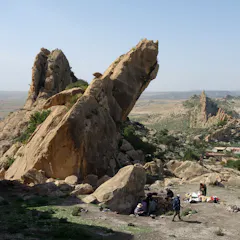
These findings challenge the long-held narrative about migration into and out of North Africa before and during the Neolithic.
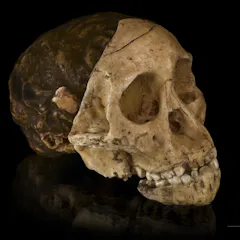
Historian Christa Kuljian and paleoanthropologist Dipuo Kgotleng talk to The Conversation Weekly podcast about the complicated legacy of the Taung child skull, 100 years since its discovery.

A rare sequence of heating and cooling triggered the chain of chemical reactions that turn organic material into glass.
Top contributors
-

PhD Candidate, Anthropology and Archaeology, University of Bristol
-
Associate Professor of Archaeology, Griffith University
-
Director, Australian Research Centre for Human Evolution, Griffith University
-
Professor in Geochronology and Geochemistry, Southern Cross University
-
Associate Professor and Director, Flinders Microarchaeology Laboratory, Flinders University
-
Professor of Archaeology and Biological Anthropology, School of Social Science, The University of Queensland
-
Professor of Environmental and Geographical Sciences, Bournemouth University; University of Reading
-
Professor of Archaeology, Griffith University
-
Curator of Human Evolution of the Cleveland Museum of Natural History and Research Assistant Professor of Anthropology, Stony Brook University (The State University of New York)
-
Associate professor, University of Johannesburg
-
Associate Professor in Archaeology and Space Studies, Flinders University
-
Honorary Associate Professor, UNSW
-
Research Associate, African Centre for Coastal Palaeoscience, Nelson Mandela University
-
Head, Public Engagement, Chau Chak Wing Museum, University of Sydney
-
Associate Professor of Anthropology, Rice University