
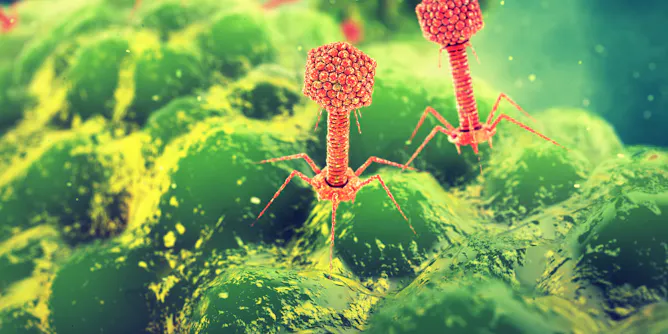
The viruses that kill bacteria may be our best bet against antibiotic resistance – if we can understand how they win.
Articles on Antibiotics
Displaying 21 - 40 of 303 articles

A cold will make your snot thicker and it may change colour.

US beef will soon be back on Australian menus. But how does it compare with home-grown beef? Three experts explain.

Antibiotic resistance has played a key role in the evolution and survival of bacteria.
Scientists have described antimicrobial resistance as an overlooked pandemic. Improving surveillance can help prevent deadly outbreaks.

The researchers theorise the protective effects of these drugs could be because they reduce inflammation, control infections and improve overall brain health.

Antimicrobial resistance is yet another catastrophic legacy of war, threatening human health and security for generations to come.

Worldwide, nearly five million people die from antimicrobial resistant infections each year.

Since the 1980s very few antibiotics have been approved. One of the reasons is that there is not enough investment in the sector.
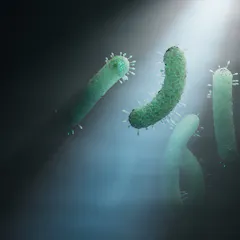
By analyzing the resistance genes and proteins of E. coli, researchers can optimize treatments to address both current and future antimicrobial resistance.

Resistance to antimicrobial drugs is a major global health challenge, so dealing with neglected tropical diseases is vital.

World leaders, civil society and global health researchers will convene at the United Nations General Assembly for arguably the most important meeting on antimicrobial resistance (AMR) this decade.
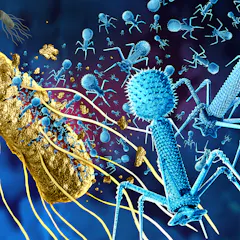
Viruses known as ‘phages’ might become an essential tool, as antibiotic-resistant bacteria threaten conventional remedies.
A new antibiotic attacks bacteria on two fronts, making it difficult for them to evolve resistance.

Some of the infections are showing an increased resistance to antibiotics.

There are more antibiotics being developed today than there were a few years ago, but the antibiotic-resistance problem remains critical.

There are many ways to kill microbes that cause dangerous infections. Combining genetic screening with machine learning can help researchers identify new antimicrobials.
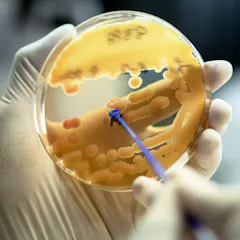
Some strains of this opportunistic pathogen are also increasingly becoming resistant to the drugs designed to treat them.

Older people and Aboriginal and Torres Strait Islander people are at much greater risk of hospitalisation from UTI. Prompt medical care is important.

With the alarming rise in syphilis cases in recent years, it’s important to know what it is, how it’s spread and who is most at risk.
Top contributors
-

Senior Research Fellow, School of Medicine, The University of Western Australia
-
Professor of Infectious Diseases and Microbiology, Australian National University
-
Professor, The University of Queensland
-
Prof. Institute for Molecular Bioscience, The University of Queensland
-
Professor of Infectious Diseases, Monash University
-
Dean of the College of Science, Professor of Biochemistry, Rochester Institute of Technology
-
Senior Lecturer in Microbiology, Aston University
-
Professor of Biochemistry and Biomedical Sciences, McMaster University
-
Professor of Public Health, Bond University
-
Professor of Public Health, Newcastle University
-
Professor of Molecular Evolution, Macquarie University
-
Professor of Infectious Diseases, University of Cape Town
-
Professor at ANU Medical School; Senior Staff Specialist Infectious Diseases; General Physician, Australian National University
-
Director Of Medicine, The Maitland and Kurri Kurri Hospital, University of Newcastle
-
Assistant Professor, Johns Hopkins University