
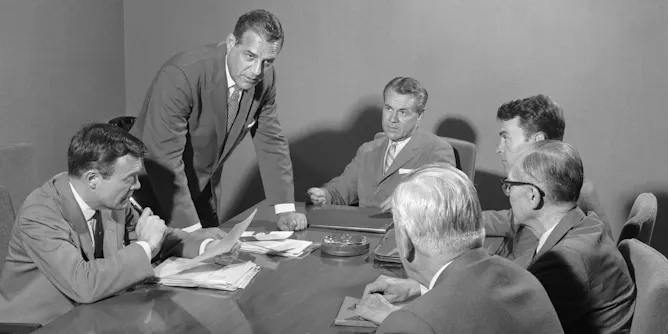
Recognizing the influence of evolution on behavior and gender norms suggests ways to reduce gender inequality in leadership in the real world.
Articles on Anthropology
Displaying 121 - 140 of 272 articles

The Zapotec people of southern Mexico have always relied on each other to solve problems when the government can’t, or won’t, help. That’s proving to be a pretty effective pandemic response.

Listening more deeply to what makes sounds meaningful for people within their respective contexts matters in an era of rising expressions of racism in the pandemic.
The stories people tell about welfare rarely match up with the stories told by people actually receiving aid.

Feel like time has come to a standstill? The coronavirus crisis has prompted us to be more creative with our relations to time.

Thinking of SARS-CoV-2 as an invisible enemy with an evil personality and humanlike motivations is a natural offshoot of the way people evolved to anthropomorphize so as not to overlook threats.
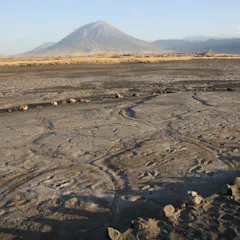
The footprints of over 20 different prehistoric people, pressed into volcanic ash thousands of years ago in Tanzania, show possible evidence for sexual division of labor in this ancient community.
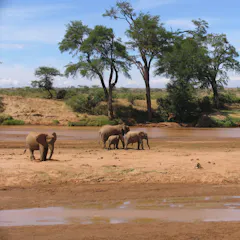
Elephants don’t have the enzyme that allows humans to metabolize alcohol. This means that anecdotes about elephants getting drunk from rotten fruit may very well be true.

History shows that behavioural factors play a major role in slowing and stopping disease spread.
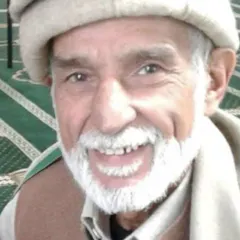
Haji-Daoud Nabi was a lifelong friend, who helped inspire my research in Afghanistan on how violent events shape people’s sense of community. I never thought my work would one day apply at home in NZ.

DNA evidence from the Himba society in Namibia overturns ideas about genetic paternity, and about what it means to be a father.
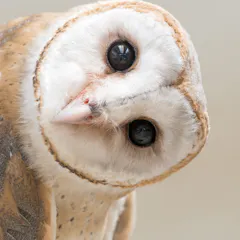
The natural world is full of intriguing clues.
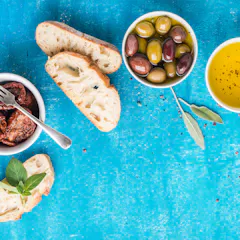
Olive oil, grapes and fish. There’s a lot to love about the Mediterranean diet but focusing on it might be a way to exclude other healthy and global diets.

Charred plant remains from one of the oldest archaeological sites reveal that the first Australians ate a varied - and sometimes labour-intensive - diet.
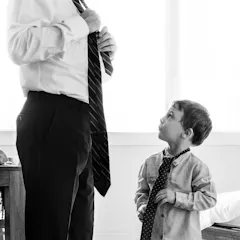
A quirk of psychology that affects the way people learn from others may have helped unlock the complicated technologies and rituals that human culture hinges on.
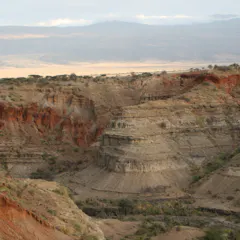
20 years ago, who could predict how much more researchers would know today about the human past – let alone what they could learn from a thimble of dirt, a scrape of dental plaque, or satellites in space.

Fighting off infection comes with predictable psychological and behavioral features. Now researchers suggest an emotion coordinates this response to help you get better. They call it ‘lassitude.’
Art, outreach and fieldwork can help reframe Britain’s imperial past, by re-humanising the people subjected to anthropological ‘colonial science’.
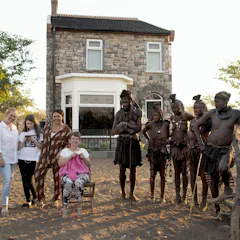
Critics who called the show featuring Scarlett Moffatt ‘racist’ need to look at their own prejudices.

When the University of Cape Town discovered skeletons in its archive that had been unethically obtained and used, they set about restoring justice to the bones and the community they came from.
Top contributors
-

Honorary Associate Professor, UNSW
-
Associate Research Professor of Anthropology, University of Colorado Denver
-
Associate Professor of Anthropology, Rice University
-
Curator of Human Evolution of the Cleveland Museum of Natural History and Research Assistant Professor of Anthropology, Stony Brook University (The State University of New York)
-
Professor of Anthropology, UCL
-
Research Fellow in Biological Anthropology, Monash University
-
Lecturer in Social Anthropology, University of Birmingham; Independent Social Research Foundation
-
Assistant Professor of Biological Sciences, Vanderbilt University
-
Associate Professor of Anthropology, Binghamton University, State University of New York
-
Professor of Earth System Science, UCL
-
Emeritus Professor, Department of Archaeology, Classics and History, University of New England
-
Professor of Anthropology, UCL
-
Assistant Professor of Arab Crossroads Studies and Anthropology , NYU Abu Dhabi, chercheuse associée LESC, Université Paris Nanterre
-
Professor of Anthropology, University of South Florida
-
Honorary Professor, University of Queensland