
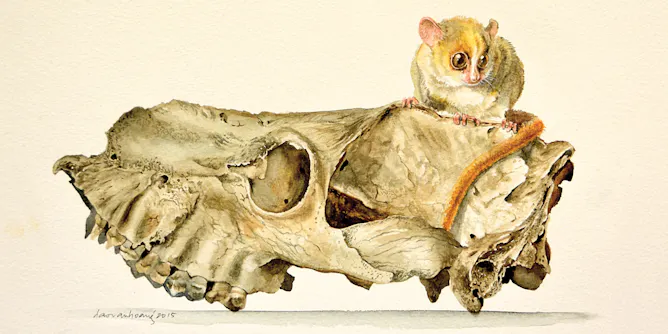
A series of new studies sheds light on the population crash and extinction of the giant birds, lemurs and more that roamed the island until around A.D. 700-1000.
Articles on Anthropology
Displaying 161 - 180 of 272 articles

God only started watching over us quite recently, according to a new study that analysed 414 societies from 30 world regions.

Ancient DNA allows scientists to learn directly from the remains of people from the past. As this new field takes off, researchers are figuring out how to ethically work with ancient samples and each other.
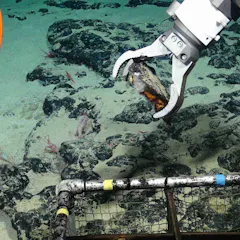
Deep sea mining could supply valuable rare minerals to green technology, but one project in the south-west Pacific is invoking the wrath of local spirits.

Philip Pullman can help us understand what smartphones are doing to people – here’s how.

We need a more nuanced approach to the world’s last isolated peoples.
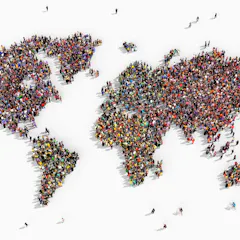
Ninety percent of psychology studies come from countries representing less than 15 percent of the world’s population. Researchers are realizing that universalizing those findings might not make sense.
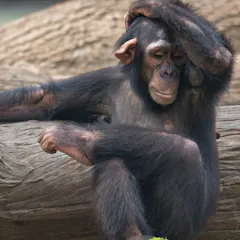
An Ig Nobel Prize-winning study suggests we need to rethink why imitation evolved.
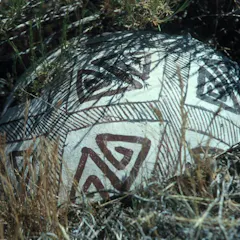
Only a small fraction of the data from archaeological fieldwork is made accessible to the public or preserved for future research.

Big data is all the rage in management circles and beyond, yet little is said about the understanding needed with such voluminous data. An important lesson can be learned from ethnographic research.
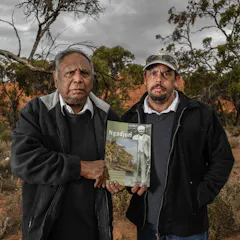
In the 1940s, the last initiated Ngadjuri man, Barney Waria, gave a series of interviews to anthropologist Ronald Berndt. Almost 80 years later, Waria’s grandson wants to share this material with his family.

Koro is widely believed to be a culturally localised delusion. But a theory that it’s a fight-or-flight reflex might be corroborated by studying traditional healing treatments in Indonesia.
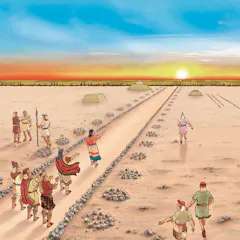
How did civilization emerge from small groups of hunter-gatherers? Some archaeologists focus on cooperation as the vital ingredient – and find evidence for it in the form of feast-related artifacts.

Linguistic clues show how people around the world first developed mathematical thought.

Using AI to search for ET might help us find things we couldn’t even imagine we should look for, but to succeed we also have think critically about how we create and use that technology.

Why was one gene mutation that affects hair, teeth, sweat glands and breasts ubiquitous among ice age Arctic people? New research points to the advantage it provided for ancestors of Native Americans.
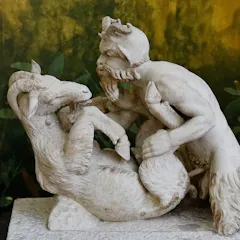
The vast discrepancy between abhorrence of bestiality and acceptance of slaughtering on animals suggests that thinking imaginatively about animal orgasm may help us to be more compassionate toward animals.
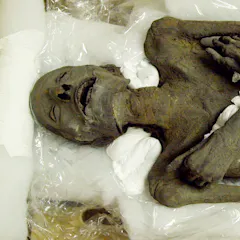
Are DNA samples today’s version of the human skeletons that hung in 20th-century natural history museums? They can provide genetic revelations about our species’ history – but at an ethical price.

Understanding the past requires knowledge that goes beyond modern science.

Insights and approaches drawn from anthropology could be a useful part of the toolkit for a cop trying to catch a killer.
Top contributors
-

Honorary Associate Professor, UNSW
-
Associate Research Professor of Anthropology, University of Colorado Denver
-
Associate Professor of Anthropology, Rice University
-
Curator of Human Evolution of the Cleveland Museum of Natural History and Research Assistant Professor of Anthropology, Stony Brook University (The State University of New York)
-
Professor of Anthropology, UCL
-
Research Fellow in Biological Anthropology, Monash University
-
Lecturer in Social Anthropology, University of Birmingham; Independent Social Research Foundation
-
Assistant Professor of Biological Sciences, Vanderbilt University
-
Associate Professor of Anthropology, Binghamton University, State University of New York
-
Professor of Earth System Science, UCL
-
Emeritus Professor, Department of Archaeology, Classics and History, University of New England
-
Professor of Anthropology, UCL
-
Assistant Professor of Arab Crossroads Studies and Anthropology , NYU Abu Dhabi, chercheuse associée LESC, Université Paris Nanterre
-
Professor of Anthropology, University of South Florida
-
Honorary Professor, University of Queensland