

As material objects, diaries give scholars an intimate look into their subjects’ lives, including handwriting and mementos. What if diaries in the future are nothing but insubstantial digital ghosts?
Articles on Anthropology
Displaying 81 - 100 of 272 articles
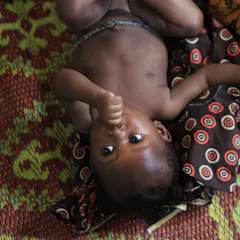
The fundamental issue at stake in abortion debates is personhood, which is viewed differently around the world, an anthropologist writes.

The DIALOG network forms a bridge between scientific and Indigenous knowledge. It renews the relationship between the university and the Indigenous world, which has for too long been one-sided.

Perhaps what is most interesting about #Swedengate is not what it tells us about Sweden, but what it tells us about ourselves.

Traditional ecological knowledge, or TEK, can encompass science, medicine, ecology, religion and culture – and help protect the environment.
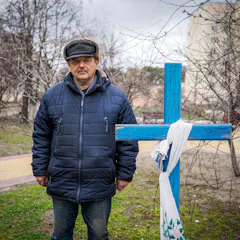
Ukrainian families’ anguish at not being able to bury their loved ones underscores a deep human need, an anthropologist writes.
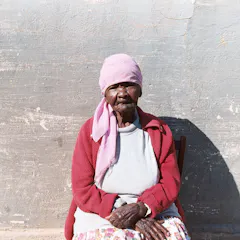
The South African Khoe-San communities are no strangers to exploitative research. One research team is trying to provide genetic ancestry results to community members. But they still face many challenges.

The Ukrainian crisis is probably the biggest crowdsourced humanitarian aid operation ever undertaken.
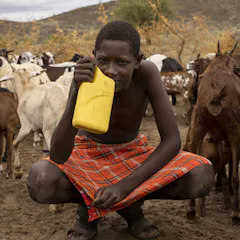
Uncertainty must be embraced and harnessed for the better because stability never lasts long.
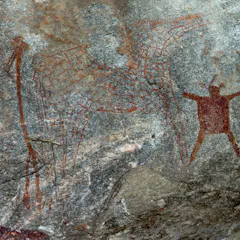
A new study doubles the age of ancient DNA in sub-Saharan Africa, revealing how people moved, mingled and had children together over the last 50,000 years.
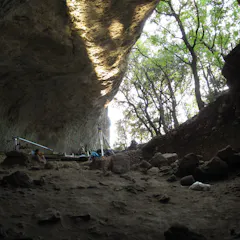
Stone artifacts and a fossil tooth point to Homo sapiens living at Grotte Mandrin 54,000 years ago, at a time when Neanderthals were still living in Europe.

How Rekambo chimpanzees demonstrate a number of ground breaking behaviours never seen before in animals.

If you ever feel like you can’t stop eating sugar, you are responding precisely as programmed by natural selection. What was once an evolutionary advantage has a different effect today.

Gift-giving might seem needlessly cumbersome and stressful. But the costs and benefits of the custom aren’t what they seem.

A new study finds more than one early human species lived on the landscape in Northern Tanzania 3.66 million years ago. But there are reasons to be cautious about the findings.

It’s about developing a community of practice: people who can work alongside scientists, taking science out of the laboratory and into the field.

Laws and rituals surrounding disease have been part of everyday life for millennia. Here’s why that’s important.
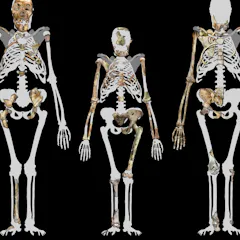
Walking has taken a very long time to develop, with evidence of bipedalism among early humans in Africa roughly 4.4 million years ago.
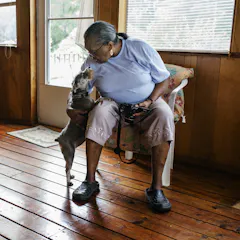
Human beings evolved to nurture – and that drive can extend to children who aren’t your own and even to members of other species.
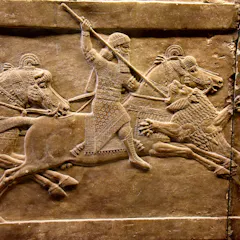
Did ancient technological advancements drive social innovation, or vice versa? Studying cause and effect in the ancient world may seem like a fool’s errand, but researchers built a database to do just that.
Top contributors
-

Honorary Associate Professor, UNSW
-
Associate Research Professor of Anthropology, University of Colorado Denver
-
Associate Professor of Anthropology, Rice University
-
Curator of Human Evolution of the Cleveland Museum of Natural History and Research Assistant Professor of Anthropology, Stony Brook University (The State University of New York)
-
Professor of Anthropology, UCL
-
Research Fellow in Biological Anthropology, Monash University
-
Lecturer in Social Anthropology, University of Birmingham; Independent Social Research Foundation
-
Assistant Professor of Biological Sciences, Vanderbilt University
-
Associate Professor of Anthropology, Binghamton University, State University of New York
-
Professor of Earth System Science, UCL
-
Emeritus Professor, Department of Archaeology, Classics and History, University of New England
-
Professor of Anthropology, UCL
-
Assistant Professor of Arab Crossroads Studies and Anthropology , NYU Abu Dhabi, chercheuse associée LESC, Université Paris Nanterre
-
Professor of Anthropology, University of South Florida
-
Honorary Professor, University of Queensland