
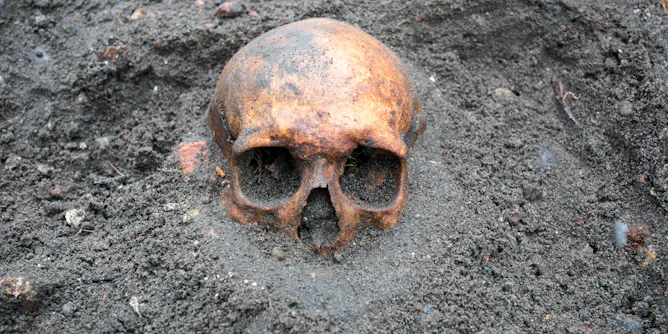
Scientific advances are allowing forensic archaeologists to shed light on mysteries long thought unsolvable.
Articles on Anthropology
Displaying 141 - 160 of 272 articles
Struggling with menopause symptoms? New research shows that who you live with may be partially to blame.

An anthropologist works in American Samoa, taking advantage of the island’s longstanding tattoo culture to tease out the effects tattoos have on the body’s immune function.

In just five Florida Panhandle counties, sea level rise could swamp more than 500 archaeological sites that tell the story of when and how Native Americans lived along the Gulf Coast.

Hundreds of archaeologists provided on-the-ground data from across the globe, providing a new view of the long and varied history of people transforming Earth’s environment.

Privacy starts with the body and extends to digital data. There are few rules governing what companies can do – yet people can’t effectively protect their own privacy.

A study of Batek hunter-gatherers from Malaysia shows how laughter can shape our ethical values.

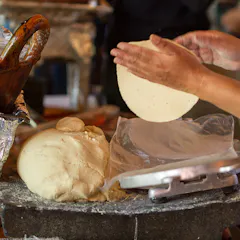
As Kashmir faces new challenges, our forms of allyship must also evolve. Perhaps we can learn some lessons from its kitchens.
A new IPCC report has called for radical changes in food production to avoid catastrophic climate change. Rice-fish farming and mixed crops could help.
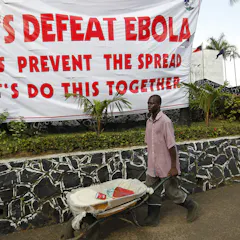
A proper understanding of community dynamics and local beliefs can inform medical interventions that are capable of establishing positive and productive relations with local communities.
Being part of a gang may increase the chance of dying young, but when gang members leave their old lives behind, they can find that their street smarts come in handy.
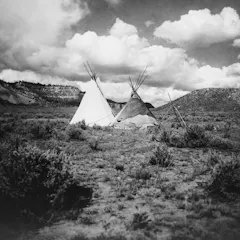
An anthropologist who’s researched the dispossession of Native Americans and their enduring connections to ancestral places sees the value in asking ‘whose land are you on?’

Far from being a technical, commercial instrument, money can be a social and political construct that has immense radical potential.
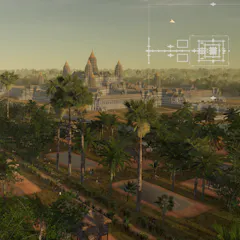
Many tourists hold an outdated romanticized image of an abandoned temple emerging from the jungle. But research around Angkor Wat suggests its collapse might be better described as a transformation.
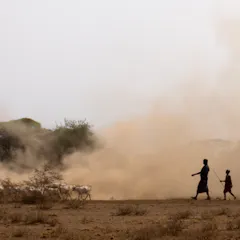
Pastoralism is a central part of many Africans’ identity. But how and when did this way of life get started on the continent? Ancient DNA can reveal how herding populations spread.
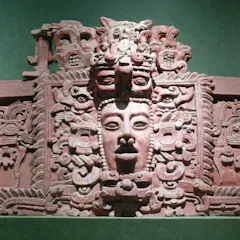
Many people think climate change caused Classic Maya civilization to collapse abruptly around 900 A.D. An archaeologist says that view is too simplistic and misses the bigger point.

Research suggests that parents and babies communicate in remarkably similar ways despite striking variation in cultural practices.

Hidden forces are always at work in the world, and people always want to control them, a cognitive anthropologist explains. Enter the human universal of shamanism.

Human civilisation is threatened by long-dead organisms, whether as White Walkers or petrol.

Imaginaries of gangs as inherent forms of brutal anarchy promote particular political agendas and obscure the ways gangs can reveal the underlying dynamics of the contexts within which they emerge.
Top contributors
-

Honorary Associate Professor, UNSW
-
Associate Research Professor of Anthropology, University of Colorado Denver
-
Associate Professor of Anthropology, Rice University
-
Curator of Human Evolution of the Cleveland Museum of Natural History and Research Assistant Professor of Anthropology, Stony Brook University (The State University of New York)
-
Professor of Anthropology, UCL
-
Research Fellow in Biological Anthropology, Monash University
-
Lecturer in Social Anthropology, University of Birmingham; Independent Social Research Foundation
-
Assistant Professor of Biological Sciences, Vanderbilt University
-
Associate Professor of Anthropology, Binghamton University, State University of New York
-
Professor of Earth System Science, UCL
-
Emeritus Professor, Department of Archaeology, Classics and History, University of New England
-
Professor of Anthropology, UCL
-
Assistant Professor of Arab Crossroads Studies and Anthropology , NYU Abu Dhabi, chercheuse associée LESC, Université Paris Nanterre
-
Professor of Anthropology, University of South Florida
-
Honorary Professor, University of Queensland