
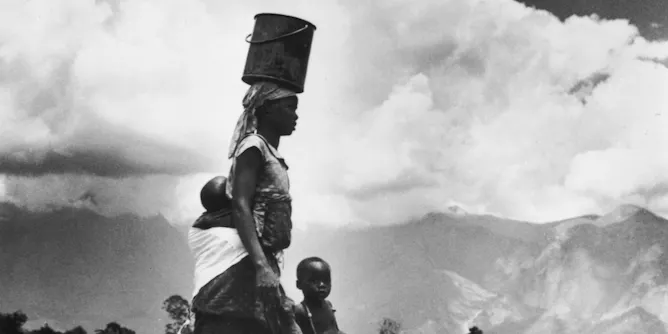
Some anthropologists question how much rare activities like big-game hunting could have affected how our species evolved. Instead they’re looking at daily activities like carrying water or firewood.
Articles on Anthropology
Displaying 41 - 60 of 272 articles
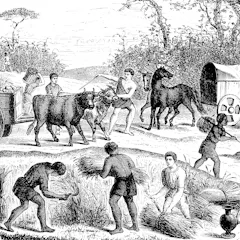
Human factors − such as how people produce food and how they organize themselves and live together − influence disease outbreaks.

Cassava’s many assets would seem to make it the ideal crop, except for one drawback: It’s highly poisonous. Human ingenuity has made cassava edible for millennia.
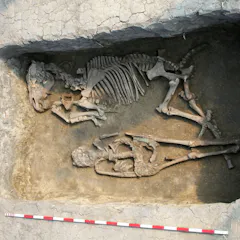
The Avars dominated southeastern central Europe for hundreds of years, leaving one of the richest archaeological heritages in Europe. Now scientists are using DNA to reveal details of their societies.

From kimchi to kombucha and sauerkraut to sourdough, many traditional food staples across cultures make use of fermentation. And these variations are reflected in your microbiome.

Pottery made more than 1800 years ago by Aboriginal communities on Jiigurru in the Lizard Island group in the Great Barrier Reef is the oldest ever found in Australia.
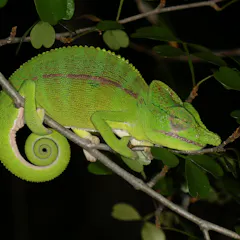
There are hundreds of lost tetrapod species across the globe and their number are increasing decade-on-decade. This study aims to find out why some are rediscovered, while others are not.

Presents are about giving, receiving and reciprocating, and how this cycle strengthens relationships.
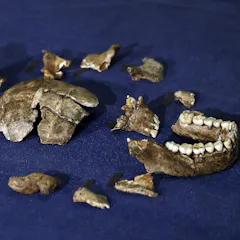
How, when and where did modern humans evolve? Nobody has all the answers, but studying rock and dirt can put the debate on firmer footing.

Science is essential for human flourishing. So why does so much science communication paint a bleak, nihilist picture of the world?
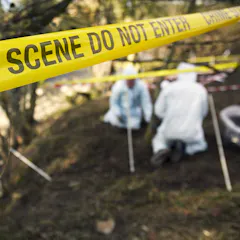
Forensic anthropologists are specialized scientists who analyze the skeletal remains of the recently deceased to help authorities figure out who the person was and what happened to them.
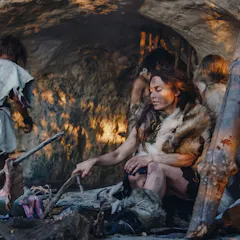
Female bodies have an advantage in endurance ability that means Paleolithic women likely hunted game, not just gathered plants. The story is written in living and ancient human bodies.

The findings reveal a close association between climatic conditions and early human migrations out of Africa.

The famous French anthropologist, world-renowned for his theory of non-places and his analyses of the “overmodern” city, died during the summer.
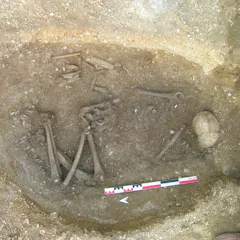
In the largest study of its kind, researchers have used DNA from a 6,700-year-old cemetery in France to reconstruct the lives of everyday Neolithic people.
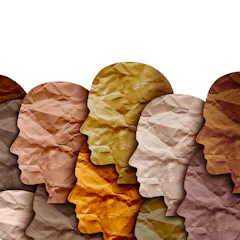
Ghassan Hage has made a singularly powerful contribution to our understanding of Australian and global racism, and the politics of domination and resistance.

Hopefully more curators and custodians of repositories of human skeletal remains will attempt to redress some of the wrongs of the past.
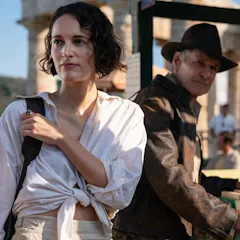
The final Indiana Jones movie is coming out June 30. The fifth in a series over 42 years, many of its ideas are taken from 19th-century orientalist and racist archaeology.
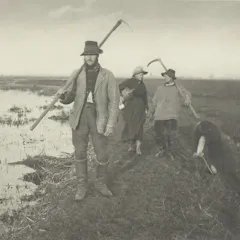
People with a common history – often due to significant geographic or social barriers – often share genetics and language. New research finds that even a dialect can act as a barrier within a group.
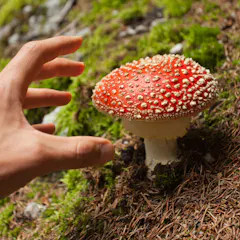
An anthropology course explores how peoples and cultures around the world use nature-based medicines to heal.
Top contributors
-

Honorary Associate Professor, UNSW
-
Associate Research Professor of Anthropology, University of Colorado Denver
-
Associate Professor of Anthropology, Rice University
-
Curator of Human Evolution of the Cleveland Museum of Natural History and Research Assistant Professor of Anthropology, Stony Brook University (The State University of New York)
-
Professor of Anthropology, UCL
-
Research Fellow in Biological Anthropology, Monash University
-
Lecturer in Social Anthropology, University of Birmingham; Independent Social Research Foundation
-
Assistant Professor of Biological Sciences, Vanderbilt University
-
Associate Professor of Anthropology, Binghamton University, State University of New York
-
Professor of Earth System Science, UCL
-
Emeritus Professor, Department of Archaeology, Classics and History, University of New England
-
Professor of Anthropology, UCL
-
Assistant Professor of Arab Crossroads Studies and Anthropology , NYU Abu Dhabi, chercheuse associée LESC, Université Paris Nanterre
-
Professor of Anthropology, University of South Florida
-
Honorary Professor, University of Queensland