

Researchers have discovered a second mass grave of Irish immigrant railroaders in Chester County, Pa.
Articles on Anthropology
Displaying 21 - 40 of 272 articles
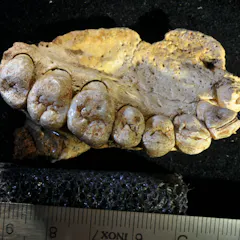
A common scanning method used to create ‘virtual copies’ of precious fossils could be erasing some of the crucial information held within.

Humans have feasted since the dawn of agriculture – but a new find suggests the practice of bringing exotic food to a communal gathering is even older.
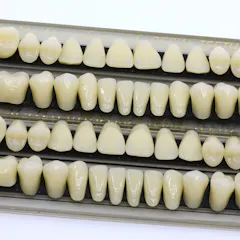
The balance of different varieties of atoms inside a person’s teeth can reveal a week-by-week record of rainfall and protein consumption during their infancy.
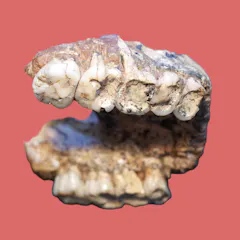
Curiously uniform dimples on the teeth of ancient hominins may give scientists a new way to trace their origins and relationships.
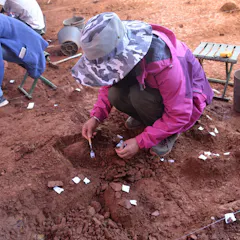
Discovery in China of tools called Quina scrapers suggests the people of East Asia were as inventive and flexible with technology during the Middle Paleolithic era as those in other parts of the world.

Animals can learn from each other, maintaining their cultures for long periods of time. What sets people apart may be the uniquely open-ended ways we invent new ideas and share and build on them.
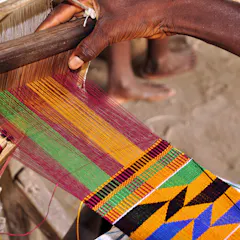
Kente cloth reflects Asante beliefs, values and history.

Anmatyerr people live 200 kilometres northwest of Alice Springs. The work of Anmatyerr artists is now on display in Switzerland for the first time.
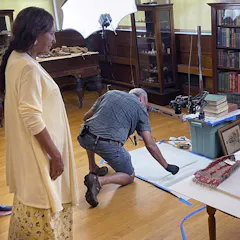
Repatriation is now a legal responsibility, but also a matter of human rights, an anthropologist writes.
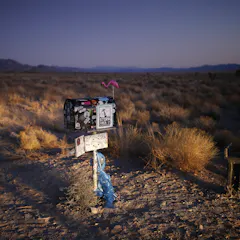
Though paranormal theories are at odds with modern science, adherents have often tried to prove their beliefs with sciencelike methods.

The Ultimate Hidden Truth of the World does us all a service by keeping Graeber’s ideas in circulation, but it distorts those same ideas.

Twins are pretty rare, accounting for just 3% of births in the US these days. But new research shows that for primates 60 million years ago, giving birth to twins was the norm.
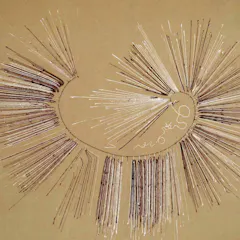
A new study reveals the most complex numeric connection ever made between two khipus. It could help lead us to even more clues about ancient Andean society.
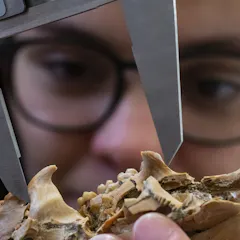
Modern North American porcupines are at least twice the size of their southern cousins and have stronger jaws. But how long have they looked that way?

Students can play to their strengths in this anthropology course designed to teach them how to present research findings in ways other than a peer-reviewed paper.
In the absence of clear-cut regulation, who should decide on where and how a technology that could change the course of human health should be applied?

Humans aren’t the only species to consider when constructing new buildings. This course teaches students to take animals into account as well.
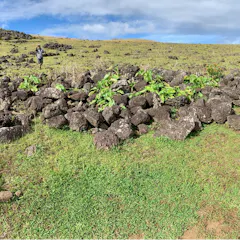
Satellite data shows the amount of food the residents of the tiny Pacific island have grown over time, pointing to a small but stable population.

People rarely speak plainly of birth, and even more rarely spell out the details in positive terms.
Top contributors
-

Honorary Associate Professor, UNSW
-
Associate Research Professor of Anthropology, University of Colorado Denver
-
Associate Professor of Anthropology, Rice University
-
Curator of Human Evolution of the Cleveland Museum of Natural History and Research Assistant Professor of Anthropology, Stony Brook University (The State University of New York)
-
Professor of Anthropology, UCL
-
Research Fellow in Biological Anthropology, Monash University
-
Lecturer in Social Anthropology, University of Birmingham; Independent Social Research Foundation
-
Assistant Professor of Biological Sciences, Vanderbilt University
-
Associate Professor of Anthropology, Binghamton University, State University of New York
-
Professor of Earth System Science, UCL
-
Emeritus Professor, Department of Archaeology, Classics and History, University of New England
-
Professor of Anthropology, UCL
-
Assistant Professor of Arab Crossroads Studies and Anthropology , NYU Abu Dhabi, chercheuse associée LESC, Université Paris Nanterre
-
Professor of Anthropology, University of South Florida
-
Honorary Professor, University of Queensland