

A blood test to detect Alzheimer’s disease in people who have symptoms and even those who don’t has been shown to work. Scientists still need to improve its accuracy rate to almost 100%, however.
Articles on Alzheimer's disease
Displaying 241 - 260 of 448 articles

Though a recent study’s results were promising, there is still much that researchers don’t know.

Stress, depression, and high blood pressure were just some of the risk factors the study’s researchers identified.

Having extra copies of a gene called BACE2 can slow down the development of Alzheimer’s disease in human brain cells.

The Federal Bureau of Prisons recently opened a unit for people suffering dementia. But is incarceration a ‘cruel and unusual’ punishment for those who don’t understand why they are behind bars?

What does an artist do when the subject is a disease as much as a person, and when the disease then subsumes the person – to the point where he can’t recognize his own son?

Our study found that people who had higher repetitive negative thinking patterns experienced more cognitive decline over a four-year period.

The antibody can be used to diagnose Alzheimer’s disease.
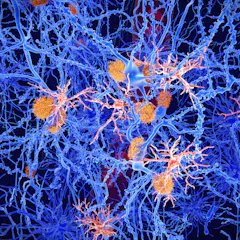
Between 10-15% of all cells within the brain are microglia.

Tiny parts of our genome once thought useless are being turned into ways to diagnose and treat disease.

Foods rich in flavonoids (such as apples, berries, or tea) are important for cognitive health, research suggests.

Blacks are at higher risk for many diseases. This is partly due to poverty, discrimination and lack of access to care. But there may be something different about the higher rates of Alzheimer’s.

Assisted living facilities are one option for seniors. But finding clear and accurate information about them isn’t easy.

We found that the key factors behind poor cognitive function were related to levels of education, being a woman, marital status and being poor.

Having better diagnostic tools will allow healthcare professionals to provide the best care possible.

Researchers are looking for ways to determine who’s most at risk for dementia and also ways to detect it early. A scientist who has studied low blood pressure makes a case for a link between the two.

A national trial that looked at whether brain stimulation could restore memory had a surprise finding. Deep brain stimulation brought back vivid memories temporarily.

Technological solutions may help to relieve the burden of care for family, service providers and caregivers working with the elderly.

Scientists explain why commercial gene testing should be used with caution.

Alzheimer’s disease is the most common form of dementia. Despite all efforts, no treatments have been found yet. To increase the odds, we need to rethink our approach and try to better understand it.
Top contributors
-

PhD Candidate, Neuroscience, University of Sheffield
-
Research Fellow in Neuroimmunology, UCL
-
Professor of Biological Psychology, Loughborough University
-
Professor of Chemistry and Senior Scientist of the Krembil Research Institute, University Health Network, University of Toronto
-
Head of Clinical Services, Dementia Support Australia, & Associate Professor of Psychiatry, Monash University
-
Professor Emeritus of Molecular Neurobiology at the University of Manchester and a Visiting Professorial Fellow, University of Oxford
-
Associate Professor, Turner Institute for Brain and Mental Health, Monash University
-
Professor of Neurology and Neuroscience, University of Florida
-
Host, The Conversation Weekly Podcast, The Conversation
-
Professor of Neurology, UCL
-
Post grad student at University of Edinburgh, University of Edinburgh
-
Associate Professor in Cellular Neuroscience, University of Reading
-
Professor of Psychology in Epidemiology, UCL
-
Étudiant au doctorat en psychologie, Université du Québec à Montréal (UQAM)
-
Affiliate Professor, Department of Family Medicine, McGill University