
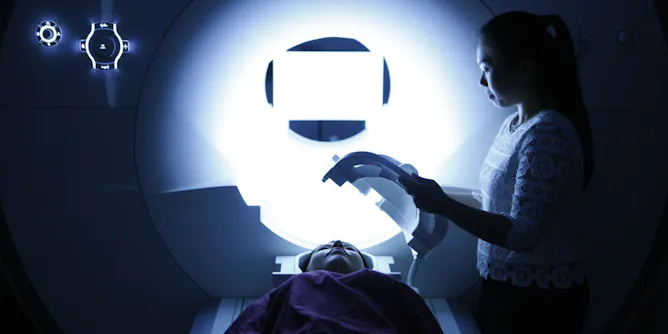
A new technique can reveal cellular changes linked to the disease that were previously visible only in brain tissue after death.
Articles on Parkinson's disease
Displaying 1 - 20 of 131 articles

Singing in a choir helps people regain their voice and reduces social isolation and the sense of loss that often follows diagnosis with a brain condition.
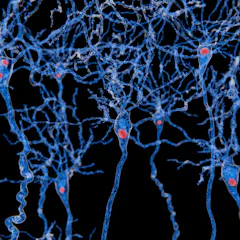
Researchers are finding ways to target the toxic proteins involved in neurodegenerative diseases such as Parkinson’s and Alzheimer’s that were once considered ‘undruggable.’

Paraquat is one of the most widely used herbicides around the world. An expert explains what we know about the risk of Parkinson’s disease.

Ozempic-style drugs have been flagged as possible treatments for cancer, dementia, endo, addiction and more. An expert explains what the evidence really says.

As G7 societies age and birth rates decline, we must invest in collaborative open science research, to optimize brain health for every citizen.

An in-ear device could help detect the early signs of Alzheimer’s and Parkinson’s, well before symptoms appear.

Scientists have shown that plastic bottles could be converted into levodopa, an important Parkinson’s drug, with implications for both medicine and the environment.

Parkinson’s disease doesn’t only mean a tremor and falls. It can cause insomnia, memory issues and impulsive behaviour. And it affects men and women differently.

People typically die from progressive supranuclear palsy within 7 to 10 years. There is currently no specialized treatment or effective screening for this neurodegenerative disease.

One of the biggest barriers to diagnoses of brain disorders is that symptoms — particularly those of apathy — can be mistaken for depression, resulting in inappropriate treatment and poorer health.

Modern science is increasingly validating what many traditions have long held: Singing and chanting can have profound health benefits.

Motion data is well known for improving athletic performance and rehab. Thanks to AI, it’s also turning motion into another vital sign for general health.

This sign of neurodegenerative disease often appears much earlier than other symptoms.

This common condition is characterised by involuntary muscle spasms.

As we transition from wakefulness to sleep, the nervous system winds down and muscles relax. Sometimes, the brain misinterprets what’s happening.

Kennedy is one of about 50,000 Americans who have spasmodic dysphonia.
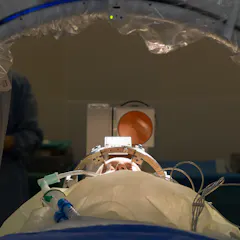
Deep brain stimulation has been around for a few decades, but the technology has recently advanced in leaps and bounds.
Any drug that increases dopamine levels could theoretically be linked to impulse control disorders.
New research shows people in specific Polynesian communities have a much higher rate of a form of Parkinson’s disease considered rare elsewhere.
Top contributors
-

Professor of Neuroscience, Royal Veterinary College
-
Professor of Neurology, Norman Fixel Institute, University of Florida
-
Professor and Head of Department of Anatomy & Neuroscience, University College Cork
-
Associate Professor, School of Biomedicine, Adelaide University
-
Clinical Research Fellow, Imperial College London
-
Professor of Physical Activity, Lifestyle, and Population Health, University of Sydney
-
Senior Post-Doctoral Researcher, University College Cork
-
Senior Research Fellow, Monash University
-
Honorary (Professorial Fellow) at the Centre for Neuroscience, The University of Melbourne
-
Associate Professor, Neurology, University of Florida
-
Computational Neuroscientist and NIHR Academic Radiology Resident, University of Oxford
-
Professor of Health Law and Bioethics, Case Western Reserve University
-
Reader in Neurology and Neuroepidemiology, Queen Mary University of London
-
Associate Professor of Neuroscience, University of Oxford
-
Associate Professor in Sociology and Anthropology, Monash University