

The basics are the same: be respectful and don’t make assumptions. But these practical tips can make conversations more meaningful and less distressing.
Articles on Neurodegenerative disease
Displaying 1 - 20 of 83 articles

Physical exercise, a proper diet, cognitive training, clinical monitoring, and socialization improve cognitive performance by 55% among older adults in Latin America.

Working with and living in spatially complex environments may help delay cognitive decline, though more research is needed.

A new review looked at 1,734 people with amyotrophic lateral sclerosis (ALS). But it couldn’t separate pesticide from other risk factors, such as head trauma.

Singing in a choir helps people regain their voice and reduces social isolation and the sense of loss that often follows diagnosis with a brain condition.
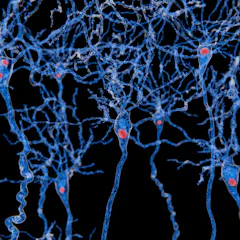
Researchers are finding ways to target the toxic proteins involved in neurodegenerative diseases such as Parkinson’s and Alzheimer’s that were once considered ‘undruggable.’

Mild cognitive decline doesn’t necessarily mean you’ll develop dementia. But it’s a common fear.

Motor neurone disease can strike people who are young and fit. And there’s no cure.

As G7 societies age and birth rates decline, we must invest in collaborative open science research, to optimize brain health for every citizen.

An in-ear device could help detect the early signs of Alzheimer’s and Parkinson’s, well before symptoms appear.

Parkinson’s disease doesn’t only mean a tremor and falls. It can cause insomnia, memory issues and impulsive behaviour. And it affects men and women differently.

People typically die from progressive supranuclear palsy within 7 to 10 years. There is currently no specialized treatment or effective screening for this neurodegenerative disease.

Exercise can be a powerful tool to improve symptoms of anxiety and depression. The amino acid tryptophan may be part of the reason why.

This sign of neurodegenerative disease often appears much earlier than other symptoms.

Dementia’s effects on the brain can cause death. But they can also lead to other complications, which can then be fatal.

The new therapy is being hailed as a breakthrough. But the small study has some limitations – and hasn’t been peer-reviewed.

Cerebrospinal fluid can sometimes leak or collect in the brain without an identifiable cause, leading to symptoms that can be difficult to diagnose.

The National Institutes of Health has been integral to scientific progress in treating countless human diseases. Without its support, patients will ultimately pay the price.

Your sense of smell is directly linked to the part of your brain that generates emotions and memories.
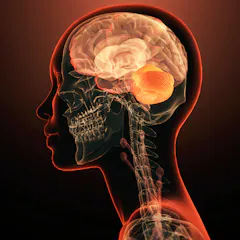
Conditions such as long COVID-19, Alzheimer’s disease and meningitis can damage the line of communication between your brain and your muscles.
Top contributors
-

Associate Professor, School of Biomedicine, Adelaide University
-
Lecturer, School of Psychology, UNSW ; Neuroscience Research Australia
-
Professor of Neurology, University of Michigan
-
Research Fellow, European Cancer Stem Cell Research Institute, Cardiff University
-
PhD Candidate, University of Technology Sydney
-
Professor of Neurology and Neurotherapeutics, UT Southwestern Medical Center
-
Assistant Professor of Neurology, Georgetown University
-
Graduate Student in Cancer Systems Biology, Rice University
-
Research Assistant Professor in Neuroscience, The University of Western Australia
-
Professor of Neuroscience, University of California, Santa Barbara
-
Assistant Professor of Mechanical Engineering, Binghamton University, State University of New York
-
Assistant Professor of Biomedical Sciences, University of North Dakota
-
Senior Lecturer, University of Uyo
-
Associate Research Scientist, Yale University
-
Professor of Neurology, Neurobiology, and Cell Biology, Duke University