

Here’s why it’s so important to look after your oral health.
Articles on Alzheimer's disease
Displaying 181 - 200 of 448 articles

New study finds that middle-aged people who had nightmares every week, are four times more likely to experience cognitive decline.

Action is needed to hold off a wave of dementia cases in an aging population. One of the most effective tools to reduce the prevalence of dementia is to address modifiable factors.

Alzheimer’s may not be primarily a disease of the brain. It may be a disorder of the immune system within the brain. Beta-amyloid may not be an abnormal protein, but part of the brain’s immune system.
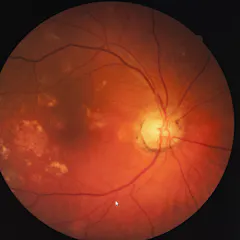
A thinning of the retina is associated with earlier ageing of the brain. Widely available retinal imaging could help detect cognitive decline in its earliest stages.

Nonhuman primates like rhesus monkeys share certain characteristics with people that may make them better study subjects than mice for research on neurodegenerative diseases.

You may dismiss many behaviour changes as just a normal part of ageing. But it may be doggy dementia, or canine cognitive dysfunction.

Diets high in fat, sugar and processed foods are associated with higher calorie intake, poorer memory and lower cognitive function.

A highly cited paper on Alzheimer’s disease may have been purposely manipulated.

From thalidomide to resveratrol, molecules with the exact same chemical properties can have drastically different effects in the body depending on how they’re arranged in space.

Not all Alzheimer’s research has been compromised by allegations of scientific fraud. But we should interrogate whether the governing bodies of research and drug approvals are truly effective.

Much dementia research does not reflect ethnically diverse communities. Studies used to make policy, clinical and investment decisions in dementia should reflect the diverse Canadian population.

Noradrenergic drugs are already used to treat a variety of conditions, including ADHD and depression.

Because they help to create a shared understanding, metaphors can play a critical role in navigating the gap between the knowledge patients and health-care providers bring.

Participants who woke up fewer times during the night performed better on memory tasks the next day.

Cell cultures have shown promise in representing diseases. The Petri dish is not as different from a sick person as one might think.

Long overlooked by scientists, white matter may provide clues to some of the brain’s greatest mysteries.

Although Medicare has agreed to pay for Aduhelm, its coverage comes with restrictions.

A clearer understanding of the true treatment costs of dementia for American Indian and Alaska Native adults could help health services better meet the needs of the populations they serve.

While longer naps are a normal part of aging, excessively long dozes could be a warning signal for cognitive decline.
Top contributors
-

PhD Candidate, Neuroscience, University of Sheffield
-
Research Fellow in Neuroimmunology, UCL
-
Professor of Biological Psychology, Loughborough University
-
Professor of Chemistry and Senior Scientist of the Krembil Research Institute, University Health Network, University of Toronto
-
Head of Clinical Services, Dementia Support Australia, & Associate Professor of Psychiatry, Monash University
-
Professor Emeritus of Molecular Neurobiology at the University of Manchester and a Visiting Professorial Fellow, University of Oxford
-
Associate Professor, Turner Institute for Brain and Mental Health, Monash University
-
Professor of Neurology and Neuroscience, University of Florida
-
Host, The Conversation Weekly Podcast, The Conversation
-
Professor of Neurology, UCL
-
Post grad student at University of Edinburgh, University of Edinburgh
-
Associate Professor in Cellular Neuroscience, University of Reading
-
Professor of Psychology in Epidemiology, UCL
-
Étudiant au doctorat en psychologie, Université du Québec à Montréal (UQAM)
-
Affiliate Professor, Department of Family Medicine, McGill University