

Almost half of all copper in the air comes from brake wear.
Articles on Air pollution
Displaying 81 - 100 of 497 articles
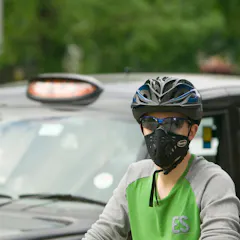
A new study has linked higher levels of air pollution to a reduced risk of developing melanoma, but an oncologist warns that the results may be misinterpreted.
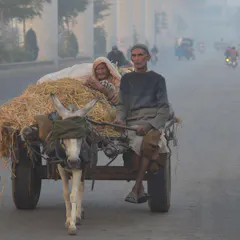
Public health implications of smog were only mentioned in 15% of stories published by Pakistani media, research shows.
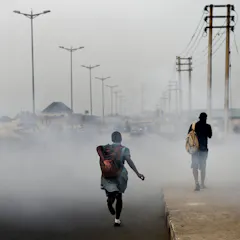
The impact of air pollution on African populations is under-researched due to limited air quality data and health studies.

Breathwork is an ancient practice to calm the mind and improve physical health.
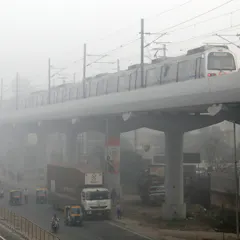
The world’s second largest city is one of its most polluted.
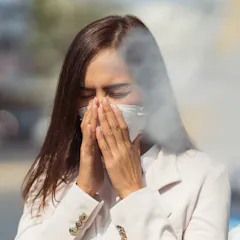
Air pollution can penetrate deep beneath the skin’s protective outer barrier.
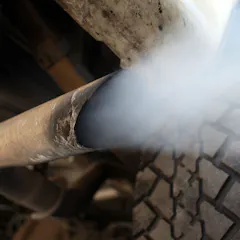
Ultrafine particles are approximately one-thousandth the width of a human hair. But because of their tiny size, they are easily inhaled – and typically more dangerous than larger particles.
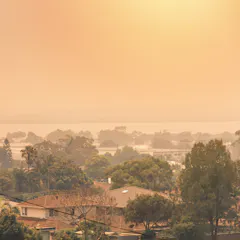
New international research reveals climate change increased the proportion of wildfire smoke-related human deaths tenfold between the 1960s and 2010s. Here’s what that means for Australia.

Researchers found 10 times more black carbon on the 15th Street/City Hall subway platform than on the sidewalk above.

Whether it’s electric two-wheelers or trucks, buses or bicycles, electric vehicles in India are hard to miss.
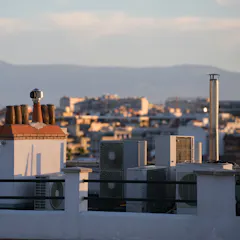
Ventilation systems pump polluted air from our homes – which contains particulate matter and methane – into the environment.
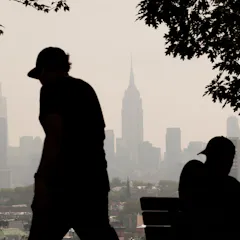
Which is riskier for your health: a few days of very bad PM₂.₅ exposure or many more days of slightly bad exposure? Researchers developed new metrics to provide better answers.

Gas stoves are responsible for 12% of Australia’s childhood asthma. But replacing your cooktop might not be practical if you’re renting or struggling with cost-of-living.
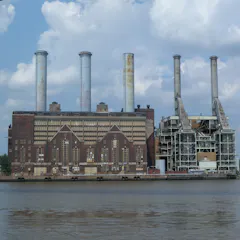
As renewables account for a growing share of electricity supply, fossil fuel plants are increasingly used to balance fluctuations in renewable generation – emitting health-threatening pollutants.

The large-scale study linked exposure to air pollution with a higher infertility risk in men, while traffic noise affected women.
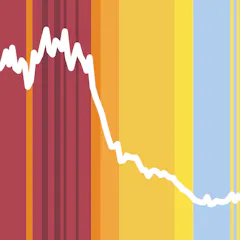
A set of graphics showing how air pollution has changed in cities around the world hopes to capitalise on the ability of striking visuals to motivate people.

Scientists have designed a powerful visual tool to make the invisible threat of air pollution more visible.

Any heater that burns fuel without adequate ventilation is dangerous in a home – and none are as safe or efficient as a reverse-cycle air conditioner.

As communities are exposed to wildfire smoke more regularly and over longer durations year after year, it is critical to consider what these changing exposure patterns mean for our long-term health.
Top contributors
-

Professor of Atmospheric Chemistry at the National Centre for Atmospheric Science, University of York
-
Professor & Chair in Air Quality and Health; Founding Director, Global Centre for Clean Air Research (GCARE), Co-Director, Institute for Sustainability, University of Surrey, University of Surrey
-
Professor of Environmental Health Sciences, UMass Amherst
-
Emeritus Professor of Environmental Science, University of Essex
-
Senior Research Fellow at the Stockholm Environment Institute, University of York
-
Associate Professor, University of Pretoria
-
Emeritus Professor of Medicine, Adelaide University
-
Professor, University of Pretoria
-
Professor and Chair, Department of Environmental Health, Boston University
-
Professor of Statistics, Queensland University of Technology
-
Senior Research Fellow, Woolcock Institute of Medical Research, Macquarie University and the South West Sydney Clinical School, UNSW Sydney. Affiliate, Centre for Safe Air., UNSW
-
Professor of Atmospheric Science, University of Birmingham
-
Honorary Professor, School of Natural Sciences, Macquarie University
-
Conjoint Professor, School of Population Health, UNSW
-
Researcher, The University of Queensland