
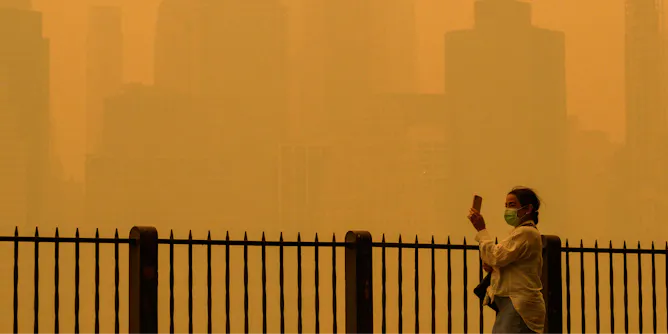
To understand what’s in the smoke you might be breathing, you have to look at where it’s been.
Articles on PM2.5
Displaying 1 - 20 of 50 articles
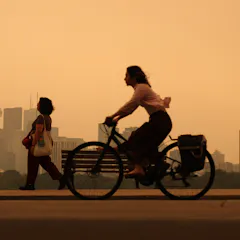
When you breathe in wildfire smoke, harmful particles can travel deep into your body.

In Agbogbloshie, Ghana, thousands of young women and men burn electronic waste to extract minerals at a cost to their health. They need more protection.

Using existing backup generators as regular sources of electricity would emit lots of pollution into American skies and endanger people’s health.
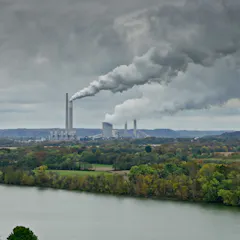
In the world of cost benefit analysis, if an impact isn’t monetized, it doesn’t exist. A former EPA official explains what’s changing now and why it matters.
The EPA is changing how it assesses proposed regulations by dropping the monetary value of health benefits from its cost-benefit analyses. That misses a big piece of the picture.

The UK wants cleaner air. But its rules are stuck in the age of smog.
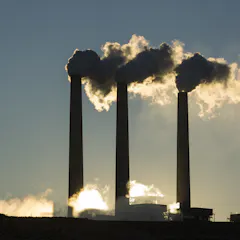
As soon as the 2018-2019 shutdown began, coal-fired power plants started emitting more particulate matter pollution. And when the inspections resumed, the levels dropped back to normal.
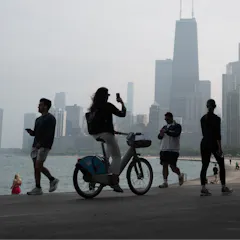
As wildfire smoke becomes a frequent summer hazard across large parts of the US, knowing the risk at the neighborhood scale matters for human health.
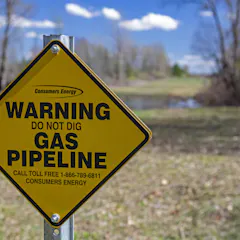
Methane reacts in the atmosphere to form components of fine particulate air pollution, which can penetrate deep into the lungs and increase risk for heart disease and asthma.
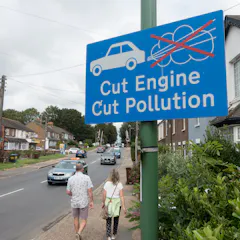
Researchers have analysed UK-wide trends for three major pollutants.
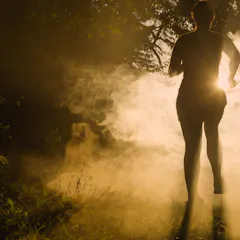
Factors like your health status and how hard you exercise can help gauge the risk of wildfire smoke exposure.
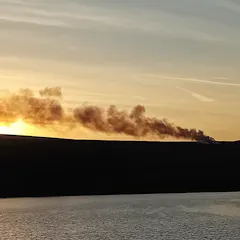
How a new monitoring system improves fire detections and captures the air pollution effects of planned peatland burns.

Wildfire smoke doesn’t just darken the skies — it harms the brain, especially in those most vulnerable.

Uganda has 1.4 million petrol-fuelled motorbikes in its public transport system that all need to go electric to reduce global warming and air pollution.
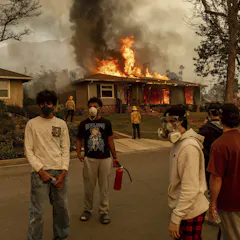
Human bodies aren’t prepared for the toxic chemicals in smoke, and the effects can be harmful in the short term and long term.
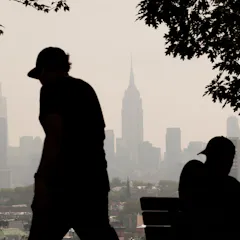
Which is riskier for your health: a few days of very bad PM₂.₅ exposure or many more days of slightly bad exposure? Researchers developed new metrics to provide better answers.

An unplanned experiment when wildfire smoke rolled through Colorado shows how trees keep some of the smoke out.

As communities are exposed to wildfire smoke more regularly and over longer durations year after year, it is critical to consider what these changing exposure patterns mean for our long-term health.
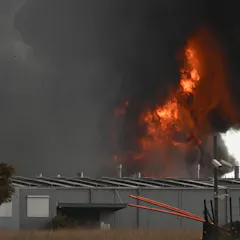
The first thing to remember is that all smoke is harmful. Typically, if you can smell smoke, it’s at a level where it’s impacting your health.
Top contributors
-

Professor of Public Health Science and Community Medicine, University of Connecticut
-
Assistant Professor, Faculty of Health Sciences, Simon Fraser University
-
Adjunct Lecturer in Urban Studies, The New School
-
Postdoctoral Associate in Conservation Bioacoustics, Cornell University
-
Professor of Chemical and Biochemical Engineering, University of Iowa
-
Professor of Chemical and Biochemical Engineering, University of Iowa
-
Associate Professor, Environmental Criminology, University of Nottingham
-
University of Iowa Distinguished Chair, Professor of Environmental Health, University of Iowa
-
Professor, Faculty of Health Sciences, Simon Fraser University
-
Postdoctoral Researcher, University of Galway
-
Associate Professor of Anthropology & Department Chair, Northern Arizona University
-
Alaska Climate Specialist, University of Alaska Fairbanks
-
PhD Researcher in Earth Sciences, University of Oxford
-
Senior lecturer in Exposure Science, University of Galway
-
Associate Professor of Chemical Engineering, The University of Melbourne