
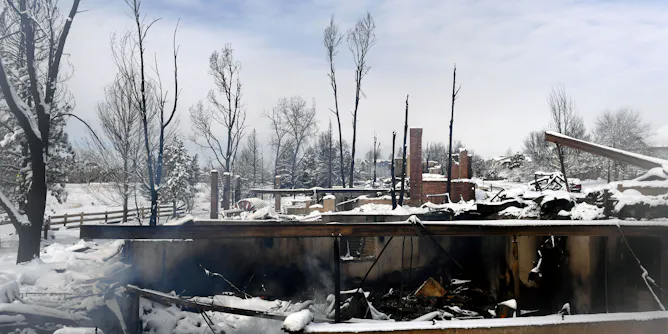
If fossil fuel companies misled the public about the dangers of their products, should they be required to pay for damages from climate-related disasters?
Articles on Clean Air Act
Displaying 1 - 20 of 48 articles

The country, and the world, have been losing diesel refining capacity for many years and can’t just ramp up production to fill the shortages.

For decades, regular citizens and advocacy groups have filed suits that forced companies and the federal government to clean up the environment. Trump officials have moved to limit that power.

Economic interests have shaped society’s response to pollution. Now, policy needs to align with the scientific evidence to clean up our air.
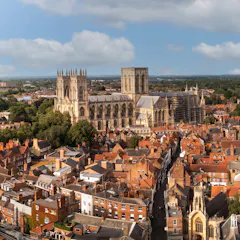
Researchers have transformed air quality data into maps, visualisations and exhibitions to connect people to the issues in tangible ways.
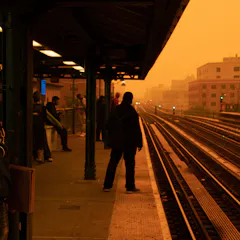
The number of ozone-related premature deaths due to wildfires is also rising.

Calls for the Supreme Court to give fossil fuel companies immunity from liability for climate-related damage misreads the Constitution, precedent and the role of courts.

The EPA’s new interpretations are strategically designed to appeal to the current US Supreme Court’s view of agency authority.
A new study linking Pittsburgh’s air pollution to thousands of deaths each year has been published just as the EPA moves to weaken pollution standards.
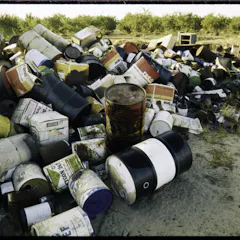
Critics of environmental protection laws may have forgotten how much progress has been made.
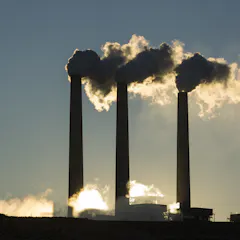
As soon as the 2018-2019 shutdown began, coal-fired power plants started emitting more particulate matter pollution. And when the inspections resumed, the levels dropped back to normal.

Careful research into public information and in-depth interviews has shown the scale of personnel cuts at the Environmental Protection Agency.
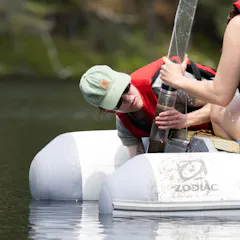
Acid rain and metals from power plants, vehicles and industries reached remote mountain lakes for years. Evidence from those lakes today shows the success of the Clean Air Act.
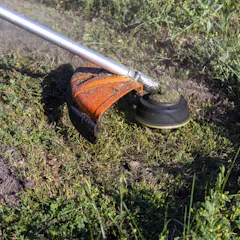
The White House proposal represents a dramatic retreat from the national goals of clean air and clean water enacted in federal laws over the past 55 years.

The US has obstructed climate action for decades – largely due to damaging actions by the powerful fossil fuel industry. But Australia has a chance now to lead.
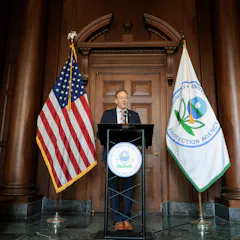
Some restrictions prevent loosening of existing environmental standards for clean air and water. Other rules can be changed – though only through a challenging and multistep democratic process.
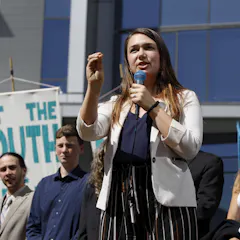
In the battle to slow climate change, local and state governments, as well as citizens, have taken to the courts. Their results have varied, but the cases keep coming.
The Trump administration’s job cuts and advisory board changes at the agency won’t change those rules, as a former EPA science adviser explains.

Tribal governance takes a long view based in Native peoples’ deep history with these lands.
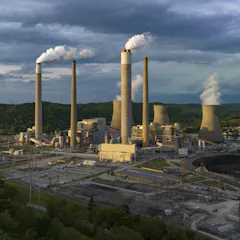
The Trump administration’s goal is to roll back rules limiting planet-warming greenhouse gas emissions from power plants, vehicles and oil and gas production, but it could backfire for industry.
Top contributors
-

Visiting Professor of Law and Environmental Affairs, Indiana University
-
Research Professor Emeritus, University of Michigan
-
Professor of Environmental Engineering, North Carolina State University
-
Associate Professor of Public Policy, Harvard Kennedy School
-
Executive Director, Sabin Center for Environment and Sustainability, Wake Forest University
-
Professor of Law Emeritus, Vermont Law & Graduate School
-
Professor of Aeronautics and Astronautics, Massachusetts Institute of Technology (MIT)
-
Senior Research Fellow at the Stockholm Environment Institute, University of York
-
Research Scientist, Massachusetts Institute of Technology (MIT)
-
Senior Research Fellow and Associate Professor, Melbourne Climate Futures initiative, The University of Melbourne
-
Academic position - Research Associate at the Centre for Resources, Energy and Environmental Law, The University of Melbourne
-
Assistant Professor of Resource Economics, UMass Amherst
-
Professor of Environmental Law, University of Maryland
-
Research fellow, Centre for Policy Futures, The University of Queensland
-
Research Fellow, Wolfson Atmospheric Chemistry Laboratories, University of York