
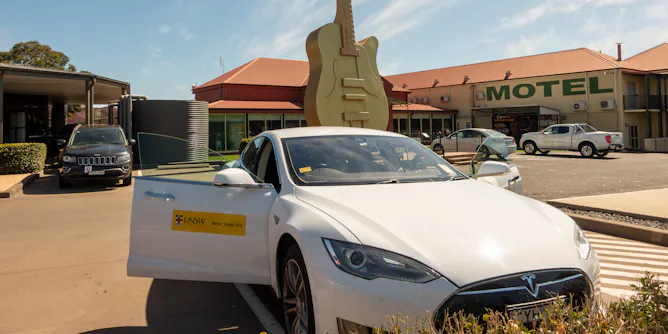
Australia has a lot of work to do to overcome the challenges facing electric vehicles users, starting with the lack of a comprehensive national charging network.
Articles on Air pollution
Displaying 221 - 240 of 497 articles

Different energy technologies should be explored in Ghana to enhance clean fuel use.

Replacing wood stoves is essential but won’t solve the indoor air pollution epidemic on its own.

Exaggerating how much lockdown improved air quality could allow us to underestimate the scale of the air pollution problem.

The tiny air pollutants known as PM2.5, emitted by vehicles, factories and power plants, aren’t just a hazard for lungs. A study finds more brain shrinkage in older women exposed to pollution.

Thousands of chemical compounds in wildfire smoke are interacting with each other and sunlight as the smoke travels. For people downwind, it can become more toxic over time.

Protecting forests means protecting a rich biodiversity of plants, animals and the livelihoods of many people.
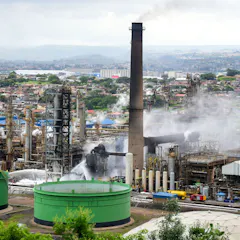
The geographic setting of hazardous industrial sites in residential areas during apartheid hasn’t transformed since democracy.
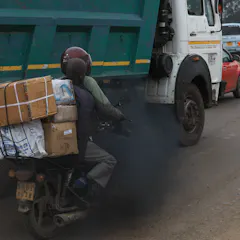
Studies demonstrate that vehicular emissions are a huge pollution source in Nairobi.

The Trump administration has used executive orders, deregulation and delays to reduce environmental regulation. Biden administration officials will use many of the same tools to undo their work.
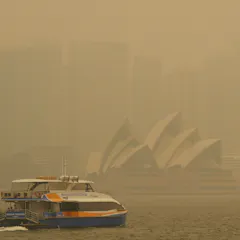
Smoke from the Black Summer fires likely caused more than 400 deaths. A national set of air quality categories is long overdue.
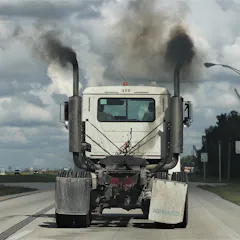
Air pollution can weaken people’s respiratory, immune and cardiovascular systems, leaving them more vulnerable when they get COVID-19.

School streets close roads to motor traffic when children arrive at and leave school.

Some atmospheric pollutants actually help cool the planet, but the sudden shutdown of heavy industry threatened to purge them.

Staff and customers with underlying health conditions are likely to be most at risk at drive-through windows.

By opening data, monitoring and reporting on air quality can be complemented by data from various sources to create more localised and relevant decision-support solutions.
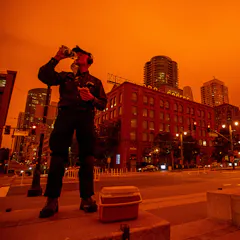
To understand the risks of wildfire smoke, it helps to understand the chemicals people are breathing.

Irish trade with the EU contributes an additional 34 tonnes of toxic nitrogen oxides to air in the UK each year.
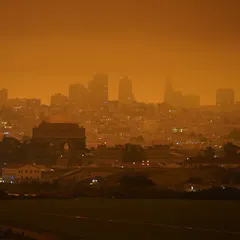
Coping with intense and prolonged wildfire smoke is difficult, both physically and mentally. Smoke is an environment hazard to be respected, not a personal challenge to be overcome.

Kampala, like many other cities in sub-Saharan Africa, has a critical data gap on the scale and magnitude of air pollution.
Top contributors
-

Professor of Atmospheric Chemistry at the National Centre for Atmospheric Science, University of York
-
Professor & Chair in Air Quality and Health; Founding Director, Global Centre for Clean Air Research (GCARE), Co-Director, Institute for Sustainability, University of Surrey, University of Surrey
-
Professor of Environmental Health Sciences, UMass Amherst
-
Emeritus Professor of Environmental Science, University of Essex
-
Senior Research Fellow at the Stockholm Environment Institute, University of York
-
Associate Professor, University of Pretoria
-
Emeritus Professor of Medicine, Adelaide University
-
Professor, University of Pretoria
-
Professor and Chair, Department of Environmental Health, Boston University
-
Professor of Statistics, Queensland University of Technology
-
Senior Research Fellow, Woolcock Institute of Medical Research, Macquarie University and the South West Sydney Clinical School, UNSW Sydney. Affiliate, Centre for Safe Air., UNSW
-
Professor of Atmospheric Science, University of Birmingham
-
Honorary Professor, School of Natural Sciences, Macquarie University
-
Conjoint Professor, School of Population Health, UNSW
-
Researcher, The University of Queensland