
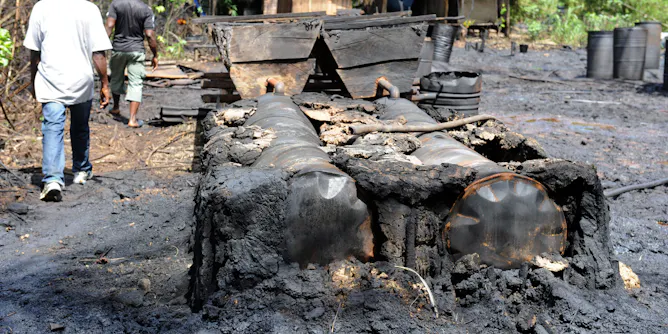
The illegal refinery process ignores all environmental, health and safety procedures and can have catastrophic consequences.
Articles on Air pollution
Displaying 181 - 200 of 497 articles
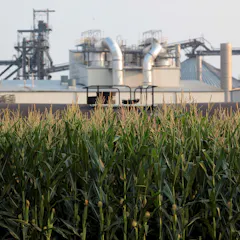
Allowing the sale of gasoline that’s 15% ethanol year-round won’t have much impact on gas prices, but recent research shows that growing corn for fuel affects the climate – for the worse.
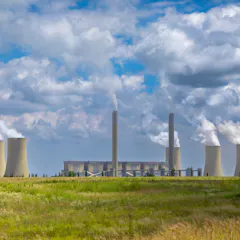
The court ruling that it’s a constitutional right to have clean air highlights the fact that South Africa needs to improve air quality urgently.

Kampala’s current transport system is not working to the benefit of its users, its operators or the government. It is not providing a mobility service.
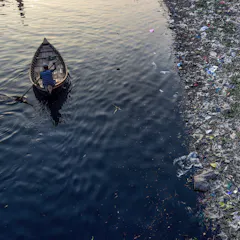
Representatives of 175 countries voted to start developing a global treaty to reduce plastic waste. Treaties addressing mercury, long-range air pollution and ozone depletion offer some lessons.
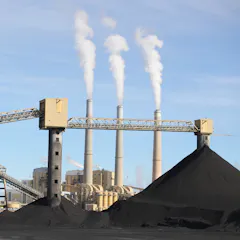
West Virginia v. EPA could be the opportunity that conservative justices have been seeking to curb federal power.

Drive-throughs not only increase air pollution and emissions, but also contribute to a car-centred culture that we need to avoid.

Air pollution are typically high during the winter months in Beijing, research shows.

Sci-fi classic The Sheep Look Up has lessons for today on environmental change, says an expert.
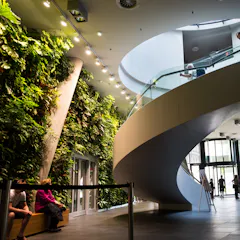
Green buildings can cost more than conventional structures, but the small increase has noticeable benefits for those working and living within them.
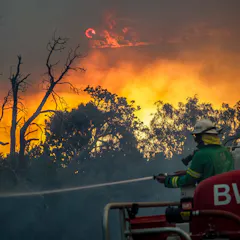
Both affect the lungs. Both can have serious health consequences in vulnerable populations. Both can have long-term health consequences.

Increased use of freight trains can ease the HGV driver crisis and improve the air quality, research shows.

Pollution from more frequent floods and wildfires – exacerbated by the warming climate – is threatening human health and poses particular risks to the brain.
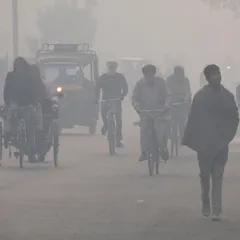
Fossil fuels account for one in five premature adult deaths each year.
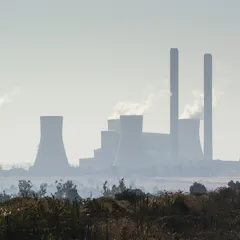
To improve air quality, a combination of efforts is needed including reducing Eskom’s emissions, investing in cleaner sources of energy, and reducing emissions.

The number of people using mainly polluting fuels in sub-Saharan Africa is rising at an alarming rate and is due to exceed 1 billion people by 2025.
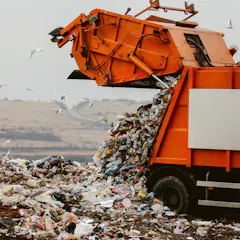
A high court judge said the Environment Agency was failing to fulfil its legal duty to protect the public.
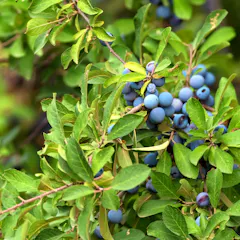
Prickly hedges capture large amounts of carbon dioxide, and are great homes for insects.
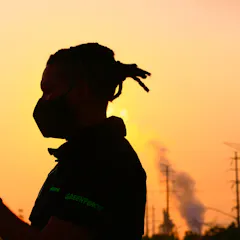
The World Health Organization has halved its recommended limit for particulate pollution.
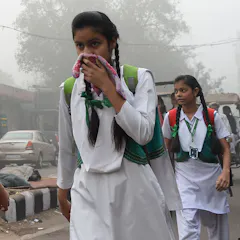
It’s the World Health Organization’s first update of global air quality guidelines since 2005. We know far more today about the serious risks these pollutants pose to human health.
Top contributors
-

Professor of Atmospheric Chemistry at the National Centre for Atmospheric Science, University of York
-
Professor & Chair in Air Quality and Health; Founding Director, Global Centre for Clean Air Research (GCARE), Co-Director, Institute for Sustainability, University of Surrey, University of Surrey
-
Professor of Environmental Health Sciences, UMass Amherst
-
Emeritus Professor of Environmental Science, University of Essex
-
Senior Research Fellow at the Stockholm Environment Institute, University of York
-
Associate Professor, University of Pretoria
-
Emeritus Professor of Medicine, Adelaide University
-
Professor, University of Pretoria
-
Professor and Chair, Department of Environmental Health, Boston University
-
Professor of Statistics, Queensland University of Technology
-
Senior Research Fellow, Woolcock Institute of Medical Research, Macquarie University and the South West Sydney Clinical School, UNSW Sydney. Affiliate, Centre for Safe Air., UNSW
-
Professor of Atmospheric Science, University of Birmingham
-
Honorary Professor, School of Natural Sciences, Macquarie University
-
Conjoint Professor, School of Population Health, UNSW
-
Researcher, The University of Queensland