

From Nairobi to Los Angeles, pandemic lockdowns have cleared pollution from the skies. But those blue vistas may be temporary, and shutdowns aren’t slowing climate change.
Articles on Air pollution
Displaying 261 - 280 of 497 articles

After a 5-year review, the EPA is leaving US standards for fine particle air pollution unchanged, even though recent studies suggest that tightening them could save thousands of lives yearly.
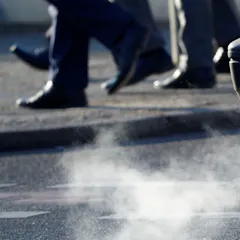
Researchers built cheap air quality monitors using parts found at hardware and electronics scores. The results have big implications for anyone who travels outside near busy roads.
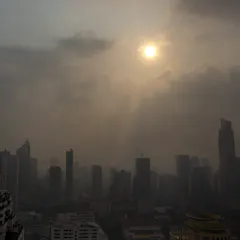
The link between air pollution and elevated death rates for COVID-19 may be overestimated.

As lockdowns have came into effect around the world, air pollution has plummeted.
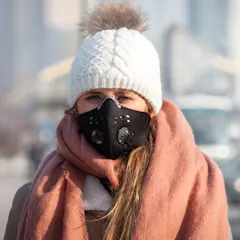
Commercially available respirator masks are becoming a popular choice for cyclists and pedestrians wanting to reduce pollution exposure.

A new study takes an innovative approach to reducing fine particle air pollution and spotlights key sources: factories that burn coal and oil, petrochemical plants and burning wood for home heating.

According to a new study, about four in 10 air pollution deaths in the US are due to emissions crossing state lines.
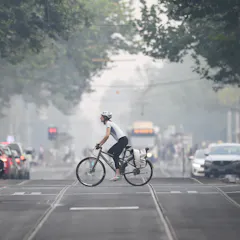
Millions of Australians far from the bushfires’ direct path have been affected by smoke haze. Here’s everything we know about the effects of bushfire smoke on our health.
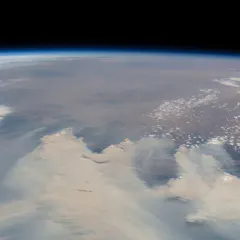
When a bushfire burns is one country, smoke drift means it can become the world’s problem. But the law lacks the teeth to hold those responsible to account.
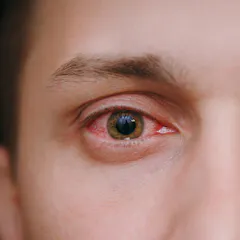
Another troubling consequence of the bushfire smoke is its effects on our eyes. But there are some steps we can take to minimise irritation and any risk of longer term harms.

Bushfire smoke accumulating over Australian cities contains a complex chemical mix which does all sorts of things to the human body.

These harmful pollutants are responsible for 20% of roadside pollution.

This is not the first time Australia’s major cities have been shrouded in bushfire smoke. But this time, the culprits must held to account.

Pollutants like nitrogen dioxide are a silent killer, but everyone isn’t equally at risk.

Smoke haze almost seems to be the new normal in parts of Australia. But what do we know about the dangers to our health in the longer term?

Pregnant women exposed to bushfire smoke face a higher risk of complications including gestational diabetes, high blood pressure and giving birth prematurely.
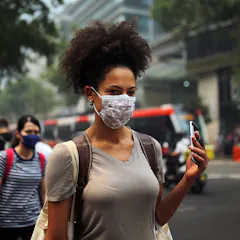
With smoke haze this week at its most hazardous level yet, people on Australia’s east coast have been taking precautions to protect their health. But some methods are more effective than others.
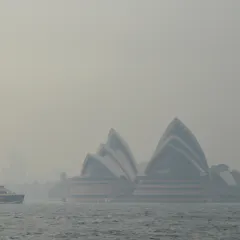
Fuming, burnt out, drained. Can our smoky cities spark a change in the political atmosphere?
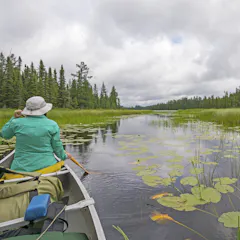
Scientists have a new approach to understanding how pollution threatens species at risk in Canada.
Top contributors
-

Professor of Atmospheric Chemistry at the National Centre for Atmospheric Science, University of York
-
Professor & Chair in Air Quality and Health; Founding Director, Global Centre for Clean Air Research (GCARE), Co-Director, Institute for Sustainability, University of Surrey, University of Surrey
-
Professor of Environmental Health Sciences, UMass Amherst
-
Emeritus Professor of Environmental Science, University of Essex
-
Senior Research Fellow at the Stockholm Environment Institute, University of York
-
Associate Professor, University of Pretoria
-
Emeritus Professor of Medicine, Adelaide University
-
Professor, University of Pretoria
-
Professor and Chair, Department of Environmental Health, Boston University
-
Professor of Statistics, Queensland University of Technology
-
Senior Research Fellow, Woolcock Institute of Medical Research, Macquarie University and the South West Sydney Clinical School, UNSW Sydney. Affiliate, Centre for Safe Air., UNSW
-
Professor of Atmospheric Science, University of Birmingham
-
Honorary Professor, School of Natural Sciences, Macquarie University
-
Conjoint Professor, School of Population Health, UNSW
-
Researcher, The University of Queensland