
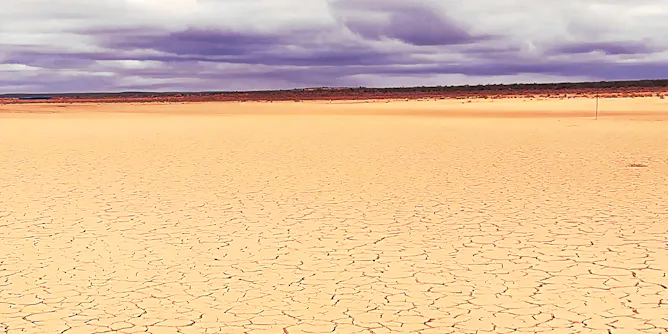
South Africa’s driest regions rely on groundwater, which dries up as the climate warms. Replenishing aquifers with excess rainfall may be a solution.
Articles on World Water Day
Displaying all articles

Nationalistic behavior can put people, economies and ecosystems, and even peace, at risk. The US, which paused Columbia River talks with Canada, isn’t the only country shifting in this direction.

The bottled water industry can undermine progress of projects aimed at creating safe-water systems for all, by redirecting attention to a less reliable, less affordable option.

Although it has been considerably less studied than other environmental problems, salinization presents major challenges for biodiversity in freshwater and coastal areas.
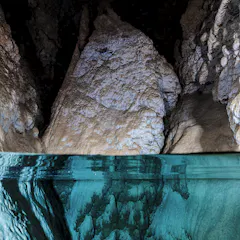
Aquifers are highly prevalent across Africa – but they’re not always going to be usable.
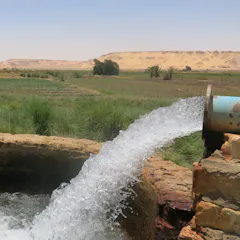
Our planet’s invaluable natural store of freshwater is woefully neglected.
Groundwater has the potential to support broad economic, humanitarian and social development in sub-Saharan Africa, as it has in other regions globally.
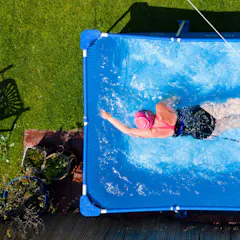
With fewer people commuting, home water use changed radically overnight in March 2020.
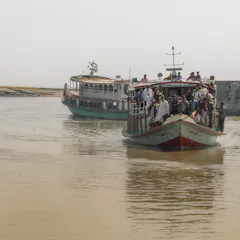
Water and climate issues are expected to cause more than one billion people to migrate by 2050.
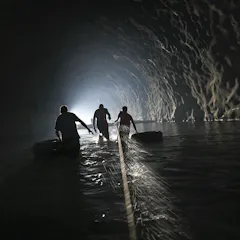
Water privatization is often seen as a solution to municipal budget shortfalls and aging water systems.
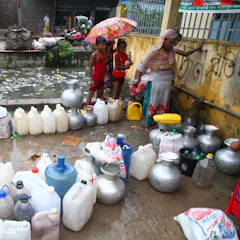
Water is essential for health, economic well-being and social equity, but too many people around the world still don’t have access to clean drinking water and sanitation.
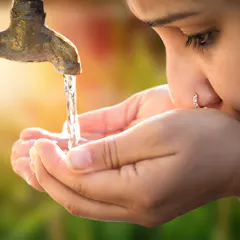
World Water Day shines a light on the importance of safe, clean drinking water, but a new report finds Canada’s freshwater systems are under stress.
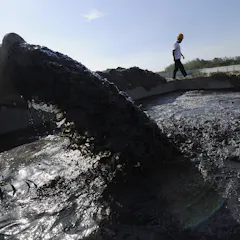
There is no longer any good reason to waste any type of water. We have the technology to turn waste water into a vital resource.
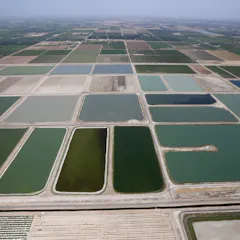
Worldwide, farmers are already using untreated waste water to irrigate their crops. Here’s how to mitigate the danger.
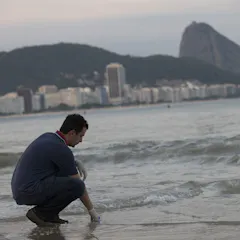
Developed and developing countries alike struggle with water quality problems. For World Water Day, a look at the challenges – and some potential solutions – to better treating wastewater.
The invention of the flush toilet was probably one of the most unsustainable innovations in human history.
States, including Colorado, restrict the use of rain barrels. A water law scholar says a better way to conserve is reduce waste from big – and powerful – water users.
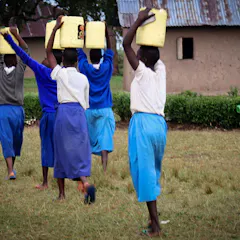
Many women in developing countries spend hours every day fetching water for their families. Reducing the burden of water work will improve their health and welfare.
Top contributors
-

Academic Officer, Water Resource Management Unit lead, Institute for Integrated Management of Material Fluxes and of Resource (UNU-FLORES), United Nations University
-
Scholarly Director of the MacEachen Institute for Public Policy and Governance, Dalhousie University
-
Associate Dean for Academic Affairs, Associate Professor of Environmental and Natural Resources Law, University of Oregon
-
Project Officer (Water-Energy-Food Nexus Central Asia), International Union for the Conservation of Nature
-
Associate Programme Officer, Institute for Integrated Management of Material Fluxes and of Resources (UNU-FLORES), United Nations University
-
Professeure agrégée, Sciences biologiques, Université du Québec à Montréal (UQAM)
-
Professor, Global Development Studies, and Director, Municipal Services Project, Queen's University, Ontario
-
Professor in Human Geography, Sustainable Consumption Institute, University of Manchester
-
Visiting Scholar, University of Guelph
-
Research Assistant in Geography, University of Manchester
-
Collaborator, Centre for Sustainable Development, University of Cambridge
-
Senior Research Fellow and Cluster Coordinator Institute on Comparative Regional Integration Studies (UNU-CRIS) and Adj Prof McMaster University, Canada, United Nations University; McMaster University
-
Professor of Hydrogeology, UCL
-
Former Director of the Institute for Water, Environment and Health (UNU-INWEH), United Nations University
-
PhD student in Human Geography, University of Manchester