
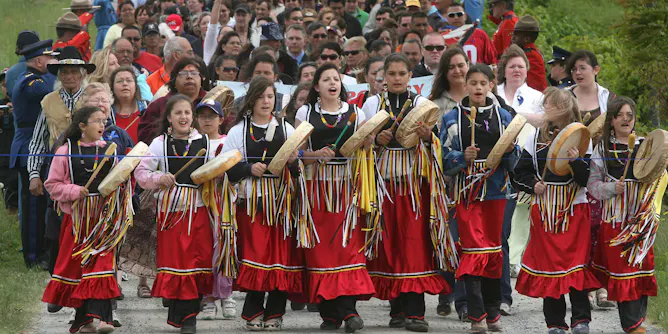
Memories can be powerful tools to address humanity’s most difficult political, sociological and environmental problems
Articles on World War I
Displaying 121 - 140 of 369 articles
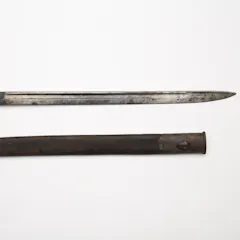
There is no weapon more visceral than the bayonet. It encourages an intimate form of killing, and during WW1, Australia troops plunged, parried and stabbed with great vigour.
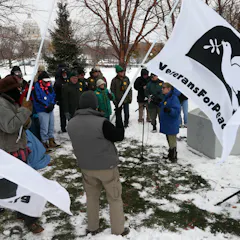
Veterans of past wars have long been at the forefront of peace advocacy in the United States.

Despite many attempts, the Kurds have never won and kept their own nation – though, after World War I, they came close.

In a world that is unrecognisable to that of 1914, should the British army be relying on recruitment tactics that are a century old?

While clear-eyed about the country’s injustices, Melville never succumbed to cynicism. On the author’s bicentennial, American readers could use a dose of his ability to fuse realism with idealism.

An expert explains why war memorials with religious symbols can have different meanings in a diverse society.
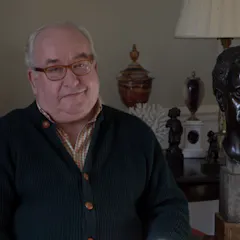
In 1918, in Wünsdorf prisoner-of-war camp, a German sculptor created a bust of Indigenous soldier Douglas Grant. For decades, the whereabouts of this nationally significant sculpture were unknown - until now.

Sir Alan Herbert’s 1919 novel was based on a true story and highlighted the injustice of executing shell-shocked soldiers for cowardice.
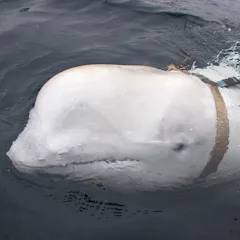
Russia isn’t the only nation suspected of training marine mammals for military use – the US, UK, and Ukraine have all done so in the past.
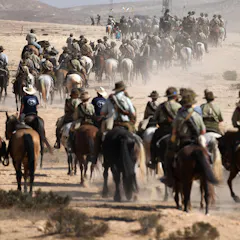
In Aboriginal and Torres Strait Islander communities, Anzac stories are often coloured by racism and ongoing injustices that negate the myth of Anzac ‘mateship’.
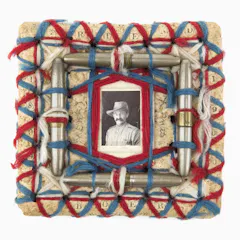
Army ration biscuits known as ‘Anzac tiles’ were durable but bland - as Australian war archives show, they served as stationery, Christmas cards and as the basis of art.
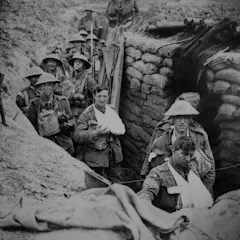
The first world war spurred a host of developments in the fields of science, medicine and architecture. Alongside these came new qualifications and professions, such as physiotherapy.

Words are as important as pictures for helping us come to terms with such a huge cultural loss.
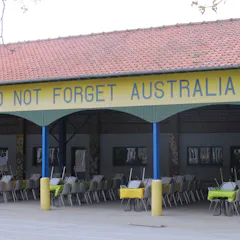
Since the end of the first world war, the Australian media has often reported that ‘the French’ care about, remember and even venerate the Anzacs. But is this true? And which French people?
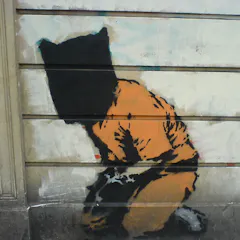
Michael Haneke’s allegorical 2009 film showed how a peaceful society can be shattered within a single generation. It’s a lesson for us now in a world drifting toward populism and violence.
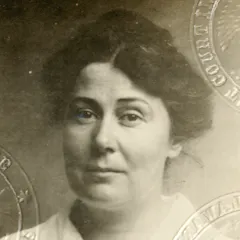
Ellen N. La Motte’s ‘The Backwash of War’ was praised for its clear-eyed portrayal of war, but was swiftly banned. Yet the similarities between her spare prose and Hemingway’s are unmistakable.
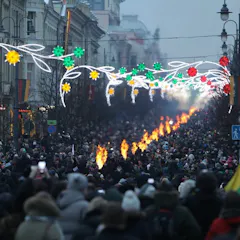
While many countries across Eastern Europe celebrate 100 years since they were born or restored as nation-states after the First World War, not everyone in these states are celebrating.

It was 100 years ago this month that Benito Mussolini created the fascist party in Italy. Today, his life offers cautionary lessons for contemporary politics.
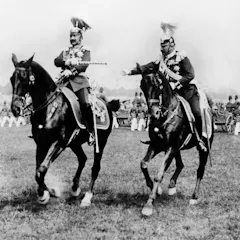
A toxic mix of wishful thinking, brinksmanship, finger-pointing, and fatalism in July 1914 bear similarities to Brexit.
Top contributors
-

Chancellor's Professor of Medicine, Liberal Arts, and Philanthropy, Indiana University
-
Principal Lecturer in History, Manchester Metropolitan University
-
Professor, University of Leeds
-
Senior Lecturer, School of Humanities and Social Sciences, Deakin University
-
Lecturer in History, University of Auckland, Waipapa Taumata Rau
-
SEACAMS R&D Project Manager, Centre for Applied Marine Sciences, Bangor University
-
Professor of Economics, University of Warwick
-
Associate Professor in Politics and International Relations, Monash University
-
Associate Professor, School of History, ANU / Chercheur Associé at the Centre d’Histoire de Sciences Po, Australian National University
-
Assistant Professor of Literature and History, University of Warwick
-
Reader in Modern Political History, Loughborough University
-
Senior Lecturer in Sociology, Adelaide University
-
Senior Lecturer in Modern European History, Cardiff University
-
Professor in German Studies, The University of Melbourne
-
Professor of Creative Arts, Griffith University