
There’s a big difference between rehoming and abandonment.
Articles on Wolves
Displaying 41 - 60 of 64 articles
The National Park Service is moving wolves to Isle Royale in Lake Superior to replenish a small pack on the island. Wolves prey on moose, which are overgrazing the island. It doesn’t hurt that they are charismatic.
As omnivores, dogs should be able to adapt well and manage on well prepared commercially available vegetarian diets as long as the essential nutrients they would normally get from meat are present.
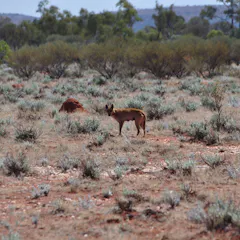
An attack on a WA mine worker has highlighted the danger of wild dingoes, particularly when attracted by humans’ food - one of the factors that can make an attack by wild predators much more likely.
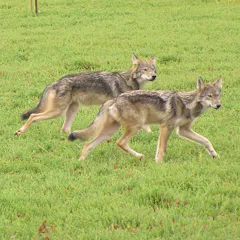
Tracking wild animals can provide lots of valuable data. New research suggests audio recordings of wild wolves can replace the typical radio collars, which can be expensive and intrusive.
When humans have conflicts with wildlife, the first reaction is often to cull them. But there’s little evidence to show that it works, and removing predators can even backfire and make things worse.
Dingoes increase cattle yields, mountain lions reduce car crashes and vultures eat organic waste: like them or not, predators help humans.

Wildlife hunts are supposed to be grounded in sound science, but new research casts doubt on this assumption.

Having movable eyebrows – and evolving beyond the Neanderthal ridge – may have played a crucial role in early human survival.

Some recent bad behaviour has been explained as being alpha but the scientist who coined the phrase discredits that theory. Instead, Prof. Sosteric suggests alphas are raised on toxic socialization.
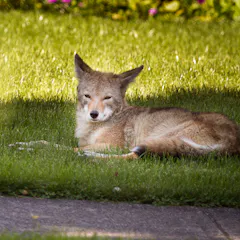
A parasite found in coyotes, wolves and foxes is now spreading to dogs and their owners as its range expands across Canada.
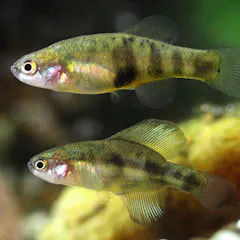
Parents’ DNA try to manipulate one another in a bid to shape junior in their mould.

Legislation designed to protect wildlife is being rolled back or ignored in all sorts of ways in all sorts of places, according to a new global database of attacks on green tape.
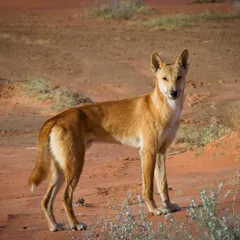
Dingoes and wolves can help control destructive smaller predators, new research shows, but only if we encourage them across wide areas.
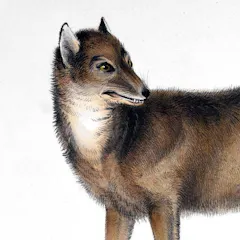
The species died out long before humans could properly study it.

Collective environmental guilt could be leading to a rise in werewolf sightings in the English countryside.
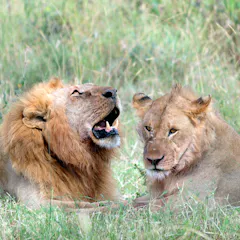
Kudu and buffalo altered their activity when lions and spotted hyena were reintroduced into the areas where these species lived.
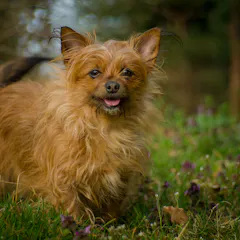
The how and the when of dog domestication are fairly settled. As for the where: now DNA says Fido traces his roots back to wolves in Central Asia that lingered around people’s camps millennia ago.

With humans providing lots of easy leftover food, wolves had a great incentive to ‘self-domesticate’.
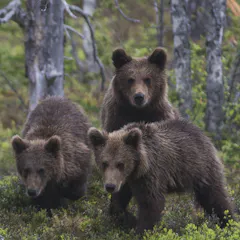
In a rare conservation success story, research has shown that numbers of wild large carnivores in the continent have been steadily increasing and a third of the European mainland now has at least one kind…
Top contributors
-

Professor in Wildlife Ecology and Conservation, School of Life & Environmental Sciences, Deakin University
-
Postdoctoral Research Associate, Leverhulme Centre for Anthropocene Biodiversity, University of York
-
Environmental Social Scientist, Newcastle University
-
Associate Professor, Grimsö Wildlife Research Station, Swedish University of Agricultural Sciences
-
Associate Professor of Behavioural Ecology, Curtin University
-
Professor of Journalism and Chair, Knight Center for Environmental Journalism, Michigan State University
-
Associate Professor, Sociology, Athabasca University
-
Professor, Zoology & Director: Centre for African Conservation Ecology, Nelson Mandela University
-
Post-doc, University of Georgia
-
Post Doctoral Fellow Zoology and the Centre for African Conservation Ecology, Nelson Mandela University
-
Associate Professor, Veterinary Parasitology and Public Health, University of Saskatchewan
-
Professor and Sixth Century Chair of Human Palaeoecology, University of Aberdeen
-
Associate Professor, Global Ecology, University of Sydney
-
Postdoctoral Research Officer, University of Oxford
-
Reader in Palaeobiology, Liverpool John Moores University