
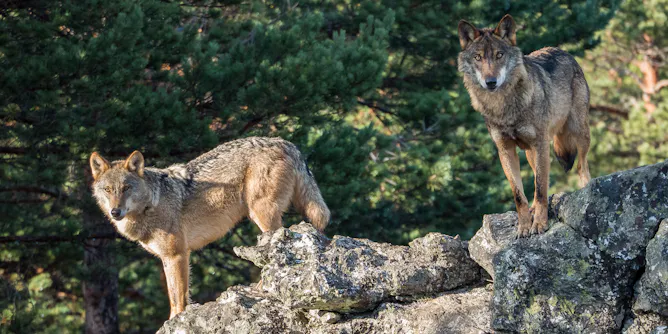
Some European countries view wolf protection differently to others. A look at Spain’s experience may explain why.
Articles on Wolves
Displaying 21 - 40 of 64 articles

Recent survey evidence suggests that most Canadians have positive opinions of wolves and rural Canadians in particular have strongly positive feelings on wolves and their protection.
Here’s what determines if a problematic wild animal is saveable or cullable.
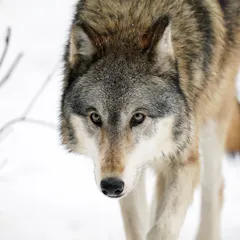
Reintroducing wolves can restore important ecological processes, but it can have unintended effects when smaller predators like coyotes are driven closer to people, a team of ecologists found.
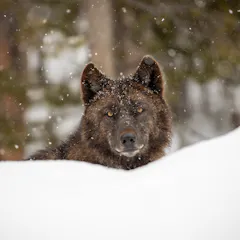
Less than a century ago, Colorado hunted, trapped and poisoned all the wolves within its borders. Today it’s restoring them – a change that reflects a profound shift in human thinking.
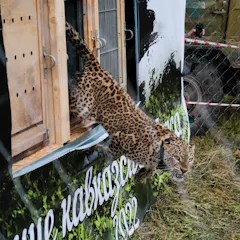
New research studies the factors that determine whether large carnivore reintroductions will be a success.
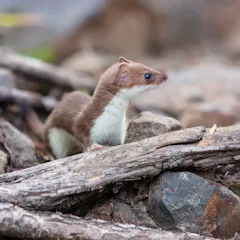
Polar bears and wolves may get the glory, but small predators like weasels, foxes and their cousins play outsized ecological roles. And many of these species are declining fast.

Wildfires are remaking western US forests. Decisions about managing forests that have burned should factor in how fires change animal behavior and interactions between predators and prey.
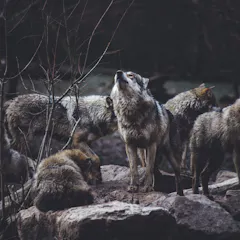
Woodland caribou populations are on the decline because human activity changes their habitat and exposes them to predation by wolves. But changing wolves’ hunting habits may protect the caribou.
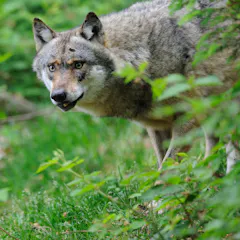
Wolves killing livestock are seizing an opportunity for a meal in a landscape with little natural prey.
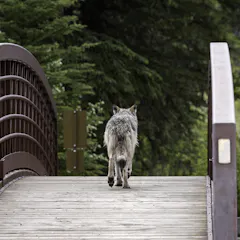
The hunting territories of wolves in the northern boreal forests are changing, in part due to the convenience of trails built for logging. This has placed caribou at an even greater risk.
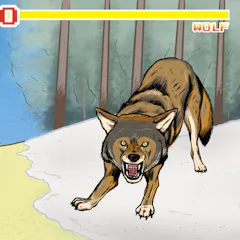
The answer isn’t as clear cut as you might think and depends on a number of factors, including the terrain and whether it’s pack vs pack.
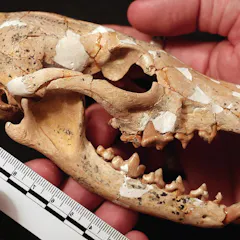
Jackals appeared and established themselves in Africa in at least the last five million years. These animals have evolved and adapted to the changing environment, allowing them to survive.
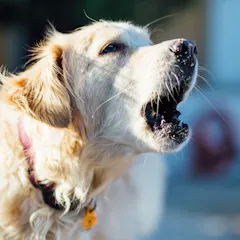
Dogs’ barks say a lot about how they’re feeling.

Our research shows dire wolves lived in the tropics not the Arctic, and were not especially close relatives of the grey wolf.
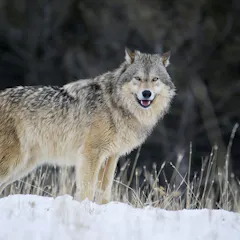
For the first time in the US, a ballot measure will ask voters whether to restore wolves to a place where they’ve been eradicated. Coloradans have strong views on both sides.

Your faithful friend’s view of the world is different than yours, but maybe not in the way you imagine.
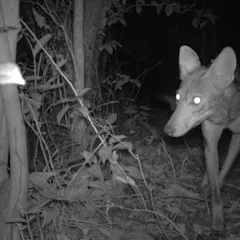
Coyotes, whose range is expanding, are now at the doorstep of South America.

The abandonment of crops and pastures allows the natural regeneration of bushes and forests and the recolonization of fauna.

Wolves are not bad – they’re just trying to survive in a world where they are unwelcome.
Top contributors
-

Professor in Wildlife Ecology and Conservation, School of Life & Environmental Sciences, Deakin University
-
Postdoctoral Research Associate, Leverhulme Centre for Anthropocene Biodiversity, University of York
-
Environmental Social Scientist, Newcastle University
-
Associate Professor, Grimsö Wildlife Research Station, Swedish University of Agricultural Sciences
-
Associate Professor of Behavioural Ecology, Curtin University
-
Professor of Journalism and Chair, Knight Center for Environmental Journalism, Michigan State University
-
Associate Professor, Sociology, Athabasca University
-
Professor, Zoology & Director: Centre for African Conservation Ecology, Nelson Mandela University
-
Post-doc, University of Georgia
-
Post Doctoral Fellow Zoology and the Centre for African Conservation Ecology, Nelson Mandela University
-
Associate Professor, Veterinary Parasitology and Public Health, University of Saskatchewan
-
Professor and Sixth Century Chair of Human Palaeoecology, University of Aberdeen
-
Associate Professor, Global Ecology, University of Sydney
-
Postdoctoral Research Officer, University of Oxford
-
Reader in Palaeobiology, Liverpool John Moores University