

When elephants leave Kruger National Park, they are sometimes killed and their meat is shared with nearby communities. This policy may have unintended consequences.
Articles on Human-wildlife conflict
Displaying 1 - 20 of 86 articles

Unhoused people face the risk of contracting disease from wild animals, while animals can be displaced by human presence.
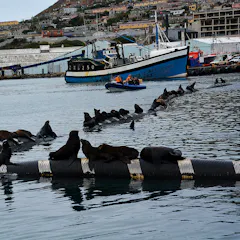
From Cape Town’s kelp forests to debates over hunting and sharks, human relationships with wildlife are reshaping conservation across South Africa.
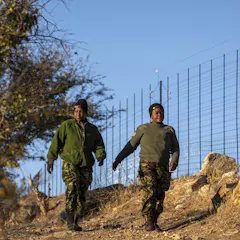
Nature reserve fences can protect wildlife and people, but they also break up natural landscapes, restrict animal movement, and affect nearby communities.
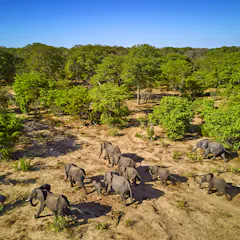
There is a desperate need to balance wildlife conservation with the wellbeing of people living in these shared spaces.

Conflict between baboons and humans won’t change unless human behaviour changes.
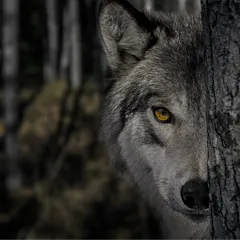
Our natural landscapes need wolves. And right now, wolves need all the good PR they can get.
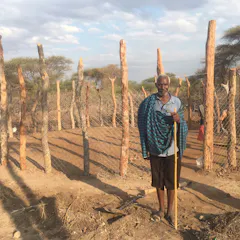
Management and protection of livestock is fundamental for reducing conflict with wildlife.
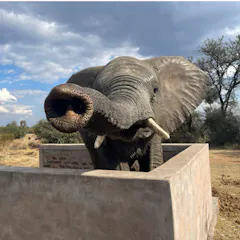
African savannah elephant numbers are surging. But for farmers in elephant territory, that can spell disaster. To solve human-elephant conflict, we might need to use smell.

Colorado has spectacular scenery, but it comes with wild animals, and they sometimes wander into town. A ballot measure that would ban hunting wild cats is the latest test of public views on hunting.
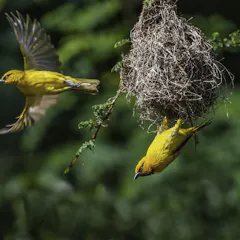
Africa is home to 20% of the world’s bird species, but land-use changes threaten their survival.

As the world’s population grows, contact between humans and wildlife will increase in more than half of Earth’s land areas. A new study shows where the largest changes will occur.

Whether they’re going to cook a fish, have it mounted or just take a photo and then release it, anglers want more than a severed head. But with shark numbers rebounding, they’ve got competition.

Conflicts between herders and the wild ancestors of their yaks, camels and reindeer are a serious threat to both people and wildlife, writes a scientist who has seen these clashes firsthand.

Lake Kariba stretches between Zimbabwe and Zambia. Its residents are bearing the brunt of a climate change-induced drought, with fish supplies dwindling and human-wildlife conflict occurring.
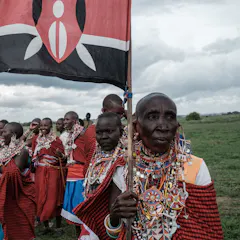
Conservation strategies should promote equitable benefits across communities.
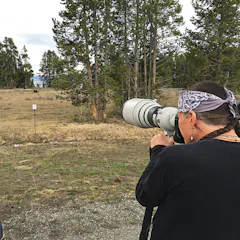
The caption may say that only scientists and trained professionals should handle wild animals, but viewers remember the image, not the words.
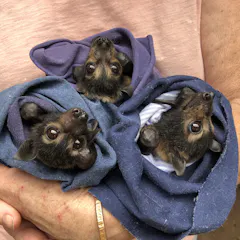
If a colony of flying foxes sets up in your backyard, you might be annoyed – or concerned. But these gentle bats are vital to our forests.
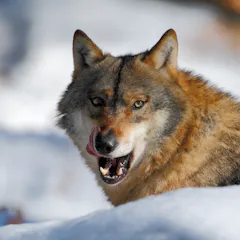
Why Arne Næss’s ideas of ‘deep ecology’ can help us live with wolves.

Hundreds of wildlife rehabilitation centers across the US and Canada treat sick and injured animals and birds. Digitizing their records is yielding valuable data on human-wildlife encounters.
Top contributors
-

Senior Researcher and Statistician, University of Hohenheim
-
Professor of Fish, Wildlife, and Conservation Biology and Director, Center for Human-Carnivore Coexistence, Colorado State University
-
PhD Student in Fisheries & Wildlife and Ecology, Evolutionary Biology & Behavior, Michigan State University
-
Environmental Social Scientist, Newcastle University
-
Postdoctoral Research Associate, Leverhulme Centre for Anthropocene Biodiversity, University of York
-
Professor and Chair, Southwestern Environmental Science and Policy, Northern Arizona University
-
Professor of Wildlife Conservation, University of Oxford
-
Postdoctoral research fellow, German Centre for Integrative Biodiversity Research
-
Adjunct Assistant Professor, University of Wyoming
-
Affiliate Faculty in Fish, Wildlife and Conservation Biology, Colorado State University
-
Lambert Reader in Human-Wildlife Coexistence, Birkbeck, University of London
-
Postdoctoral Researcher in Environmental Conservation, UMass Amherst
-
Associate Professor, University of Oxford
-
Assistant Professor in the Human Dimensions of Natural Resources, Colorado State University
-
Adjunct Assistant Professor, University of Miami