

The welfare information that animal industries release shapes public trust.
Articles on Dogs
Displaying 1 - 20 of 427 articles

The finding highlights the amazing diversity present across dog breeds.

No Australian pets have contracted H5 bird flu, but overseas outbreaks suggest cats are particularly vulnerable.

‘Who’s a good boy? Yes, you are!’

Think your dog can tell when you’re angry rather than sad? New research inside dogs’ brains suggests the answer might be more complicated than you think.

From canine physiotherapy to pet supplements, wellness is booming. But what does the evidence say about keeping our animals healthy?

Larry has watched seven prime ministers come and six of them go.

The bonds between humans and animals are richly represented in both literature and visual arts throughout ancient Greek culture.
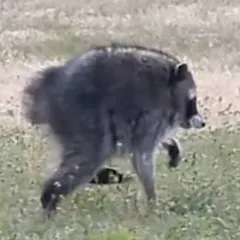
The deformity is so severe it would be extremely challenging to try and correct it surgically.

Dogs and cats both give you a brief mood lift, but only one of them seems to raise your stress levels too.

Overcrowded homes, mismatched dog groups and sizes are the biggest drivers of dog-on-dog aggression in South Africa.
How animals respond to death.

Various dog breeds embody distinct positive traits and behaviors that make them ready role models for human leaders.

An original new study on pet ownership assesses how attached people are to their cats and dogs in order to understand the emotional connection and the associated health benefits at all ages.

When it comes to animals they love, many owners have ‘weight blindness’.

Is radiation really changing Chornobyl’s dogs? It’s a great story, but not supported by evidence.

Animals won’t always express pain in the way we expect.

As employers rethink wellbeing in a post-pandemic workplace, the key question is whether policies for pets at work are lawful, evidence-based and inclusive.

Based on international collaborations lasting decades, two new studies have unlocked previously unavailable information from the bones of dogs long dead.

Co-sleeping with your pet produces a paradox: it feels beneficial — enhancing connection, comfort and emotional safety — but it objectively disturbs your sleep, and eventually your overall well-being.
Top contributors
-

Senior Lecturer in Animal Science, Nottingham Trent University
-
Postdoctoral Researcher in Veterinary Science, University of Sydney
-
Associate Professor, School of Animal and Veterinary Science, Adelaide University
-
Professor, School of Veterinary Science, University of Sydney
-
Research Fellow, Animal Welfare Science Centre, The University of Melbourne
-
Senior Lecturer in Animal Science, Scotland's Rural College
-
Fellow, Keele University
-
Professor, Management and Organizational Studies, Huron University College and Coordinator of Animal Ethics and Sustainability Leadership, Western University
-
Veterinarian, James Cook University
-
Animal Geographer, Keele University
-
Richard Malik is a Friend of The Conversation.
Veterinary Internist (Specialist), University of Sydney
-
Reader, School of Psychology, Queen's University Belfast
-
Senior Lecturer, Sydney School of Veterinary Science, University of Sydney
-
Professor in Wildlife Ecology and Conservation, School of Life & Environmental Sciences, Deakin University
-
Lecturer in Veterinary Education, Royal Veterinary College