
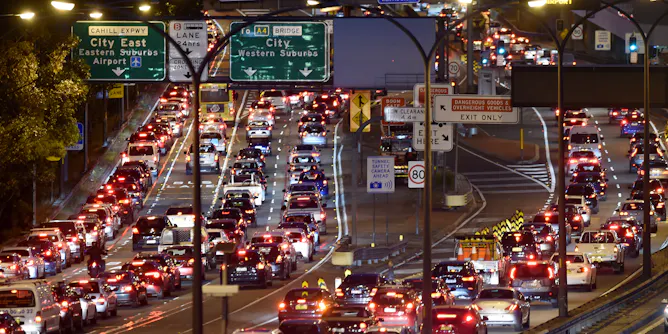
Expanding freeway networks undermines climate action. It points to a deep-seated flaw in Australia’s urban planning systems which must be solved.
Articles on Urban planning
Displaying 41 - 60 of 694 articles
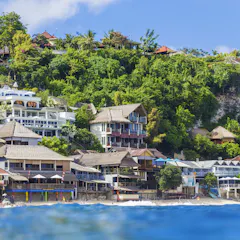
The Bingin Beach settlement has proven sustainable for more than 50 years, and has become an integral part of the local heritage.

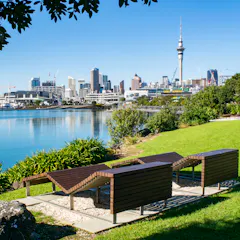
Other countries have learned to harness the economic and cultural energy of their super-cities, but New Zealand is held back by Auckland’s failure to thrive.
Humans change the urban landscape with religious, cultural and political activities, which in turn can influence the evolution of urban animals and plants.

AI-powered technologies are increasingly being integrated into assistive technologies like hearing aids and prosthetics. This is changing how the people who use them experience urban space.

A new study involving more than 150 industry experts identifies how to turn ‘good intentions’ on emissions into better ways to design, build and maintain our cities.
NZ playgrounds are often separated from city life, constraining children’s spontaneous play. Planners can learn from car-free urban spaces where children are free to roam.
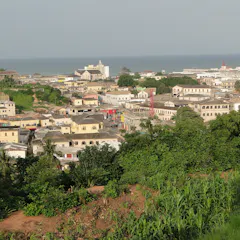
Many small towns in Ghana lack the infrastructure and planning capacity to cope with their growth.

Our maps show some kids have nearer, bigger playgrounds than others.
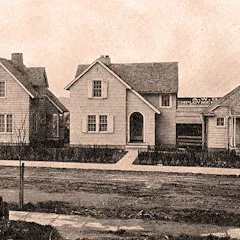
During World War I, the US government designed and constructed entire communities for workers and their families, setting new standards for housing and neighborhood planning.
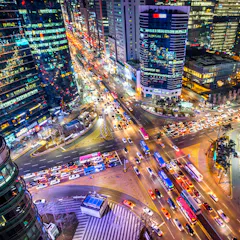
By 2050, the majority of the world’s population will live in cities. So how do we make them as liveable as possible?

A New South Wales senate enquiry into public toilets is underway. Now’s our chance to talk about how public toilets communicate social values.

Housing announcements are everywhere right now, but few are based on evidence. Here’s what the politicians aren’t talking about, but should be.

Hot sunny days can make footpaths, bike lanes and city streets unbearable. If we want people to ditch the car, we’re going to need more trees, research shows.
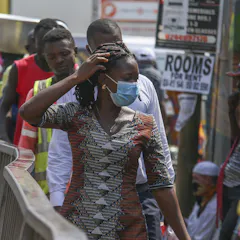
Ghana’s cities pay little attention to the needs of walkers.
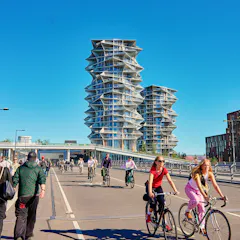
Our ranking covers over 100 metrics in 183 cities spread across 93 countries.
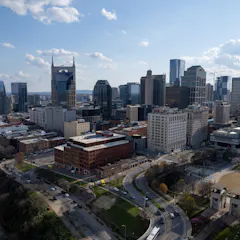
People’s perceptions of risk shape where businesses choose to locate, new research suggests. Interestingly, conservatives and liberals view risk very differently.
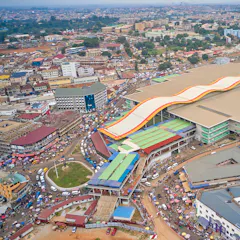
Kumasi was once considered among west Africa’s greenest cities.
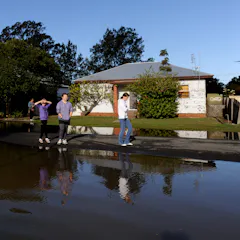
Researchers examined how disaster risk informs decisions about new housing. They found crucial problems that leave communities exposed.
People want easy access to green spaces and shops and they don’t want to travel more than 20 minutes to get there – but women feel a lot less comfortable after dark.
Top contributors
-

Professor of Human Geography and Planning, University of Tasmania
-
Senior Lecturer in Urban and Environmental Planning, Griffith University
-
Head of Urbanism and Associate Professor of Urban Studies, School of Architecture, Design and Planning, University of Sydney
-
Associate Professor of Urban Planning, The University of Melbourne
-
Professor of Planning, School of Built Environment, UNSW
-
Associate Professor in Urban Planning, The University of Queensland
-
Professor of International Planning, Centre for Urban Research, RMIT University
-
Associate Professor in Urban and Regional Planning, University of Sydney
-
Teaching Assistant Professor, University of Pittsburg and Visiting Associate Professor, The University of Osaka, University of Pittsburgh
-
Associate professor, UNSW International Centre for Future Health Systems, UNSW
-
Honorary Professor of Planning, The University of Queensland
-
Senior Lecturer in Urban Planning & Design, Monash University
-
Professor of Sustainability, Curtin University
-
Senior Lecturer, University of Environment and Sustainable Development
-
Professor, City Futures Research Centre, UNSW