

Any benefit of eating ice cream can likely be explained by other factors – such as eating a healthy diet or exercising.
Articles on Type 2 diabetes
Displaying 41 - 60 of 169 articles

You’ve probably heard of the drug semaglutide or Ozempic, the diabetes medication being used for weight loss. So what are the risks and benefits? And who should have access to it?

The risk of developing eye complications is high in young people with Type 2 diabetes, which is increasingly affecting children and adolescents, especially those who are more sedentary.

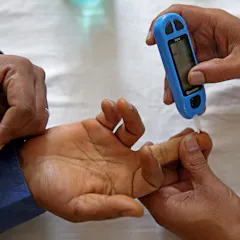
In Canada, 14.4 per cent of South Asians have Type 2 diabetes, the highest prevalence of any other ethnic group in the country. Why is this population so disproportionately affected by diabetes?

Improving diabetes care in South Africa requires strong will and support from health authorities, introduction of clinical information systems, the use of technology and digital solutions.

Here’s why it’s so important to look after your oral health.

As diabetes progresses, insulin injections become the only treatment option. But the transition from oral medication to injectable insulin is often a bumpy one.

A number of recent studies indicate people who have had COVID are more likely to be diagnosed with diabetes.

Everything from where your coffee is grown right down to how it’s brewed can affect what health benefits it might have.

With such a sharp increase in global prevalence, it’s clear that diabetes is spiralling out of control. It can no longer be ignored.
Just over 10% of the world’s adults now live with diabetes and the COVID pandemic saw many people sitting down for longer periods – but small daily changes can improve health.

“Fat cakes” are incredibly popular in cities and townships across sub-Saharan Africa. But they are also unhealthy because of their high carbohydrate content.

Mexican Americans who have more formal education than their parents are much less likely to have Type 2 diabetes, new research finds.

Ageing and other health conditions can both complicate matters when it comes to managing this condition.

Low-carbohydrate diets worked as well as meal-replacement diets in achieving remission.

Even just a few minutes of walking every hour can help better manage blood sugar levels.

Almost a quarter of a million New Zealanders have type 2 diabetes. If nothing is done to change the current trajectory, the number will increase by 70-90% within 20 years, warns a new report.

Latest meta-analysis shows weight loss is the most important factor in achieving remission.

‘One-size-fits-all’ weight loss advice could be inadvertently harmful to some patients.

The rapid rise in diabetes mustn’t be overlooked, as it could have devastating health and economic effects. Most national health systems are already struggling with infectious diseases.
Top contributors
-

Honorary Associate Professor, University of Leicester
-
Laureate Professor in Nutrition and Dietetics, University of Newcastle
-
Programme Leader, MRC Epidemiology Unit, University of Cambridge
-
Clinical Associate Professor, Diabetes and Endocrinology, Aston University
-
Assistant Professor of Health Promotion and Policy, UMass Amherst
-
Postdoctoral Research Fellow, Epidemiology, University of Cambridge
-
Chairperson, Diabetes Alliance; Co-founder, Diabetes Research Centre, University of Pretoria
-
Associate Professor, Department of Biology and Institute of Biochemistry, Carleton University
-
Associate Professor, Health Sciences, University of Waikato
-
Lecturer, Nutrition & Dietetics, Curtin University
-
Chair of Human Nutrition, University of Glasgow
-
Senior Lecturer, Pharmacy, Aston University
-
Associate Professor in Biology and Biomedical Science, Aston University
-
Professor of Medicine, Monash University
-
Head of Diabetes Clinics, Baker Heart and Diabetes Institute