
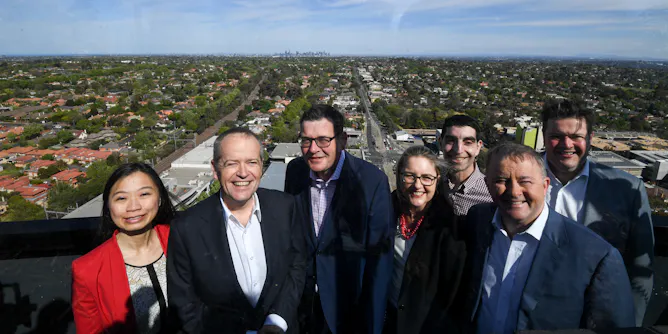
Whichever party wins, Victoria’s new government will have promised the biggest transport infrastructure project in Australian history. So what are the promises and are they backed by proper assessment?
Articles on Transport planning
Displaying 61 - 80 of 88 articles
Apps that seamlessly combine all our travel options could be the most significant transport innovation since the automobile, but early trials show government policy support is vital to make MaaS work.

The private car is the default transport option for many families. This reduces physical activity and increases greenhouse gas emissions, with unhealthy results for their children and the environment.

Blind belief that new technology and disruptive innovation will fix congestion in our cities overlooks the need for strong leadership that supports progressive policy innovation.
In the election bidding wars, parties commit billions to transport projects, often before all the work needed to justify these has been done. More cost-effective alternatives hardly get a look-in.

For 40 years the author has argued that trains and trams are better than buses. New ‘trackless trams’, which take innovations from high speed rail and put them in a bus, have changed his mind.
Staying at home puts women at greater risk of health problems – cities need to change to encourage them to go outside.
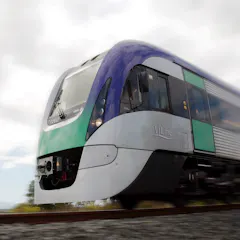
High-speed rail for Australia has been on the drawing boards since the mid-1980s but has come to nothing. Three states are developing medium-speed rail with federal funding, but NSW is missing out.
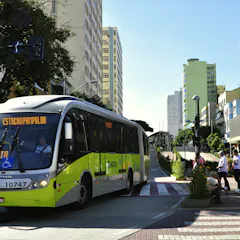
Trains and trams get most attention, but ‘tweaking’ bus transit can transform cities. Buses can be more cost-effective and deliver better service, especially for small to mid-sized cities.

In the 1970s, both Kyoto and Melbourne made fateful decisions about their transport networks. Melbourne today enjoys the benefits of trams, while Kyoto lives with the consequences of losing them.
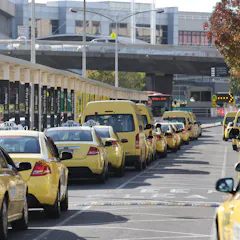
Good public access for Melbourne Airport and others like it depends on not fixating on one solution, like a single rail line, but instead developing multiple options integrated with the city’s needs.
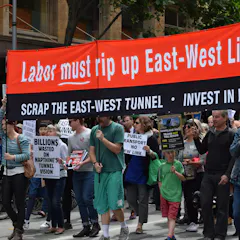
Transport infrastructure has such an impact on what kind of city we become that more democratic planning is long overdue. But public consultation is typically limited and focused on design issues.
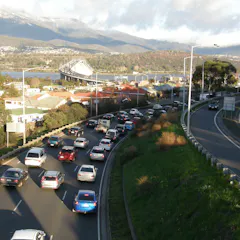
Hobart is a smaller city with big city problems that have become an election issue. Recent growth is creating traffic congestion that affects productivity, residents’ health and liveability.

Self-driving, shared, electric vehicles and increasing urban density represent four disruptions that will transform city life. But a transport utopia isn’t a guaranteed outcome of their interactions.

One potential benefit of WestConnex, which remains untouched, is that it could relieve Sydney’s city centre from cars and make it more pedestrian-friendly.
The real challenge is finding appropriate ways to invest in public transport that will not only take pressure off the system but also support improved travel on all modes, including cars.
Recent decisions to proceed with major road projects have not considered viable alternatives, despite this being a legal requirement.
The government claims figures showing the south gets more than the north are misleading.
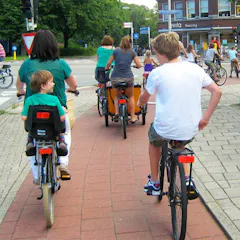
The evidence suggests a small investment in cycling infrastructure, combined with less punitive policing, would enable more Australians to escape daily traffic congestion.
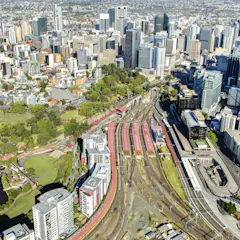
The rail project may well help get more commuters into the CBD, but offers few benefits for the parts of the broader metro area where most population growth is occurring.
Top contributors
-

Honorary Principal Fellow, University of Wollongong
-
Associate Professor of Urban Planning, The University of Melbourne
-
Transport and Cities Program Director, Grattan Institute
-
Senior Lecturer in Urbanism, University of Sydney
-
Associate, Grattan Institute
-
Honorary Senior Fellow in Transport Planning, The University of Melbourne
-
Professor of Sustainability, Curtin University
-
Professor of Urban Policy and Director, Urban Futures Enabling Impact Platform, RMIT University
-
Adjunct Researcher, Cities Research Institute, Griffith University
-
Associate professor, UNSW International Centre for Future Health Systems, UNSW
-
Curtin University
-
Adjunct Fellow, School of Earth and Environmental Sciences, The University of Queensland
-
E-Mobility Research Fellow, The University of Queensland
-
Lecturer, UNSW
-
Education Fellow in Transport Planning, PhD Candidate, The University of Melbourne