
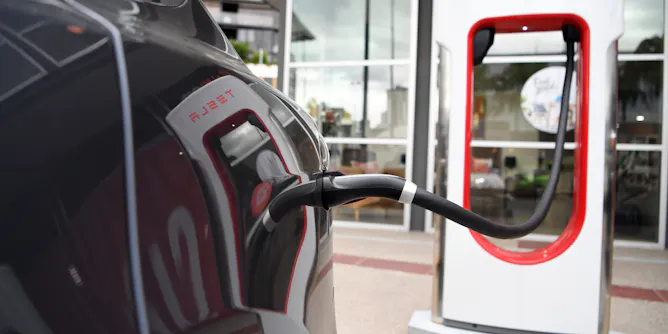
Electric vehicles would lower emissions, but if their lower running costs lead to increased car use that creates a whole lot of other costs for our cities.
Articles on Transport planning
Displaying 21 - 40 of 88 articles

COVID led to commuting time savings worth over $2,000 a year for each driver and $5,000 per public transport user. But as workplaces reopen, we may need road user charges to keep traffic flowing.
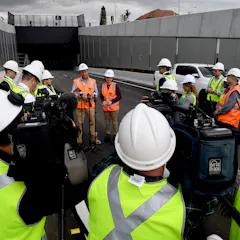
A review of all public road and rail projects worth $20 million or more and completed since 2001 reveals a 21% cost overrun. Worryingly, costs of bigger projects blew out more often and by more.
Coronavirus has changed population projections and behaviours across society. With fewer commuters we need to shift transport planning based on a hub-and-spoke network to focus on more local travel.
If we’re to get more people walking and cycling in our cities, then we need to make it easier for people, and we can learn from others overseas.
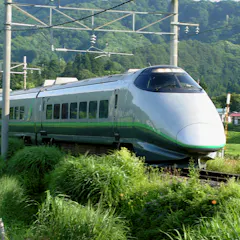
A high-speed rail network in Australia would create many benefits by reshaping cities and regional communities along its route.

Once again, the state looks intent on pressing ahead with a huge road project without releasing a business case. Among the many concerns is the failure to look at lower-emission alternatives.
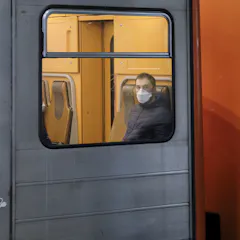
Many operators have lost almost all their fare revenue. Even those who operate on contract terms that reduce the impact of falling patronage must bear the costs of disinfection and other precautions.
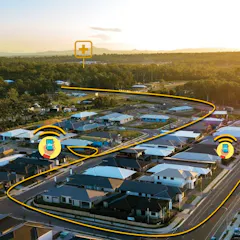
On-demand public transport has now provided over 1 million rides in 36 trials in various Australian cities. Is the problem of poor suburban public transport on the way to being solved?
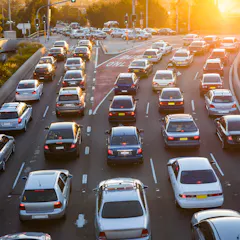
The continued upward trend in our second-biggest source of emissions is a result of government inaction on a transport mix dominated by trucks and cars and a lack of fuel-efficiency standards.
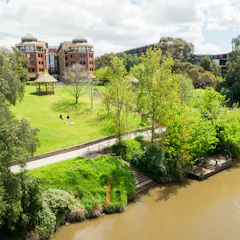
Only the inner suburbs of Melbourne and other capital cities meet the 20-minute neighbourhood test. But we could transform the other suburbs for much less than the cost of current transport projects.

States across Australia are increasingly using market-led proposals to build infrastructure. The emerging problems reflect the inherent risks of projects that bypass proper public planning processes.
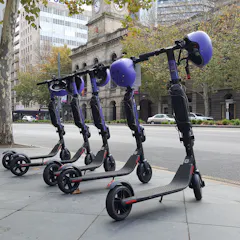
Are debates about e-scooters too narrow? Perhaps it is time to focus more on revitalising urban spaces and retrofitting road infrastructure.
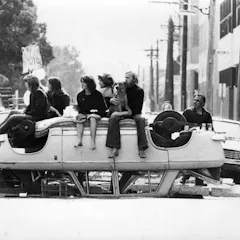
Public protests eventually forced the scrapping of some proposed freeways in 1973. Today, we have another round of projects and people are protesting again, with good reason. Government should listen.
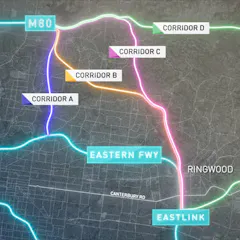
Transport modelling has been tarnished by its use to justify the predetermined projects politicians favour. But, if used more transparently, it’s a valuable tool for planning our future cities.
While called a transportation plan,
it was heavily skewed towards roads. We need the type of city-shaping thinking that underpinned the plan, but today’s plans must match 21st-century priorities.
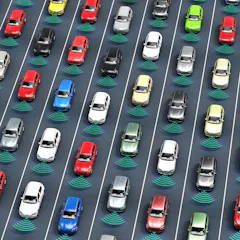
Self-driving vehicles that constantly roam the streets looking for passengers could overwhelm cities. But, if kept in check, these vehicles could be useful for improving urban transport.

Faced with the eye-watering costs of building infrastructure, it makes sense to turn to much more cost-effective smart technology to get traffic flowing.
Scenarios based on a survey of Adelaide commuters and analyses of traffic flows show it’s possible the congestion could get worse in the transition to driverless vehicles.

An analysis of trips to school has found the extra time and distance private secondary school students travel is a significant contributor to morning peak-hour congestion.
Top contributors
-

Honorary Principal Fellow, University of Wollongong
-
Associate Professor of Urban Planning, The University of Melbourne
-
Transport and Cities Program Director, Grattan Institute
-
Senior Lecturer in Urbanism, University of Sydney
-
Associate, Grattan Institute
-
Honorary Senior Fellow in Transport Planning, The University of Melbourne
-
Professor of Sustainability, Curtin University
-
Professor of Urban Policy and Director, Urban Futures Enabling Impact Platform, RMIT University
-
Adjunct Researcher, Cities Research Institute, Griffith University
-
Associate professor, UNSW International Centre for Future Health Systems, UNSW
-
Curtin University
-
Adjunct Fellow, School of Earth and Environmental Sciences, The University of Queensland
-
E-Mobility Research Fellow, The University of Queensland
-
Lecturer, UNSW
-
Education Fellow in Transport Planning, PhD Candidate, The University of Melbourne