
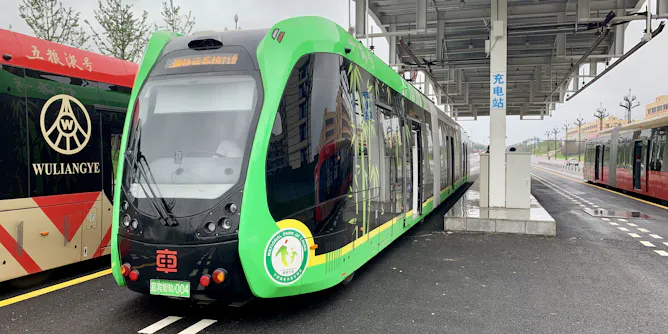
Installing light rail is costly, as Sydney has found, but it’s the gold standard for public transport along road corridors. What trackless trams can do is rapidly expand such services at low cost.
Articles on Transport planning
Displaying 41 - 60 of 88 articles

A breakdown in the road or rail systems often causes commuter chaos in Australia. Some overseas cities are more resilient because they have other options – and our bicycle network could give us that.
Commuters who drive to and from the CBD typically earn much more than most. Concerns about the fairness of charging drivers who use these busy roads at peak times are overblown.

Parcel and courier delivery vehicles are often blamed for traffic congestion in our cities. But they’re only a fraction of the traffic caused by tradespeople and other services.
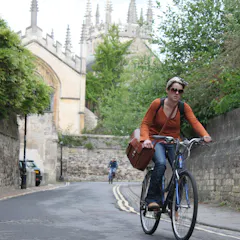
A substantial building programme is needed to rearrange our cities to benefit all types of journeys – not just commutes.
Average commuting times for Australians have increased by 23% in 15 years. And those with long commutes are less satisfied with their work, working hours, work-life balance and even pay.
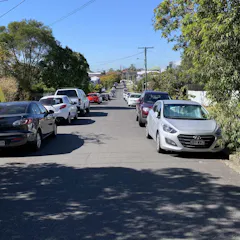
The global trend is to free up valuable city space by reducing parking and promoting other forms of transport that don’t clog roads and pollute the air. Australian cities are still putting cars first.

More than half a century after the first high-speed trains began running overseas, Australia is still waiting for the long-promised service. Right now, faster rail is a better short-term prospect.
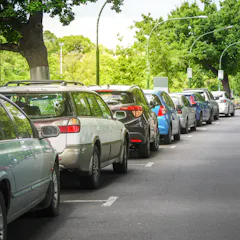
Australian cities have a glut of parking, even as politicians move to protect parking spaces or promise even more. There are better ways to keep congestion manageable and our cities liveable.
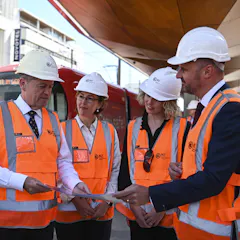
The major parties are promising tens of billions of dollars in transport spending, but only a handful of projects are on Infrastructure Australia’s national priority list with approved business cases.
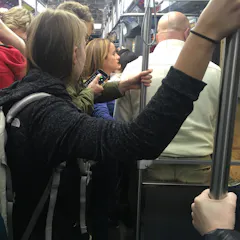
Traffic impact assessments required of major building developments mainly focus on the movement of cars, but these account for only 30-40% of trips by inner-city apartment dwellers.
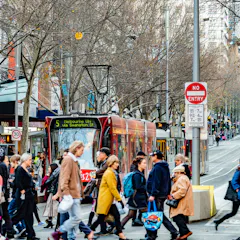
A newly released ten-year plan for Melbourne aims for fewer cars, safer streets and more shared spaces. A significant amount of parking and road space would be reallocated to walking and cycling.
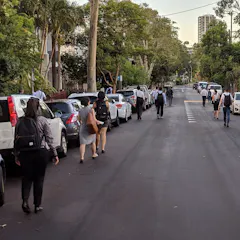
In Sydney, 44 of 178 train stations have a single side entrance. It adds up to 12 minutes of daily travel time for people walking the long way to their platform. It’s enough to make some drive instead.

Some countries have already committed to using electric aircraft on domestic routes. These aircraft could slash costs and emissions on some of Australia’s busiest flight routes.

The Commuter Car Park Fund announced in the budget sounds big, but is likely to create only around 30,000 extra spaces – a marginal benefit for Australia’s 1.2 million daily public transport users.
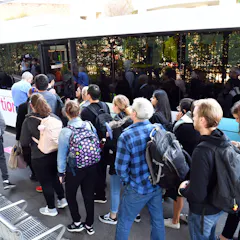
The major parties are promising projects costing tens of billions of dollars, with a surprisingly large overlap between them. Yet only two have been endorsed by infrastructure authorities.

Every major transport study since the 1970s has identified Sydney’s western rail corridor as the priority for an upgrade. The latest patronage figures confirm that’s where the need is greatest.
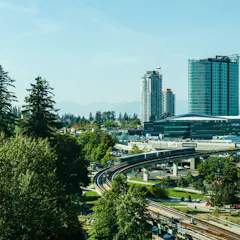
Instead of spending ever more on roads, we can learn from Vancouver’s use of congestion as a ‘friend’ in managing the development of transport networks and of the city itself.
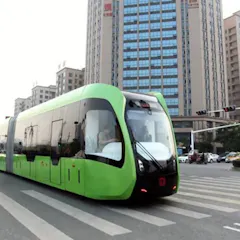
The autonomous rail rapid transit (ART) system developed in China might make buses sexy, but the technology alone won’t resolve the issues of road space and right of way in Australia.
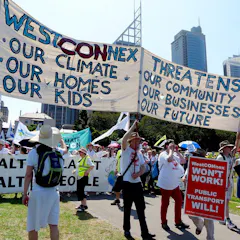
The health concerns that dominate public submissions to the parliamentary inquiry into WestConnex are a reminder that papering over such issues comes back to haunt governments.
Top contributors
-

Honorary Principal Fellow, University of Wollongong
-
Associate Professor of Urban Planning, The University of Melbourne
-
Transport and Cities Program Director, Grattan Institute
-
Senior Lecturer in Urbanism, University of Sydney
-
Associate, Grattan Institute
-
Honorary Senior Fellow in Transport Planning, The University of Melbourne
-
Professor of Sustainability, Curtin University
-
Professor of Urban Policy and Director, Urban Futures Enabling Impact Platform, RMIT University
-
Adjunct Researcher, Cities Research Institute, Griffith University
-
Associate professor, UNSW International Centre for Future Health Systems, UNSW
-
Curtin University
-
Adjunct Fellow, School of Earth and Environmental Sciences, The University of Queensland
-
E-Mobility Research Fellow, The University of Queensland
-
Lecturer, UNSW
-
Education Fellow in Transport Planning, PhD Candidate, The University of Melbourne