
Forgot your laundry in the washing machine? Sorry, you’re going to have to wash it again.
Articles on Textiles
Displaying 1 - 20 of 74 articles
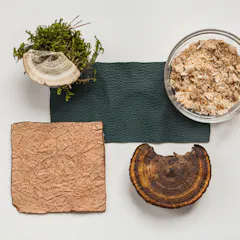
Developing a new material is only the first step. Convincing an industry built around traditional textiles to adopt it is a very different challenge.

Every year, thousands of tonnes of unsold clothing go to landfill. Australia could learn from the EU model.

Clever clothing that can sense health issues are not far off, but they could prove hard to recycle or reuse.
Two garments made from the same fibre may have very different environmental footprints depending on how they were processed and finished.

While care labels contain information on what washing machine programmes are suitable for garments, use of these machines should be reduced to preserve textiles.

Merino wool is a smart choice for both cold and warm weather. But exactly why is it such a good material?
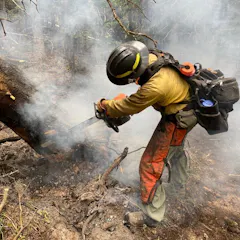
The risk to firefighters isn’t just from breathing wildfire smoke – it’s also in the chemicals that get on their clothes and filter through to their skin.

Textiles shape British life in ways that are often overlooked.

Stephen Girard’s silk stockings were repaired by multiple women in his household who made his enormous wealth possible.

Fashion made out of recycled polyester mostly uses plastic bottles. That’s not a good thing.
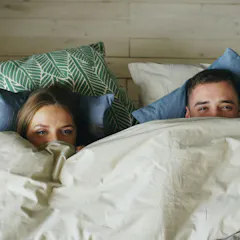
Shopping for a duvet? There’s solid textile science to guide you – and it’s less complicated than the marketing would have you believe.
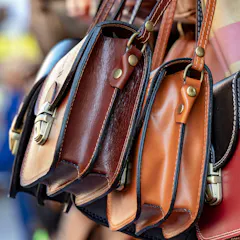
Many alternatives to animal leather – even the ones made with plants – are plastic‑based composites with short lifespans.
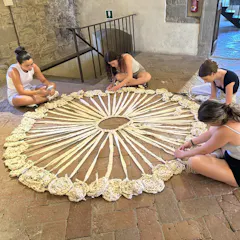
Textile work in a global learning program is a vehicle for exploring new forms and esthetics, and building collaborative creative practices.
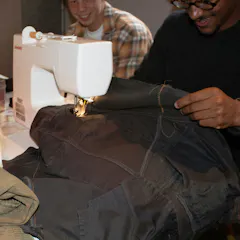
There’s been a rise of young men sewing across Australia (and the world for that matter). Social media and Gen Z influencers have a lot to do with it.

A simple habit can make a big difference. Here’s why.
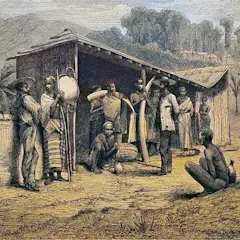
Africa’s ‘new consumer class’ isn’t new; in the 1800s the continent called the tune for European factories.
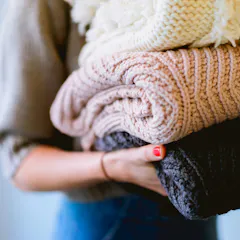
Moths and chemical reactions are the enemies of natural fibre – but there are easy ways to keep your clothes safe.

The world puts a lot of unnecessary microplastics into the environment − such as glitter in makeup. Even better filters in washing machines could help.
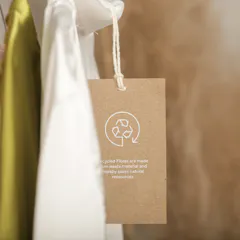
Research shows that green innovations for textiles can end up making consumers buy more.
Top contributors
-

Associate Professor, Fashion and Textiles, RMIT University
-
Senior Lecturer and Program Manager, Bachelor of Fashion (Enterprise) program, RMIT University
-
Associate Professor and Program Manager, Master of Fashion (Entrepreneurship), RMIT University
-
Senior Lecturer in Fashion & Textiles, RMIT University
-
PhD Researcher, Art Market, Nottingham Trent University
-
Lecturer in Textile and Fashion Technology, University of Manchester
-
Director, Swinburne-CSIRO National Testlab for Composite Additive Manufacturing, Swinburne University of Technology
-
Deputy Co-ordinator, Journalism Program, Swinburne University of Technology
-
Doctoral Student, UMass Dartmouth
-
Professor of Art and Associate Dean, Research and Innovation, School of Art, RMIT University
-
Associate Professor of Graphic Design, University of Maryland, Baltimore County
-
Reader in Global Development and Political Economy, SOAS, University of London
-
Professor of Electrical and Computer Engineering, Tufts University
-
Professor of International Relations and International Development, Department of International Relations, University of Sussex
-
Assistant Professor of Electrical and Computer Engineering, The Ohio State University