
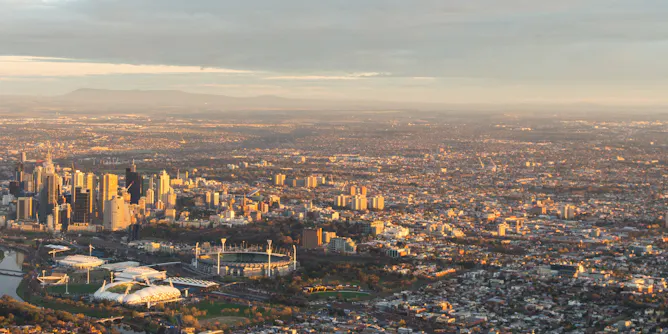
Planning innovations around the world offer inspiration, but ultimately the innovations needed to make Australia’s sprawling cities more sustainable must be shaped by local conditions.
Articles on Sustainable cities
Displaying 101 - 116 of 116 articles

Rising e-commerce means more delivery trucks and urban gridlock. Lockers at transit centers, where carriers can leave packages for people who live or work nearby, are a potential solution.
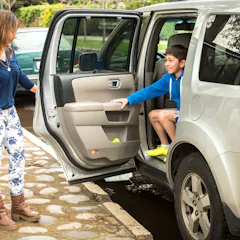
The private car is the default transport option for many families. This reduces physical activity and increases greenhouse gas emissions, with unhealthy results for their children and the environment.
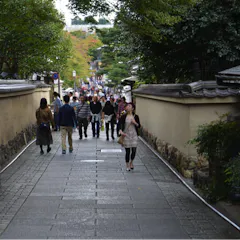
The city where the Kyoto Protocol was signed resolved some years ago to move away from cars and towards low-emission alternatives for getting around. And it’s making real progress towards that goal.
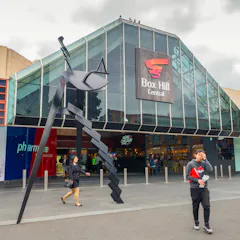
Australian cities are world-leading – in the worst sense – for resource use and greenhouse emissions. China-born residents have embraced these consumption patterns, which is bad news for the planet.
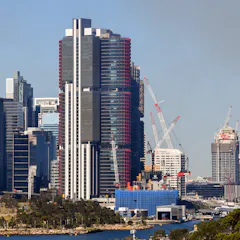
Barangaroo is an example of a development with admirable green credentials, but it is also an exclusive precinct that has played a role in displacing the disadvantaged from this part of Sydney.
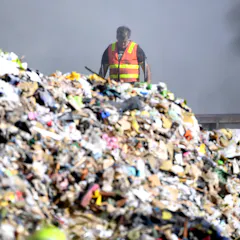
Australia has yet to properly acknowledge that the Sustainable Development Goals aren’t just an issue for other countries. The problems that demand our attention are much closer to home.
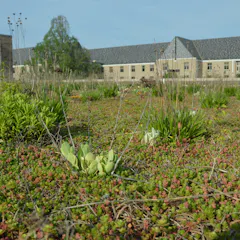
Taking this step may improve the quality of life for vulnerable people and reduce the amount of air conditioning they use, making their neighborhoods less prone to power outages.

Many US cities are investing in bike infrastructure and shade trees. Properly located, these additions can make streets cooler, cleaner and safer for all users – even those who drive.
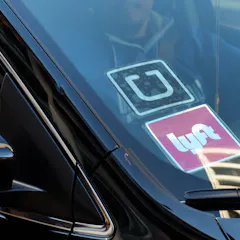
In many US cities, ride-hailing apps are luring riders away from public transit and increasing traffic congestion. But with the right rules, they could enhance public transit instead.

There’s no such thing as a one-size-fits-all plan for sustainable, healthy urban living. Urban diaries help identify what works – and doesn’t work – for tropical cities like Cairns or Townsville.

In an increasingly urban world, trees can make a major difference. One study found that, for every dollar invested in planting, megacities saw a $2.50 return on their investment.
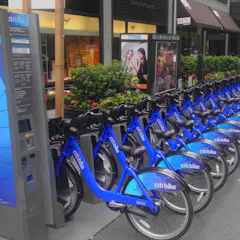
Dozens of US cities have launched bike-share programs in the past decade. There have been bumps – critics want wider access, and cities want bikes stored out of the way – but bike sharing is on a roll.

Gentrification is not the only path for improving urban neighborhoods. A cleanup in Brooklyn and Queens offers another, more inclusive model that scholars have dubbed ‘just green enough.’
They don’t all support the same strategies for coping with it, but US mayors increasingly see climate change as a pressing urban challenge.
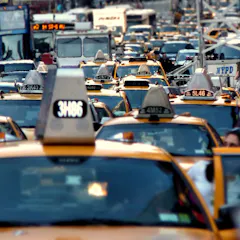
New York soon may charge a fee to drive into central Manhattan as a way of reducing traffic and raising funds for public transit. An urban scholar says this step is overdue in the United States.
Top contributors
-
 John Rennie Short is a Friend of The Conversation.
Professor Emeritus of Public Policy, University of Maryland, Baltimore County
-
Assistant Professor of Fish, Wildlife, and Conservation Biology, Colorado State University
-
Honorary Associate Professor, ANU College of Science, Australian National University
-
Professor of Urban Policy and Director, Urban Futures Enabling Impact Platform, RMIT University
-
Emeritus Professor in Sustainable Urbanism, Swinburne University of Technology
-
Professor Sustainability and Urban Governance, RMIT University
-
Senior Lecturer in Transport, Urban and Regional Planning, Adelaide University
-
Professor of Planning, School of Built Environment, UNSW
-
Academic Director, School for International Training, The University of Melbourne
-
Professor of Civil and Environmental Engineering and Director, Supply Chain Transportation and Logistics Center, University of Washington
-
Lecturer in Urban Agriculture, Boston University
-
Postdoctoral Research Fellow, Swinburne Business School, Swinburne University of Technology
-
Senior Lecturer – Environmental Health, James Cook University
-
Assistant Professor, Political Science, Boston University
-
Professor of Mobile Media and Games., RMIT University