
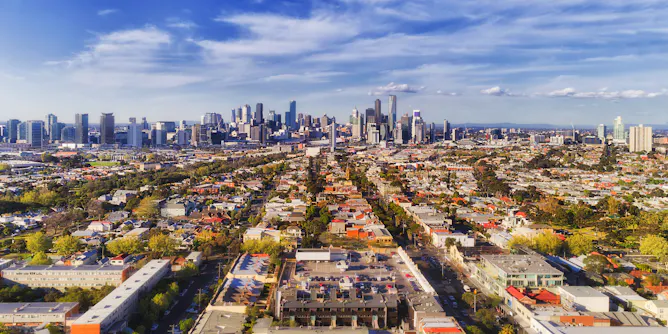
Victoria’s government wants local governments to speed up development and get more homes built. But there are many questions around this goal.
Articles on Sustainable cities
Displaying 21 - 40 of 116 articles
Turning excess office space into apartments isn’t a panacea for the housing shortage, but it’s producing thousands of new units yearly and is more sustainable and economical than new construction.
We want healthy, liveable cities and to cut emissions to net zero. Getting more people to use bicycles instead of cars will go a long way towards achieving these goals.
Two recent research documents provide a substantial basis for assessing how the draft policy shapes up and identifying where it falls down.

City parks are like outdoor living rooms: If people feel welcome and relaxed, they will settle in.

The pursuit of ‘vanity height’ in skyscrapers is driven by aesthetic appeal and the status of being ‘the tallest’. Redefining how we measure building heights can help cut the environmental cost.
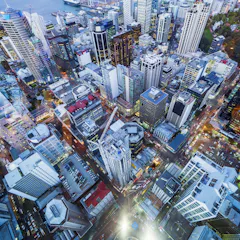
Changing work habits and shifting environmental priorities demand new models of urban redevelopment. Architectural ‘exaptation’ uses the past to reimagine the future.
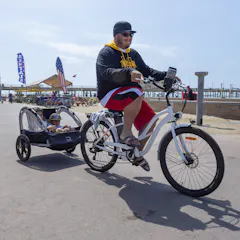
Many incentive programs promote e-bike use, but they aren’t necessarily targeting the right people for the right reasons.

An essential part of managing a growing global waste problem is sorting, recovering and recycling it. But you won’t see this on children’s shows that feature waste collection.
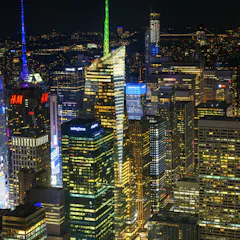
Migrating birds need stopover locations en route where they can rest and feed. A new study shows that artificial light draws them away from sites they would normally use and into risky zones.
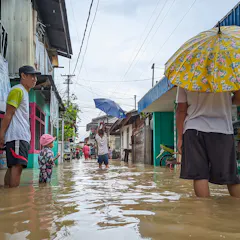
Urban development exacerbates urban water issues in the broader context of extreme weather changes.
US cities are starting to reform laws that required developers to provide minimum amounts of parking. But there’s more they can do to loosen the auto’s grip on downtowns.

A public survey found 86% of people want more space for nature in the city. The city council is already taking steps to add green space and increase biodiversity, which should boost public wellbeing.
Lagos is famous for its congested traffic. Cycling could help change this image.
Our largest cities, home to 80% of the population, are central to achieving sustainability in a time of climate change. The federal government has begun to act on the need for coherent urban policies.
Everyone likes getting something for nothing, but history shows why the math behind free public transit doesn’t add up.

Food forests are urban oases that pack a lot into small spaces, including food production, local cooling and social connections.

A big reason the idea is gaining momentum globally is that the benefits for the health of individuals, communities and the environment are clear and almost immediate.
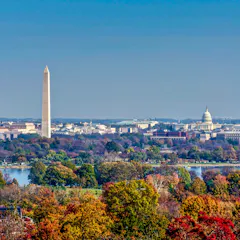
Research shows cities are delivering on their climate pledges. More than mayors, the real force behind these local transitions are nonprofit organisations.
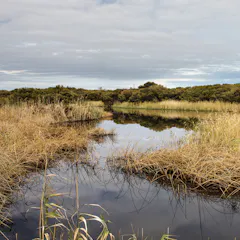
Cities are starting to restore natural systems such as waterways, wetlands and bushland. But restoration on the scale these systems need to function properly calls for a rethink of urban planning.
Top contributors
-
 John Rennie Short is a Friend of The Conversation.
Professor Emeritus of Public Policy, University of Maryland, Baltimore County
-
Assistant Professor of Fish, Wildlife, and Conservation Biology, Colorado State University
-
Honorary Associate Professor, ANU College of Science, Australian National University
-
Professor of Urban Policy and Director, Urban Futures Enabling Impact Platform, RMIT University
-
Emeritus Professor in Sustainable Urbanism, Swinburne University of Technology
-
Professor Sustainability and Urban Governance, RMIT University
-
Senior Lecturer in Transport, Urban and Regional Planning, Adelaide University
-
Professor of Planning, School of Built Environment, UNSW
-
Academic Director, School for International Training, The University of Melbourne
-
Professor of Civil and Environmental Engineering and Director, Supply Chain Transportation and Logistics Center, University of Washington
-
Lecturer in Urban Agriculture, Boston University
-
Postdoctoral Research Fellow, Swinburne Business School, Swinburne University of Technology
-
Senior Lecturer – Environmental Health, James Cook University
-
Assistant Professor, Political Science, Boston University
-
Professor of Mobile Media and Games., RMIT University