

Emotional, violent and sexual abuse are rife at an age when victims are scarred for life.
Articles on Sub-Saharan Africa
Displaying 21 - 40 of 184 articles
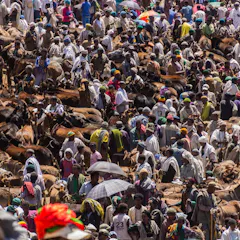
Environmental policymakers and scholars must listen to sub-Saharan Africans’ voices and recognize the importance of population for achieving sustainable development goals.

Africa bears the heaviest burden of antimicrobial resistance, a phenomenon fuelled largely by poverty, But there are encouraging signs that the continent is taking action to fight it.

News coverage of Ethiopia’s ethnic conflicts has overshadowed the growing tensions and polarisation between religious communities.

People with diabetes in Liberia face a vicious cycle of hunger and neglect that can sometimes spiral out of control and put their lives in danger.

Overall, differences in teachers’ subject knowledge could explain a third of the differences in student learning between the 14 countries.

Gabon is resource rich, but the Bongo family’s continuous rule has been bad news for the country of 2.3 million people.

Examining how military coups unfold is crucial to understanding a country’s path back to democracy.
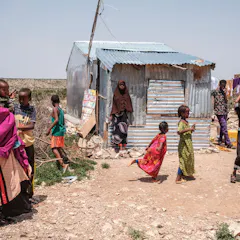
Exploring the potential intersections between climate change and violence against children is crucial.
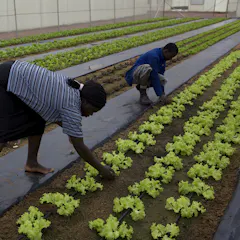
Urban farms can work in developing countries if farmers and architects are aware of conditions that favour food production in built spaces.
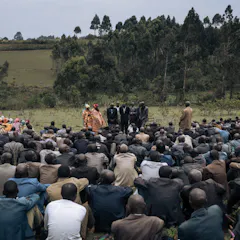
The Banyamulenge have been viewed as strangers in their own country – the violence targeting them revolves around this misconception.
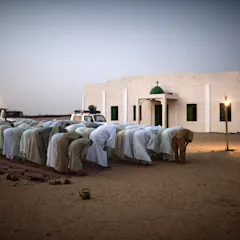
Chad fulfils all conditions to be affected by Islamist terrorism. But the threat so far comes from its neighbours, not from the inside.
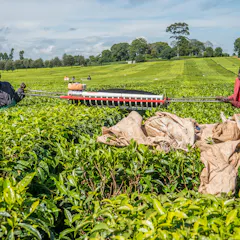
Average farm machinery use in Africa is among the lowest in the world.
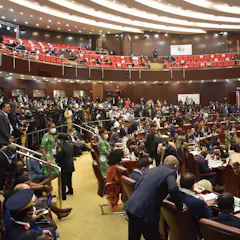
Member states need to arrive at binding, transparent and enforceable priorities to see progress.
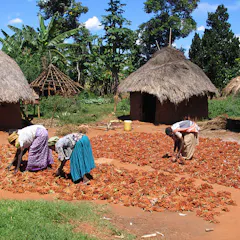
Lowering spatial inequalities can reduce economic and social inequities.
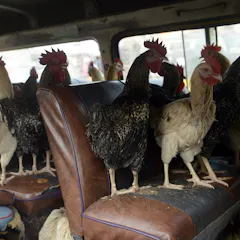
Indiscriminate antimicrobial use in Nigeria’s poultry value chain is putting people at risk of developing resistance to medicines.
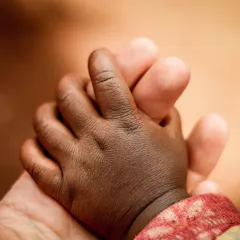
Eight countries are projected to be behind 50% of the growth in population over the next three decades. Five are in Africa.

Researchers in sub-Saharan Africa ought to fuse conventional Western theories of knowledge and local theories of knowledge.
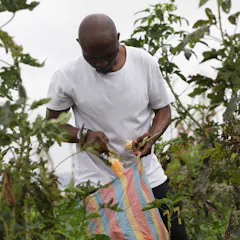
Algorithms can help determine what farm inputs and policies can boost food production.
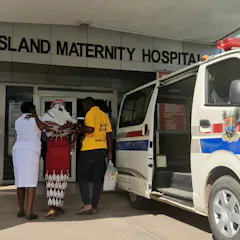
Every year, seven in ten maternal deaths occur in sub-Saharan Africa. A study examining sub-Saharan Africa’s largest metropolis find that inequalities in access play a key role.
Top contributors
-

Extraordinary Professor, Global Health, Stellenbosch University; South African Medical Research Council
-
Professor of Pharmacy, University of Tasmania
-
Professor of the Practice of International Development, Harvard Kennedy School
-
Professor, School of Public Health, University of Gothenburg Sweden, University of the Witwatersrand
-
Editor-in-Chief of the South African Journal of Science and Consultant, Vice Principal for Research and Graduate Education, University of Pretoria
-
Associate professor, University of Canberra
-
sociologue (Institut des mondes africains), École des Hautes Études en Sciences Sociales (EHESS)
-
Assistant professor, The Education University of Hong Kong
-
Teaching Assistant Professor, University of Pittsburg and Visiting Associate Professor, The University of Osaka, University of Pittsburgh
-
Professor of medicine and deputy director of the Desmond Tutu HIV Centre at the Institute of Infectious Disease and Molecular Medicine, University of Cape Town
-
Distinguished visiting professor, University of Glasgow
-
Director of the Africa Centre for Population Health and Professor of Virology, University of KwaZulu-Natal
-
Research Active Lecturer, Discipline of Psychology, Charles Darwin University, Charles Darwin University
-
Professor, Institute of African Studies, University of Leipzig
-
Research Scientist, African Population and Health Research Center