
From heatwaves to droughts to storms, climate change poses one of the biggest health threats to Australians. Yet the federal government makes no mention of it in its strategic health planning.
Articles on Storms
Displaying 121 - 140 of 187 articles
It’s only happened twice since naming started in 1950, and there’s an unusual twist to where many of the storms formed this year.
How destructive storm surge gets depends on both the hurricane and the shape of the land.
Disaster preparation and evacuation procedures weren’t made for social distancing. The pandemic means response decisions are now fraught with contradictions.
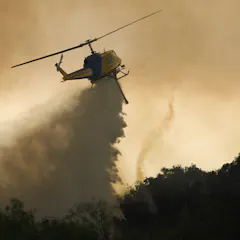
Persistent heat waves and dry lightning are part of the problem. For firefighters, the erratic behavior gets dangerous quickly.
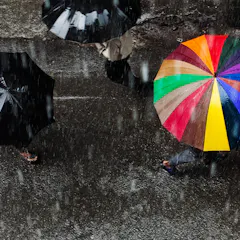
Some rainstorms drench you in a second, while others drop rain in a nice peaceful drizzle. A meteorologist explains how rainstorms can be so different.
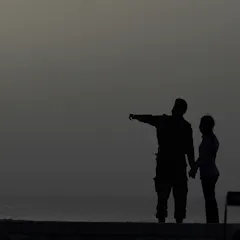
From June through October, it’s not unusual for huge Saharan dust plumes to blow across the Atlantic. They can darken skies but also bring calmer weather and electric sunsets. Here’s how they form.
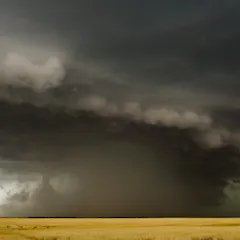
Hurricane and tornado winds spin in circles, but there’s another, equally dangerous storm type where winds barrel straight ahead. They’re called derechos, and are most common in summer.
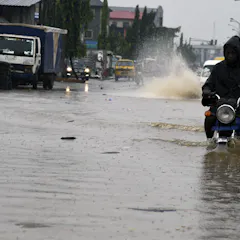
Lagos is vulnerable to heavy storms but the impact can be mitigated with better preparation.
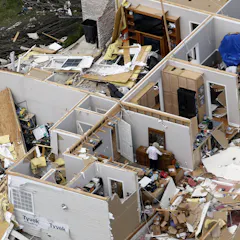
In the Southeast US, tornadoes strike at night more often than in other regions. This poses special challenges for getting early warnings to the public.
Our research has brought us into contact with multiple communities whose lives are increasingly precarious thanks to climate change.
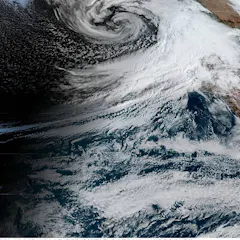
Earth’s biggest rivers are streams of warm water vapor in the atmosphere that can cause huge rain and snowfall over land. Climate change is making them longer, wetter and stronger.
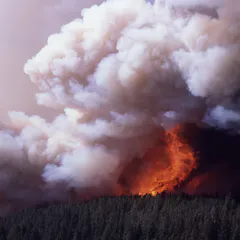
Large, intense bushfires can pump so much heat into the atmosphere they form their own thunderstorm system. And that can make the weather on the ground even more dangerously unpredictable.

African countries need to take into account the effects environmental changes, like climate change, have on their ability to deal with food security, poverty reduction and lowering mortality rates.
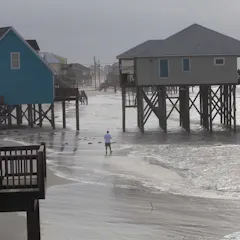
‘Building back better’ refers to making communities more disaster-proof and resilient after they take a hit. But instead, some US owners are building back bigger homes in vulnerable places.

It’s hard to believe, but big storms and hurricanes are caused by tiny particles moving around in the atmosphere.
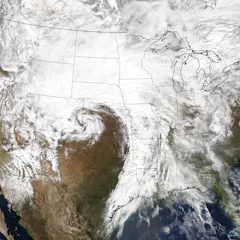
What creates such dramatic storms across the US Great Plains? The key factors are topography and temperature differences.
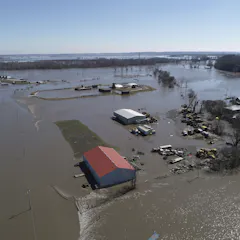
A climatologist who studies precipitation trends explains how climate change is projected to make flooding events in the Midwest more severe and more frequent.
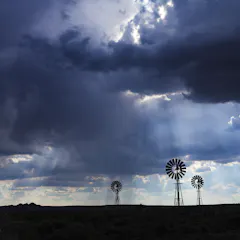
Why is thunder so loud? It’s because the amount of electrical energy that flows from the cloud to the ground is so enormous.
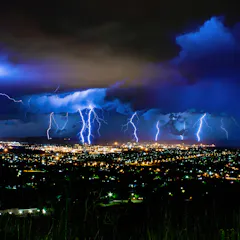
There are many reasons to be careful when there’s a big storm. But there are also ways you can protect yourself to avoid lightning.
Top contributors
-

Professor of Geology and Environmental Geosciences, University of Dayton
-
Adjunct Professor of Environmental Geography, CQUniversity Australia
-
Research Scientist, Australian Bureau of Meteorology
-
Professor of Atmospheric Science and Colorado State Climatologist, Colorado State University
-
Professor, Climate Change Research Centre, UNSW
-
Meteorologist and Research Program Manager, University of Wisconsin-Madison
-
Distinguished Scholar, National Center for Atmospheric Research; Affiliate Faculty, University of Auckland, Waipapa Taumata Rau
-
Professor of Geography & Environmental Systems, Associate Dean of the Graduate School, University of Maryland, Baltimore County
-
Professor of Geography, University of Tennessee
-
Assistant Professor of Geography, Middle Tennessee State University
-
Professor of Meteorology, Senior Associate Dean for Undergraduate Education, Penn State
-
Professorial Fellow, School of Earth Sciences, The University of Melbourne
-
Distinguished Professor of Meteorology, Penn State
-
Professor of Physical Geography, University of the Witwatersrand
-
Principal Research Scientist in Extreme Weather, The University of Melbourne