
We name severe cyclones and storms, but not heatwaves or floods. Why? Are there benefits to giving Australia’s climate-fuelled extreme weather a name?
Articles on Storms
Displaying 21 - 40 of 187 articles
More extreme weather is set to cause more more problems for farmers and supermarkets in getting food to consumers.
The Southern Ocean is the engine room of global heat and carbon uptake – and it’s changing faster and more dramatically than we thought.
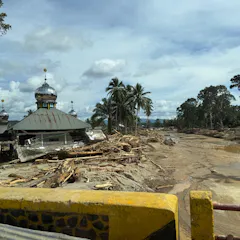
Extreme rain wasn’t the only cause of Sumatra’s deadly floods. Years of forest loss, eroded soils, and weakened watersheds turned a storm into a tragedy — one that could repeat.
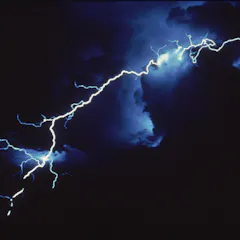
A burst of early-summer thunderstorms has swept across NZ, fuelled by unstable air and a shifting seasonal pattern. Here’s what it means for summer and beyond.

The backlash was swift and intense. Now the Bureau of Meteorology will have to make changes to its new website.
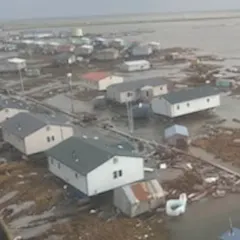
‘As the storm approached Alaska, everything went sideways,’ leaving people no time to evacuate and little time to prepare. An Alaska meteorologist explains what happened and the challenges ahead.
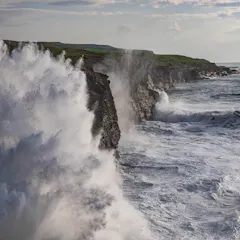
Its position on the edge of the Atlantic makes it vulnerable, and the storms are getting stronger.

Trees in full leaf are more likely to fall, which is why summer storms can be particularly disruptive.

FEMA flood maps are essential tools for identifying flood risks, but they have significant coverage gaps, and politics can get in the way.

Storm systems, heat waves, bright sunlight, even lightning – for millions of people, weather changes can bring on painful headaches.
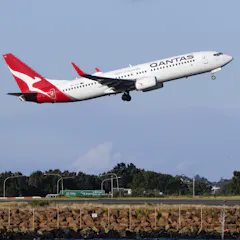
New research suggests global warming is increasing the frequency and intensity of wind gusts from thunderstorm downbursts, with serious consequences for air travel.
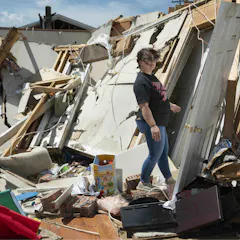
A storm scientist explains what’s been driving deadly tornado outbreaks and how tornado season has been changing.
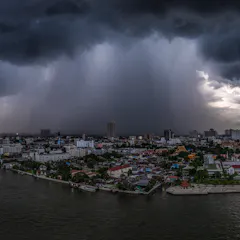
Engineers use giant fans in the Wall of Wind test facility to study the destructive ways these powerful winds can interact with tall buildings.
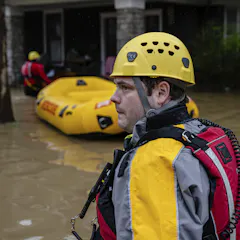
Rising global temperatures increase the risk of extreme downpours, as a climate scientist explains.
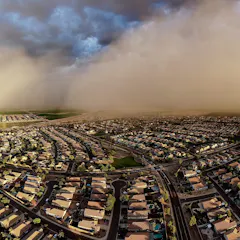
One long line of powerful winds can whip up dust storms, spread wildfires, spin up tornadoes and fuel blizzards – all at the same time across different states.
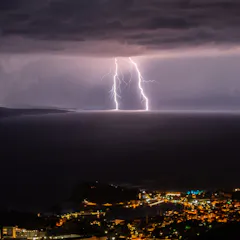
An unplanned experiment takes scientists closer to solving a long-standing mystery: To what extent, if any, have human-created emissions influenced thunderstorms?
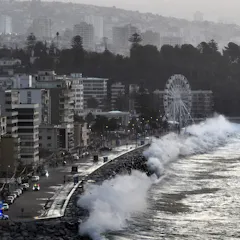
Big storms can generate ocean swells that travel thousands of kilometres and cause damage to distant coasts. Predicting their paths and local impacts remains a challenge.
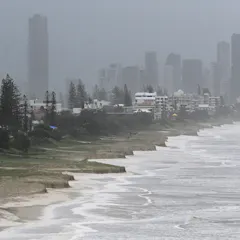
In short: the danger is not over. Residents in affected areas should remain cautious and heed official advice, to keep themselves safe.
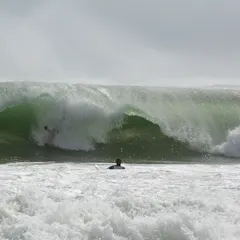
What drives surfers to hit the waves as a cyclone approaches the coast? And what will it take to get them to stop?
Top contributors
-

Professor of Geology and Environmental Geosciences, University of Dayton
-
Adjunct Professor of Environmental Geography, CQUniversity Australia
-
Research Scientist, Australian Bureau of Meteorology
-
Professor of Atmospheric Science and Colorado State Climatologist, Colorado State University
-
Professor, Climate Change Research Centre, UNSW
-
Meteorologist and Research Program Manager, University of Wisconsin-Madison
-
Distinguished Scholar, National Center for Atmospheric Research; Affiliate Faculty, University of Auckland, Waipapa Taumata Rau
-
Professor of Geography & Environmental Systems, Associate Dean of the Graduate School, University of Maryland, Baltimore County
-
Professor of Geography, University of Tennessee
-
Assistant Professor of Geography, Middle Tennessee State University
-
Professor of Meteorology, Senior Associate Dean for Undergraduate Education, Penn State
-
Professorial Fellow, School of Earth Sciences, The University of Melbourne
-
Distinguished Professor of Meteorology, Penn State
-
Professor of Physical Geography, University of the Witwatersrand
-
Principal Research Scientist in Extreme Weather, The University of Melbourne