

An astronomer takes us on a tour of the universe to learn about the birth of stars and planets and how they get their spin.
Articles on Stars
Displaying 81 - 100 of 224 articles
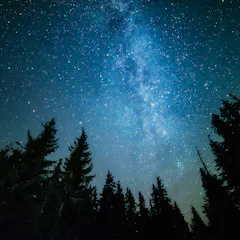
People travel hundreds or thousands of miles and spend a fortune to see the night sky in all its splendor. But we are literally blocking out the cosmic beauty above our homes.
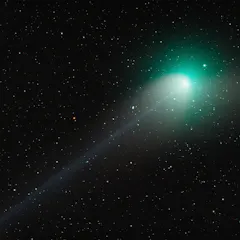
Skies in the Northern Hemisphere have been graced by a rare, green comet. Now, it’s our turn to look for it in Australia – but the view will be dimming rapidly.
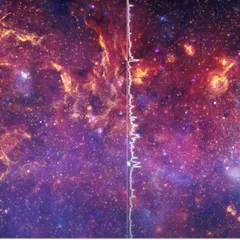
Since ancient times, the stars have been set to music. Modern technology now enables scientists to convert images of space into real compositions.

A year on since the historic launch of the most powerful infrared telescope in human history, we admire and explore some of the best images it delivered in 2022.
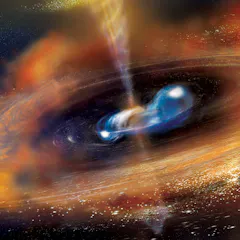
Gamma-ray bursts occur when a massive star explodes or when two neutron stars merge. A newly discovered burst has puzzled astronomers, as it lasted much longer than astronomers would have expected.

Astrology and astronomy were once practiced side by side by scientists like Galileo and Kepler. And they’re more similar than you might think.

It has been one year since the launch of the James Webb Space Telescope and six months since the first pictures were released. Astronomers are already learning unexpected things about the early universe.
A new particle accelerator has just begun operation. It is the most powerful accelerator of its kind on Earth and will allow physicists to study some of the rarest matter in the universe.
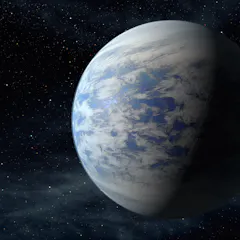
Newly discovered super-Earths add to the list of planets around other stars that offer the best chance of finding life. An astronomer explains what makes these super-Earths such excellent candidates.
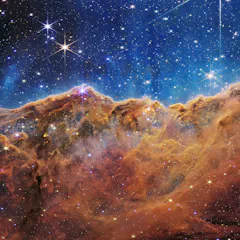
We may have a stolen planet in our own Solar System.
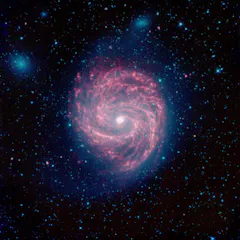
A comparison of star-forming galaxies suggests, surprisingly, that dark matter and visible matter do interact – taking us closer to understanding what keeps the galaxies together.
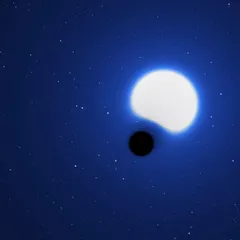
Astronomers have discovered the first dormant black hole outside of the Milky Way. These black holes are not absorbing matter from a nearby star, making them incredibly hard to find.
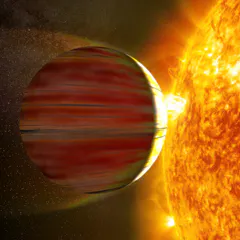
The unusual planetary system has a host star orbited by two giants. One has an incredible odd route around its star. And the other (unlike our own gas giants) is hellishly hot.
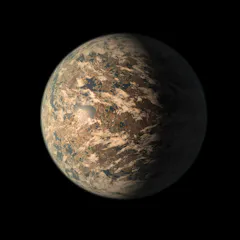
Life on Earth has dramatically changed the chemistry of the planet. Astronomers will measure light that bounces off distant planets to look for similar clues that they host life.
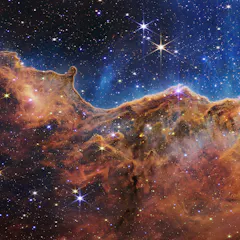
Long before the James Webb telescope brought us these deep field images, artists have been capturing notions of space.
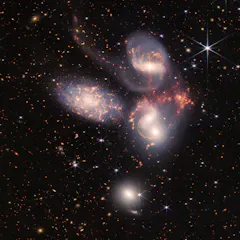
NASA released five new images from the James Webb Space Telescope, revealing incredible details of ancient galaxies, stars and the presence of water in the atmosphere of a distant planet.

Even experts were not prepared for the crispness of the new images from the James Webb space telescope.
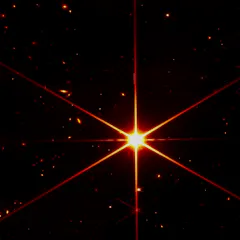
It has taken eight months to test and calibrate all of the instruments and modes of the James Webb Space Telescope. A scientist on the team explains what it took to get Webb up and running.
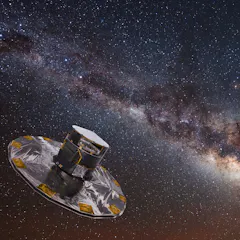
New data may settle dispute about the universe’s true expansion rate.
Top contributors
-

Professor (Astrophysics), University of Southern Queensland
-
University Distinguished Professor of Astronomy, University of Arizona
-
Associate Professor in Astronomy, Monash University
-
Senior Curator (Astronomy), Museums Victoria Research Institute; The University of Melbourne
-
Professor (Physics), University of Southern Queensland
-
Associate Dean of Innovation and Engagement, Swinburne University of Technology
-
Lecturer in Astronomy, Nottingham Trent University
-
ARC Laureate Fellow & Distinguished Professor, Centre for Astrophysics & Supercomputing, Swinburne University of Technology
-
Associate Professor, School of Physics, The University of Melbourne
-
Professor, Radio Astronomy, University of Sydney
-
CAASTRO Affiliate Postdoc, The University of Melbourne
-
Professor of Nuclear Physics, Michigan State University
-
Professor and Director of the Centre of Excellence for Data Science, AI and Modelling, University of Hull
-
Professor of Astrophysics and Royal Society University Research Fellow, University of Hertfordshire
-
Lecturer, University of Southern Queensland