
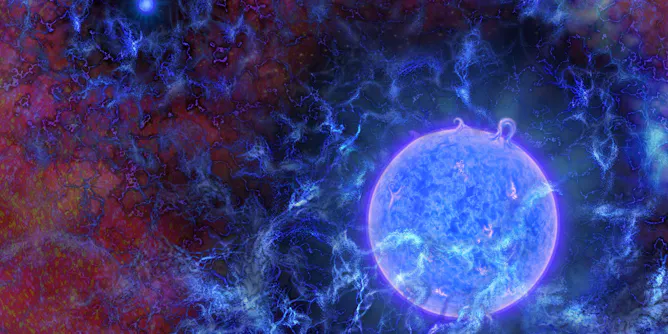
New radio technology has managed to detect the first light in the universe.
Articles on Stars
Displaying 161 - 180 of 224 articles
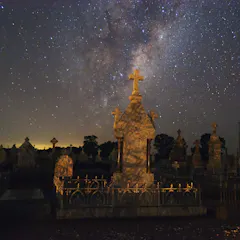
On a clear night you can see thousands of stars in the night sky, and there are billions more in our galaxy alone. But are the official star names really up for sale?
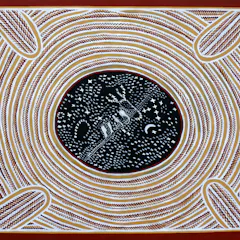
Four star names from Aboriginal Australia have been recognised by the International Astronomical Union. So what are they and where to find them?
The precious metal is literally extra-terrestrial, produced in the heart of the stars. How and under what conditions? Scientists know more thanks to a double astrophysical observation.
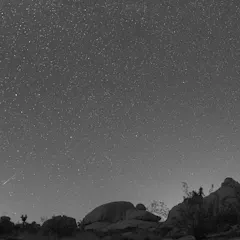
A guide to meteor showers – what to look out for and when.
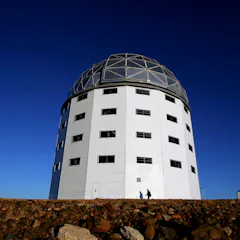
Technology has redefined astronomy. Pioneering telescope designs have allowed astronomers to unravel ever more complex questions about the universe and its mysteries.
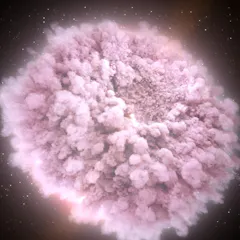
Until the recent observation of merging neutron stars, how the heaviest elements come to be was a mystery. But their fingerprints are all over this cosmic collision.
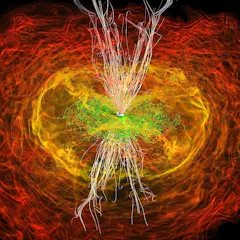
The gravitational wave itself is the least exciting part of the announcement from LIGO and Virgo. Observing this new source answers many longstanding questions.
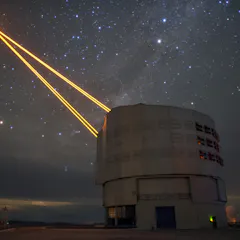
How exactly do the stars twinkle in the night sky? As it turns out, the answer is full of hot air… and cold air.
What caused the Big Bang is still a mystery. And that’s just one of the many unanswered questions, in spite of everything we do know about the birth of the Universe.
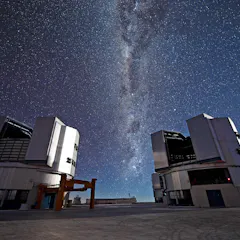
Australia’s new partnership with the European Southern Observatory will give our astronomers access to much bigger telescopes.
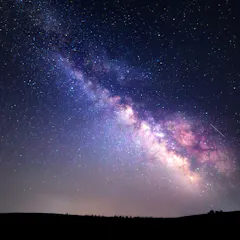
New research shows the insects use the brightness of different stars to work out which direction to go.
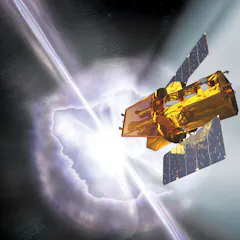
A burst of gamma rays in a distant part of the universe reveals the birth of another black hole.
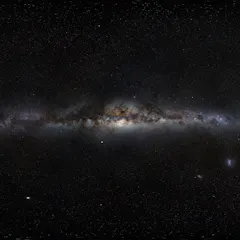
Understanding how the billions of stars in our galaxy formed and evolved is the subject of a huge galactic archaeology project.
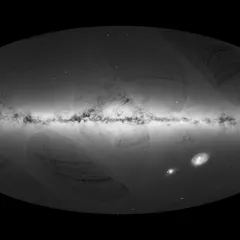
The Gaia catalogue’s incredible precision is only possible due to accurate tracking of Gaia itself from the ground.
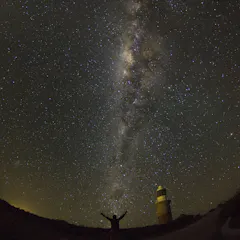
The drive the get more women involved in science should start at an early age. But as one space researcher found out, girls can get nudged out of science at school.
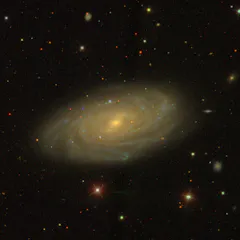
Galaxies are supposed to be the place where new stars are formed. So what causes some to stop this stellar production line?
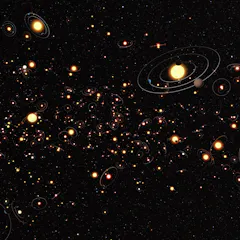
A look at some of the more obscure methods astronomers use to detect planets around other stars, in the second of a two-part series on finding world’s elsewhere in the universe.
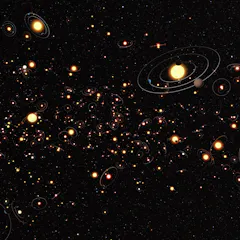
Astronomers have discovered more than 3,000 planets around other stars, so far. In the first of a two-part series we look at how they find world’s elsewhere in the universe.
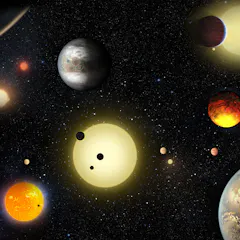
The number of known exoplanets doubled this week to more than 3,200. But why have only a handful of these those new planets caught people’s imagination?
Top contributors
-

Professor (Astrophysics), University of Southern Queensland
-
University Distinguished Professor of Astronomy, University of Arizona
-
Associate Professor in Astronomy, Monash University
-
Senior Curator (Astronomy), Museums Victoria Research Institute; The University of Melbourne
-
Professor (Physics), University of Southern Queensland
-
Associate Dean of Innovation and Engagement, Swinburne University of Technology
-
Lecturer in Astronomy, Nottingham Trent University
-
ARC Laureate Fellow & Distinguished Professor, Centre for Astrophysics & Supercomputing, Swinburne University of Technology
-
Associate Professor, School of Physics, The University of Melbourne
-
Professor, Radio Astronomy, University of Sydney
-
CAASTRO Affiliate Postdoc, The University of Melbourne
-
Professor of Nuclear Physics, Michigan State University
-
Professor and Director of the Centre of Excellence for Data Science, AI and Modelling, University of Hull
-
Professor of Astrophysics and Royal Society University Research Fellow, University of Hertfordshire
-
Lecturer, University of Southern Queensland