
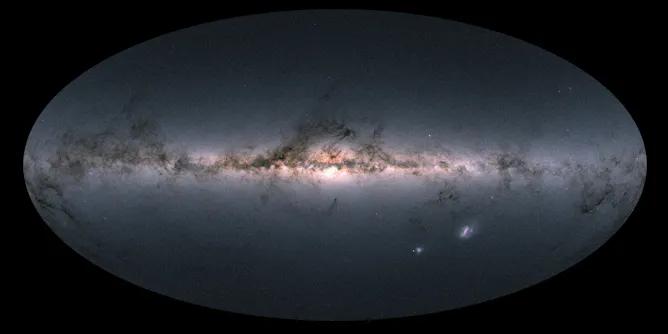
Floating crystals can pause the stellar aging process, providing a final energy source to otherwise dead stars.
Articles on Stars
Displaying 61 - 80 of 224 articles
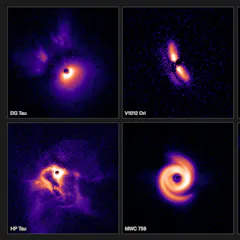
Astronomers have spotted a surprisingly diverse set of planet-forming disks.
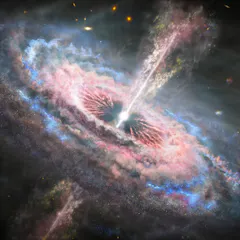
The discovery raises big questions about widely accepted models of galaxy formation.
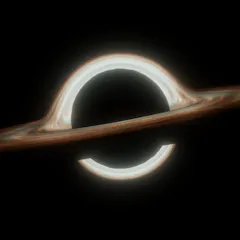
The extreme object could tell us more about the environment around black holes.
The observation could fill in gaps in our knowledge about planet formation.

People have been looking up at the stars for thousands of years. Here’s where to start if you want to learn more about the night sky – from spotting easy-to-find constellations to using the best apps.
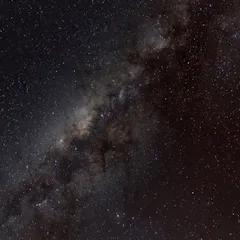
An astronomer explains why space looks so dark despite containing 200 billion trillion stars.
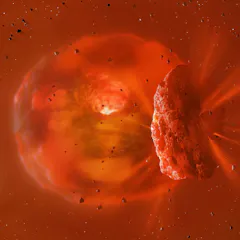
The discovery provides a way to study the birth of an entirely new planet in real time.
Measuring the ages of planets and stars is tricky. An observational astrophysicist describes the subtle clues that provide good estimates for how old different space objects are.
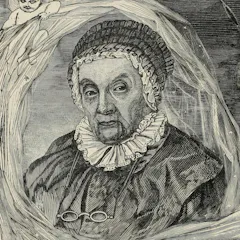
Astronomer Caroline Herschel’s work discovering and cataloging astronomical objects in the 18th century is still used in the field today, but she didn’t always get her due credit.
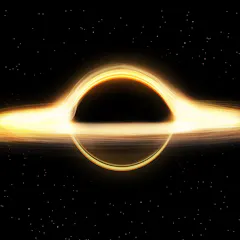
Black holes are known for pulling in all kinds of stuff – including light. Here’s how that actually works.
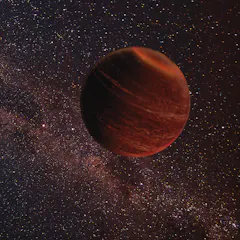
Astronomers have detected the coldest star ever found to emit radio waves using the Australian SKA Pathfinder telescope.
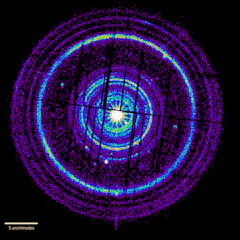
Radiation from the brightest cosmic explosion ever seen may have been mixing with gas and dust around its dying star – making the signal last longer.
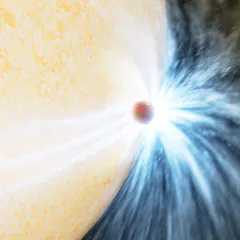
Stars begin to expand when they run out of fuel and can become thousands of times larger, consuming any planets in the way. For the first time, astronomers have witnessed one such event.
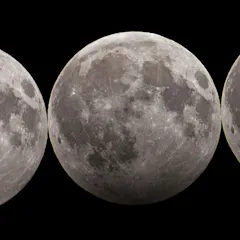
Not all lunar eclipses are alike. An astronomer explains the science behind the slight dimming of the Moon on May 5, 2023.
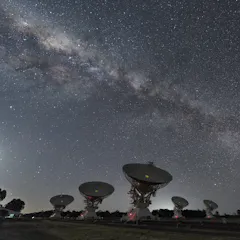
Artificial intelligence tools are making waves in almost every aspect of life, and astronomy is no different. An astronomer explains the history and future of AI in understanding the universe.
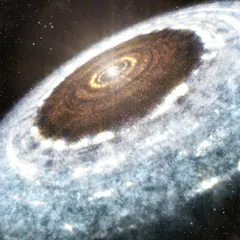
Astronomers have long known where water is first formed in the universe and how it ends up on planets, asteroids and comets. A recent discovery has finally answered what happens in between.
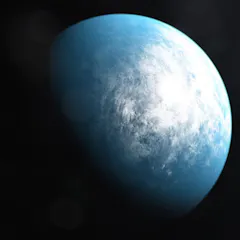
With more than 5,000 known exoplanets, astronomers are shifting their focus from discovering additional distant worlds to identifying which are good candidates for further study.

With the help of thousands of citizen scientists, a new study measured exactly how much brighter night skies are getting every year.
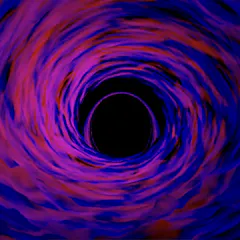
Astronomers have found that mysterious dark energy may originate in black holes.
Top contributors
-

Professor (Astrophysics), University of Southern Queensland
-
University Distinguished Professor of Astronomy, University of Arizona
-
Associate Professor in Astronomy, Monash University
-
Senior Curator (Astronomy), Museums Victoria Research Institute; The University of Melbourne
-
Professor (Physics), University of Southern Queensland
-
Associate Dean of Innovation and Engagement, Swinburne University of Technology
-
Lecturer in Astronomy, Nottingham Trent University
-
ARC Laureate Fellow & Distinguished Professor, Centre for Astrophysics & Supercomputing, Swinburne University of Technology
-
Associate Professor, School of Physics, The University of Melbourne
-
Professor, Radio Astronomy, University of Sydney
-
CAASTRO Affiliate Postdoc, The University of Melbourne
-
Professor of Nuclear Physics, Michigan State University
-
Professor and Director of the Centre of Excellence for Data Science, AI and Modelling, University of Hull
-
Professor of Astrophysics and Royal Society University Research Fellow, University of Hertfordshire
-
Lecturer, University of Southern Queensland