
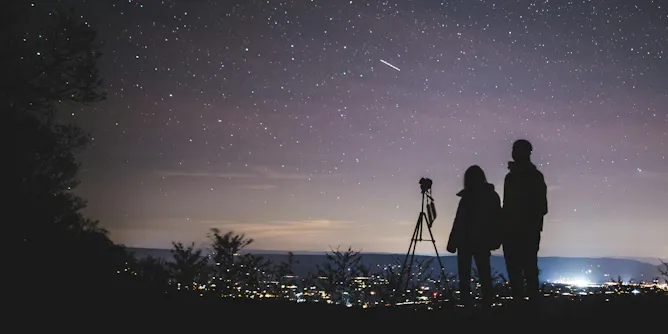
So what names do astronomers use for stars and how are official star names selected?
Articles on Stars
Displaying 21 - 40 of 224 articles
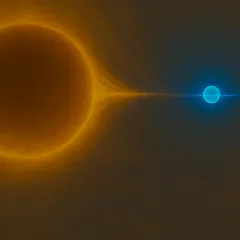
The WOH G64 star looked to be accelerating to its end of life. But now astronomers are not sure that’s the case.

Radio pulses repeating every minute-to-hour have puzzled astronomers, but a new paper in Nature Astronomy might finally shed some light.
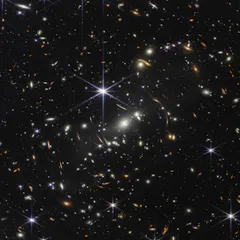
Some unique ‘stars’ might be fueled by dark matter annihilation.

Will the universe keep existing forever? An astrophysicist explains how scientists aren’t entirely sure, but they can make predictions.
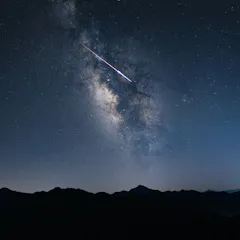
The findings suggest Earth’s geological story was partly written in the stars – specifically, in the spiral arms of our home galaxy.
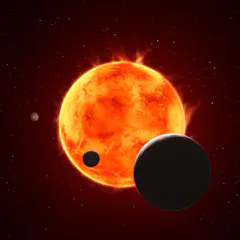
The largest telescope in space has been trained on a rocky exoplanet.
Just as earlier generations might have turned to prayer or ritual, many people today are turning to the stars.
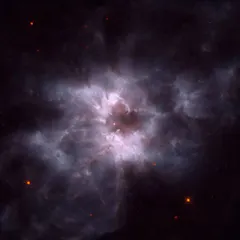
Could tiny stars a fraction the size of our solar system’s Sun have habitable planets orbiting them? A new study says it’s possible.
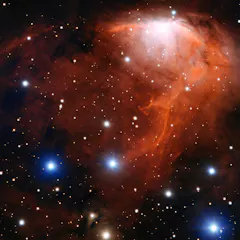
Two new studies challenge scientists’ previous theories on how the very first stars in the universe formed.
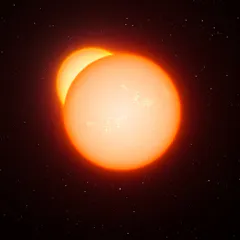
It takes a supercomputer weeks to output the properties of one stellar binary. A new study shows AI can do it in a fraction of the time.
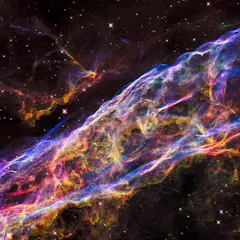
Almost everything on Earth is made up of atoms, but where do these fundamental building blocks come from?
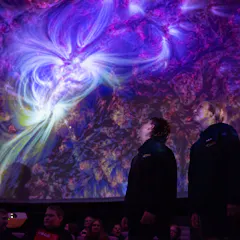
As the night sky became polluted with light from electrified cities, people built planetariums. Today, they’re more impressive than ever.
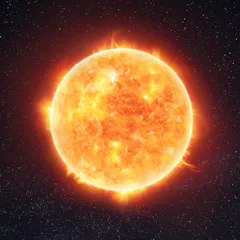
Stars are constantly vibrating because of ‘starquakes’. Listening to their sound can reveal a surprising amount of information.
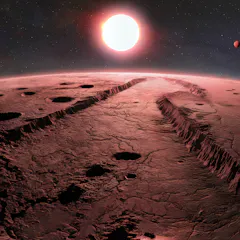
The small worlds were particularly challenging to discover.
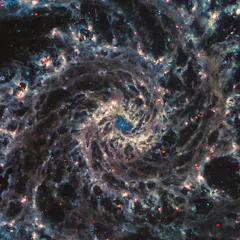
The James Webb Space Telescope is celebrating three years from its launch. Its discoveries have already changed our understanding of the early universe.
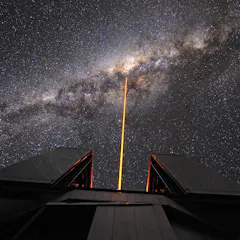
The discovery helps explain a long-running cosmic mystery about why some stars hurtle through space much faster than others.

Killjoys on social media say there’s no point wishing on stars because they are already dead – but the naysayers are completely wrong.

In 2017, astronomers found an object they’d never seen before. Now, it’s part of a growing category of elusive ‘dark comets’ – and we might find more soon.
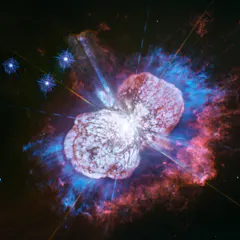
Just like volcanologists monitor volcano activity to predict eruptions, astronomers can monitor stars to predict explosions.
Top contributors
-

Professor (Astrophysics), University of Southern Queensland
-
University Distinguished Professor of Astronomy, University of Arizona
-
Associate Professor in Astronomy, Monash University
-
Senior Curator (Astronomy), Museums Victoria Research Institute; The University of Melbourne
-
Professor (Physics), University of Southern Queensland
-
Associate Dean of Innovation and Engagement, Swinburne University of Technology
-
Lecturer in Astronomy, Nottingham Trent University
-
ARC Laureate Fellow & Distinguished Professor, Centre for Astrophysics & Supercomputing, Swinburne University of Technology
-
Associate Professor, School of Physics, The University of Melbourne
-
Professor, Radio Astronomy, University of Sydney
-
CAASTRO Affiliate Postdoc, The University of Melbourne
-
Professor of Nuclear Physics, Michigan State University
-
Professor and Director of the Centre of Excellence for Data Science, AI and Modelling, University of Hull
-
Professor of Astrophysics and Royal Society University Research Fellow, University of Hertfordshire
-
Lecturer, University of Southern Queensland