
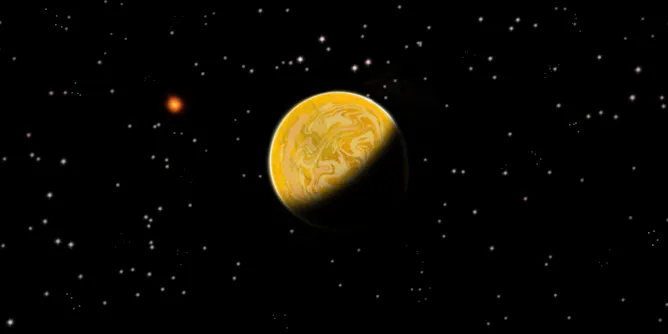
Astronomers have detected possible signs of gases released by volcanic activity.
Articles on Stars
Displaying 41 - 60 of 224 articles
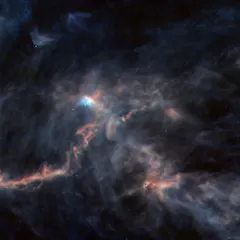
Life showed up really early on Earth – it needed complex carbon molecules to do so. A new discovery hints that these molecules can survive the harsh conditions when stars are born.
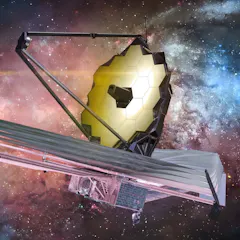
Some of the earliest galaxies found with JWST are also the brightest. That’s a problem for our ideas about the universe.
Comet C/2023 A3 (Tsuchinshan-ATLAS) is expected to be the brightest spectacle of 2024. Our charts will help you find it in the night sky.

The Hubble tension has been described as a “crisis” for cosmology. Can it be resolved?
A new series delves into the big questions surrounding the nature of our universe.
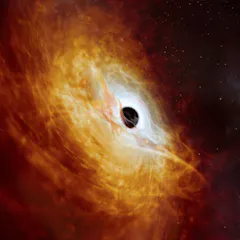
These small galaxies are either crammed with stars or they host gigantic black holes. The data astronomers have collected continues to puzzle them.
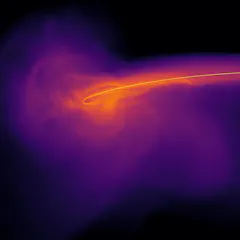
If a star gets too close to a black hole, it gets shredded and produces a complex ball of light. These videos are the first time this dramatic event has been simulated in detail.

What’s so special about a supermoon? Hardly anything. There are better things to observe in the night sky, according to a professional astronomer.
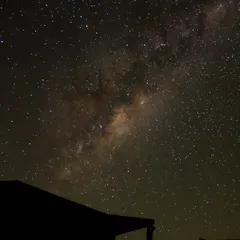
This small coastal town’s efforts to reclaim the night skies for people and nature is truly inspirational. Here’s how you can help reduce light pollution and claim your own Dark Sky Place title.
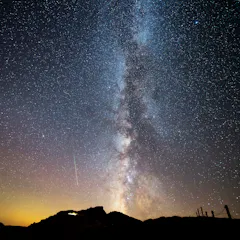
Light pollution is a relatively new problem. Simple solutions can fix it.
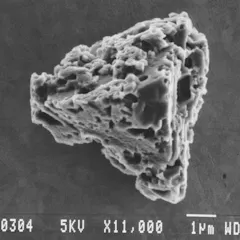
Most presolar grains were destroyed in the formation of the universe. But some survived on meteorites.
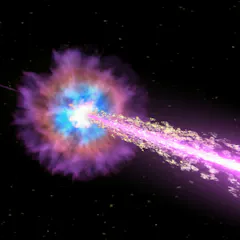
Analysis of two major cosmic blasts deepens the mystery of where the universe’s ‘heavy’ elements come from.
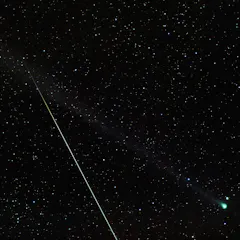
The Eta Aquariid meteor shower peaks each year in early May, but this year it should be particularly good, thanks to dark skies and extra activity.

If you look carefully at the night sky, you may spot this fuzzy visitor with the naked eye – but binoculars will help.

Where specialized algorithms fail to classify star-borne pulses, human volunteers with just a little training can step in.
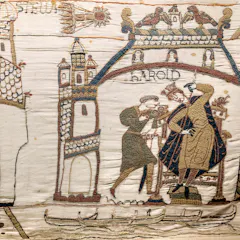
Medieval scholars connected celestial events to changes that happened on the ground, such as the overthrow of the king.

Some ancient texts record what were likely dying stars, faintly visible from Earth. If close enough, these events can disturb telescopes and even damage the ozone layer.
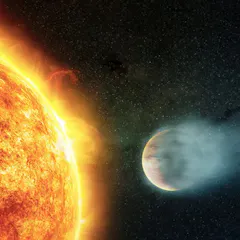
There are several ways in which stars can destroy and swallow their own planets.
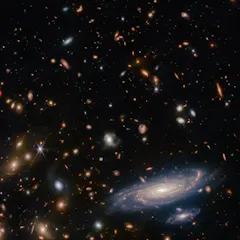
We may be able to find traces of dark matter star explosions.
Top contributors
-

Professor (Astrophysics), University of Southern Queensland
-
University Distinguished Professor of Astronomy, University of Arizona
-
Associate Professor in Astronomy, Monash University
-
Senior Curator (Astronomy), Museums Victoria Research Institute; The University of Melbourne
-
Professor (Physics), University of Southern Queensland
-
Associate Dean of Innovation and Engagement, Swinburne University of Technology
-
Lecturer in Astronomy, Nottingham Trent University
-
ARC Laureate Fellow & Distinguished Professor, Centre for Astrophysics & Supercomputing, Swinburne University of Technology
-
Associate Professor, School of Physics, The University of Melbourne
-
Professor, Radio Astronomy, University of Sydney
-
CAASTRO Affiliate Postdoc, The University of Melbourne
-
Professor of Nuclear Physics, Michigan State University
-
Professor and Director of the Centre of Excellence for Data Science, AI and Modelling, University of Hull
-
Professor of Astrophysics and Royal Society University Research Fellow, University of Hertfordshire
-
Lecturer, University of Southern Queensland